
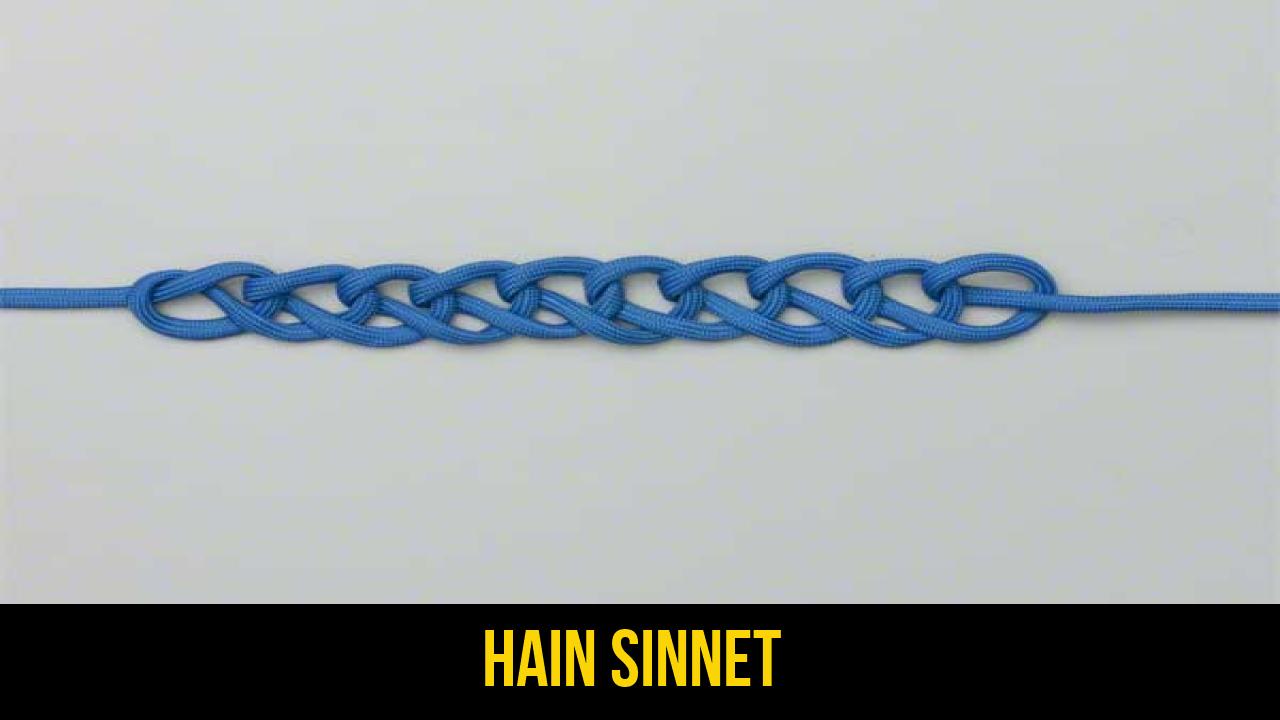
In the realm of outdoor rope techniques, few methods are as visually satisfying and practically indispensable as the Chain Sinnet. Whether you are a seasoned arborist, a maritime enthusiast, or a weekend hiker, understanding how to manage long lengths of cordage is a fundamental skill. The Chain Sinnet knot—often referred to by several other names depending on the industry—is a functional masterpiece that allows a user to shorten a rope, store it without tangles, and deploy it in seconds.
Effective rope management is what separates a novice from an expert. There is nothing more frustrating than reaching into a pack for a utility line only to find a "bird’s nest" of tangled fibers. The Chain Sinnet solves this problem through a series of interlocking loops that provide a high degree of organization while maintaining the integrity of the rope’s fibers.
Alternative Names: Monkey Braid, Daisy Chain, Crochet Stitch, Single-Pillar Sinnet, and Carpenter’s Braid.
What Is a Chain Sinnet?
The Chain Sinnet is technically a method of "shortening" a rope or "braiding" a single strand into itself. Unlike a standard braid that requires three separate strands, a sinnet is worked with one. Its primary purpose is to take a long, cumbersome length of line and condense it into a manageable, attractive "chain."
Practical Uses and Applications
- Rope Storage: This is the most common use. By "chaining" a rope, you prevent it from kinking or knotting during transport.
- Shortening Lines: If you have a 50-foot rope but only need 10 feet for a specific task, the Chain Sinnet allows you to take up the slack without cutting the rope.
- Electrical Cord Management: Professionals often use this technique for long extension cords to prevent the internal copper wires from twisting and breaking.
- Decorative Macramé: In the world of fiber arts, the Chain Sinnet is used to create thickness and texture in wall hangings and plant hangers.
- Emergency Rigging: It allows for a quick-release mechanism. If the "lock" is removed, the entire chain can be pulled apart instantly, which is vital in fast-paced outdoor scenarios.
Materials and Tools Needed
To master rope knots like the Chain Sinnet, you must understand the interaction between the knot and the material. Not all ropes behave the same way under the tension of a sinnet.
Recommended Rope Types
- Paracord (550 Cord): The gold standard for practicing outdoor rope techniques. Its flexibility makes it very easy to loop and tuck.
- Static Climbing Rope: Because these ropes are thicker, they create a very chunky, robust chain that is easy to handle.
- Synthetic Kernmantle Ropes: These offer the best "slickness" for the quick-release feature of the sinnet.
- Natural Fiber Ropes (Manila or Cotton): While these can be used, they offer more friction, which may make the "quick-release" slightly more difficult.
Tools and Considerations
- Gloves: If you are working with large-diameter utility ropes or rough natural fibers, gloves prevent rope burn during the repetitive looping process.
- Flat Surface: While experts can tie this in mid-air, beginners should start on a table to keep the loops uniform.
- Rope Length: You generally need a rope that is at least four times longer than the desired finished chain length.
How to Tie a Chain Sinnet?
Follow these precise steps to create a perfect Chain Sinnet knot. Consistency in loop size is the key to a professional-looking result.
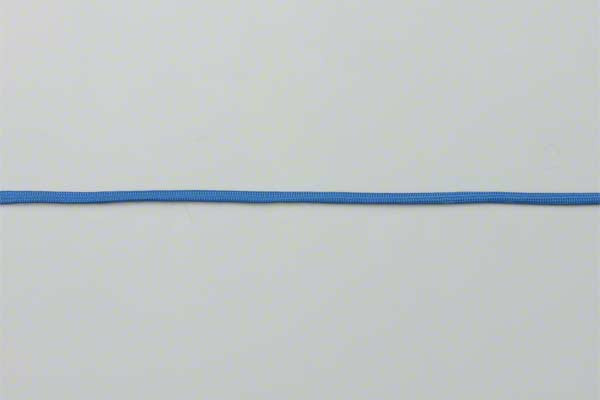
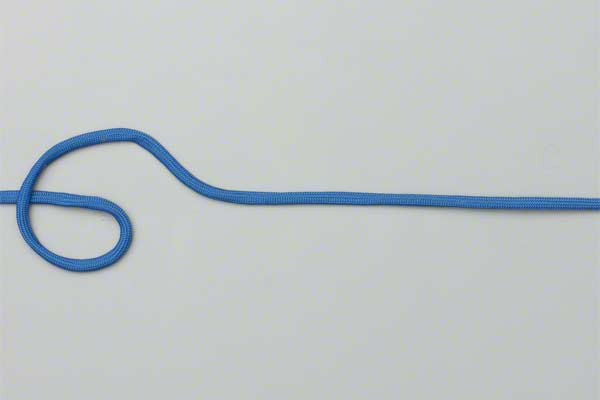
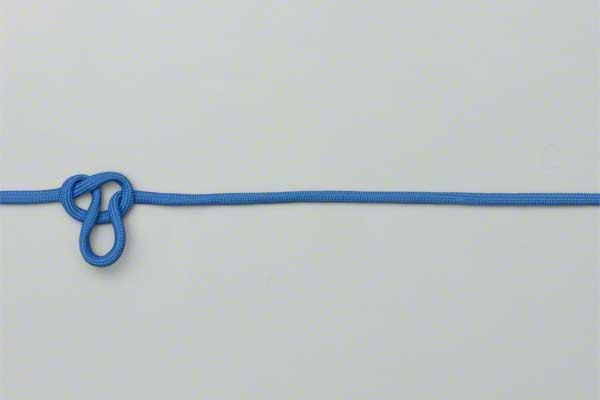
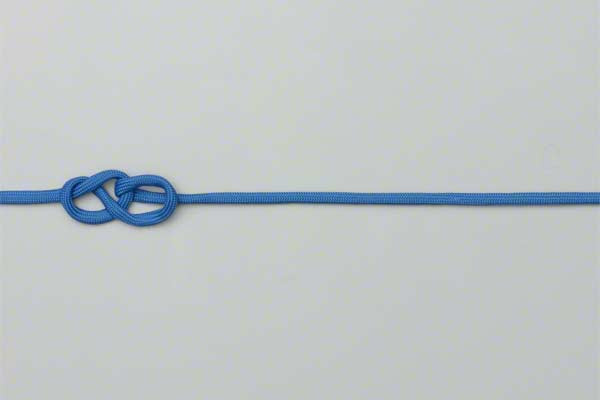
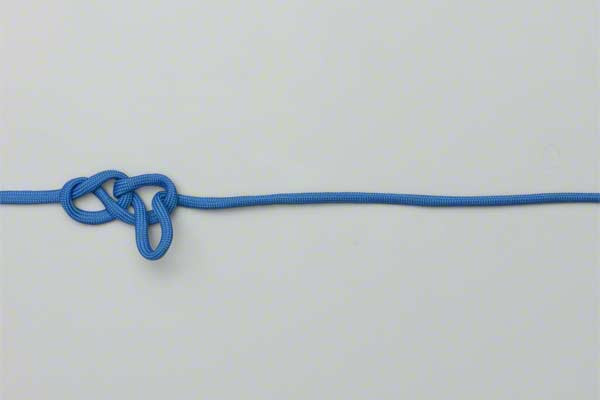
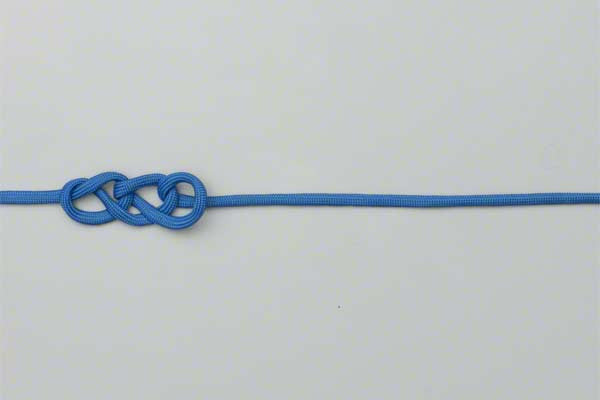
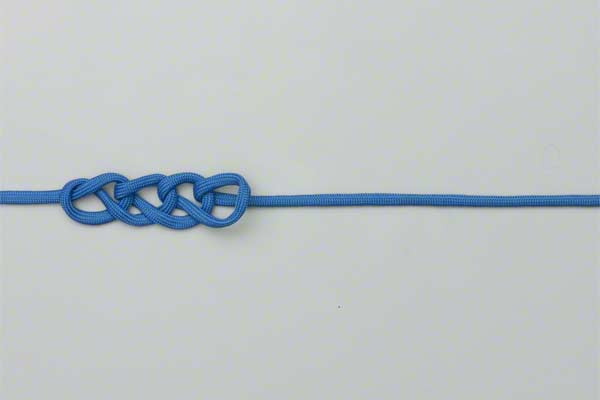
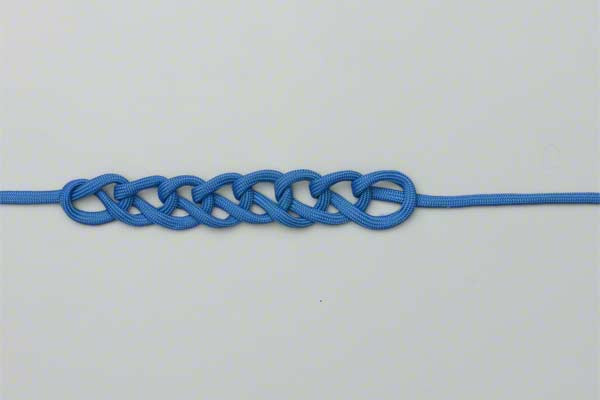
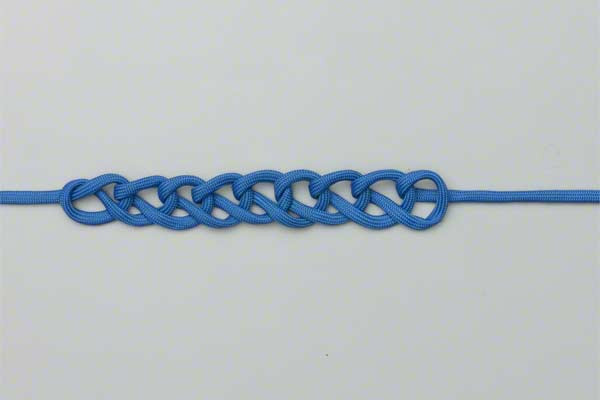
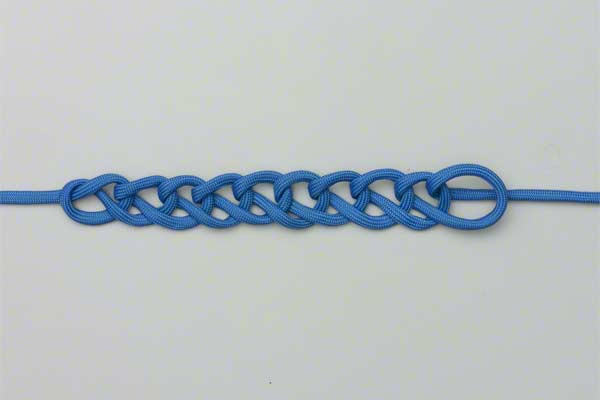
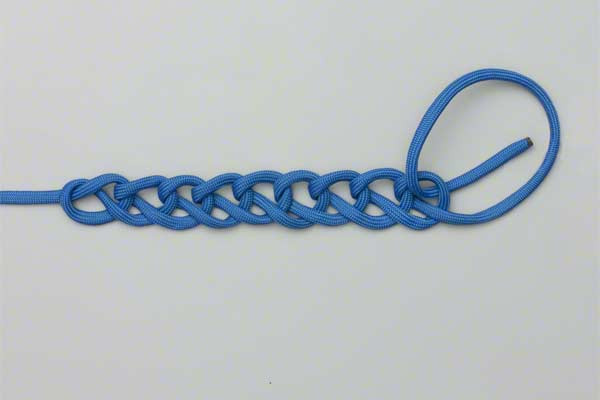
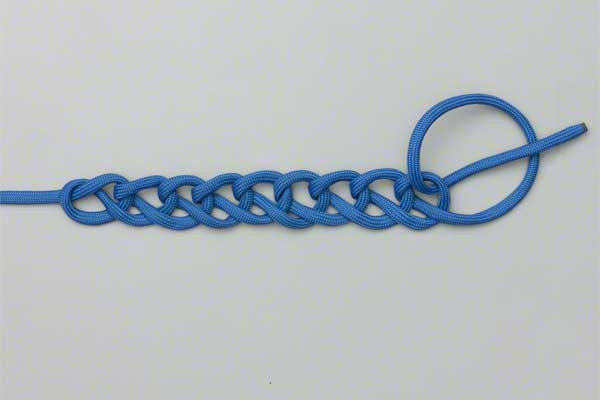
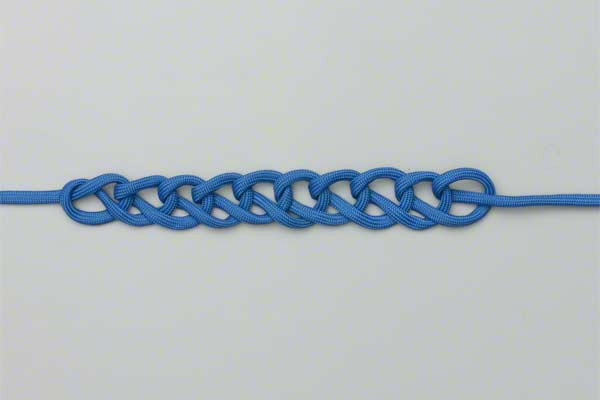
- Make a noose in the rope.
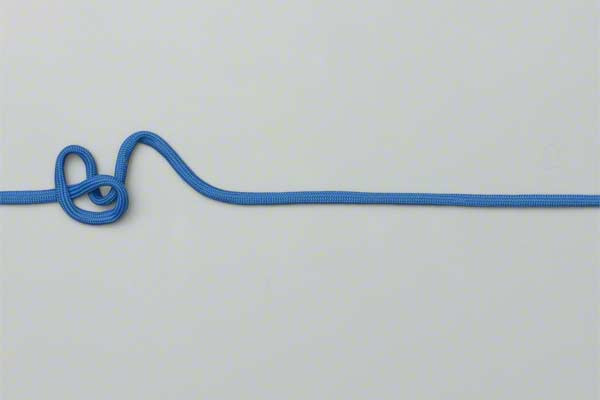
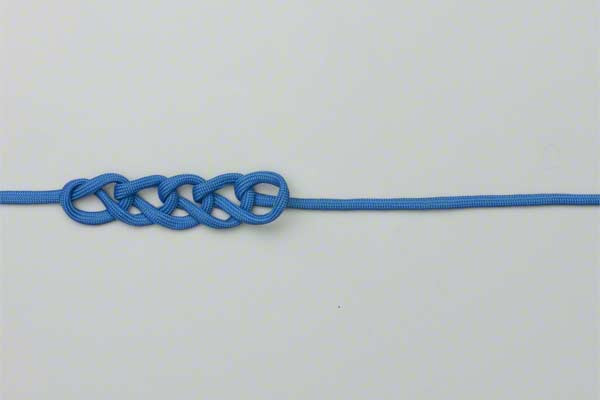
- Form a loop and tuck it into the noose.
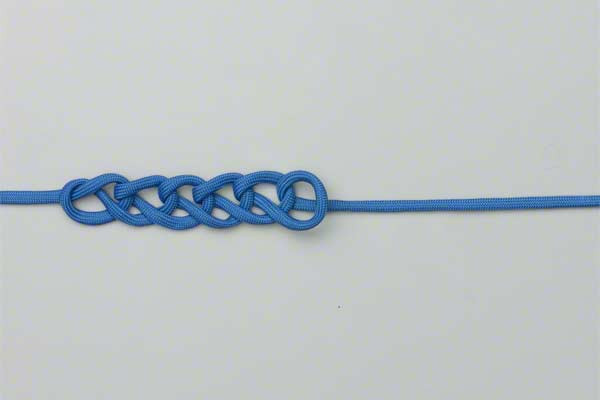
- Make another loop and tuck it into the previous loop.
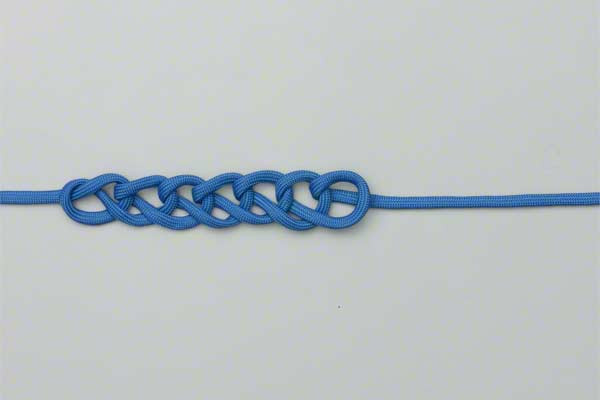
- Keep repeating.
- When the chain is long enough, lock it by passing the end through the final loop.
Common Mistakes to Avoid
Even though the Chain Sinnet is straightforward, a few common errors can lead to a messy result or a knot that is difficult to undo.
1. Inconsistent Loop Tension
If one loop is tight and the next is loose, the chain will look crooked and may develop "soft spots" that tangle. Aim for a uniform "pull" on each loop as you tuck it through.
2. Tying the Initial Noose Too Tight
The first step—making the noose—sets the foundation. If you cinch the initial noose too tightly, it can be difficult to pass the first loop through, and it may distort the start of your chain.
3. Forgetting the "Lock"
The most critical part of the Chain Sinnet for storage is the final step. If you do not pass the tail end through the final loop, the entire chain will unravel the moment it is bumped or moved. This is great for quick deployment, but terrible for organized storage in a backpack.
4. Over-Twisting the Rope
As you form loops, be careful not to introduce a "twist" into the standing part of the rope. If the rope starts to hockle (kink), let the free end hang and spin out the tension before continuing.
Related Knots and Splicing
Understanding the Chain Sinnet is often a gateway to learning other complex outdoor rope techniques. Here are a few related knots that every enthusiast should know:
- The Sheepshank: A classic knot used to shorten a rope that is already under tension at both ends. Unlike the sinnet, it requires tension to stay secure.
- The Clove Hitch: A quick-release binding knot used to secure a rope to a cylindrical object; often used as a starting point for lashings.
- The Bowline: Known as the "King of Knots," it creates a fixed loop at the end of a rope that will not slip or bind under load.
- The Alpine Butterfly Knot: A secure loop tied in the middle of a rope (the "bight") that can handle tension from three different directions.
- The Braid (Three-Strand): While the sinnet uses one strand, the traditional braid is the foundation of rope construction and decorative cordage.
Practical Industry Applications
Arboriculture and Tree Care
Arborists often deal with "throw lines" and heavy climbing ropes that are several hundred feet long. Using a Chain Sinnet allows them to keep these lines organized in bags without the risk of the rope knotting itself during the ascent.
Search and Rescue (SAR)
In SAR operations, speed is everything. A 100-foot utility line stored in a Chain Sinnet can be carried over the shoulder. When the rescuer reaches the victim, they simply pull the "lock" and the rope falls perfectly to the ground, ready for immediate use.
Marine and Boating
On a boat, "line" management is a safety requirement. While "coiling" is the standard for dock lines, the Chain Sinnet is frequently used for smaller utility lines or decorative "fenders" to protect the hull of the ship.
Final Words
The Chain Sinnet is more than just a way to shorten a rope; it is a vital component of professional rope management. By mastering this technique, you ensure that your gear is always ready for action, whether you’re rigging a tarp in the wilderness or organizing extension cords in your garage.
Remember, the beauty of the Chain Sinnet knot lies in its simplicity and its speed. Practice with different types of cordage until the motion becomes muscle memory. Once you can tie a uniform, locked chain in the dark, you have truly mastered one of the most practical outdoor rope techniques in existence. Keep your lines organized, your knots secure, and your adventures tangle-free.
