
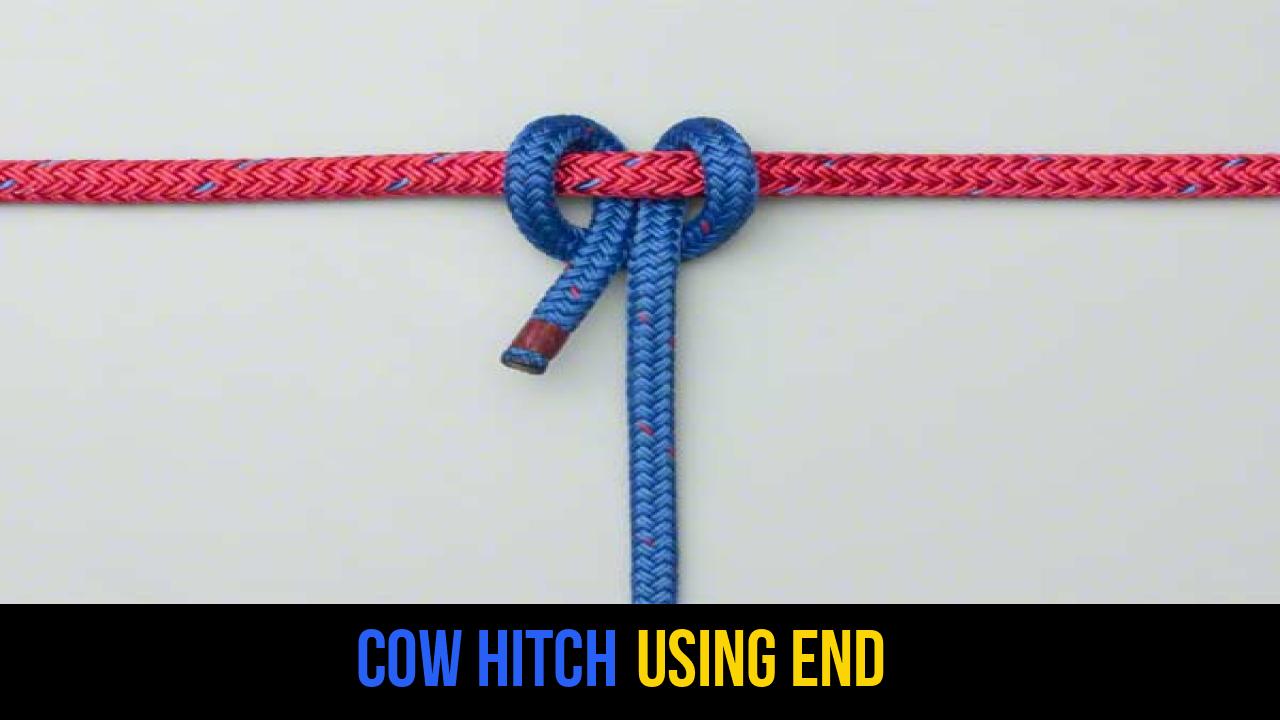
In the world of rope knots, few are as fundamentally useful and deceptively simple as the hitch. Whether you are securing a gear bag to a motorcycle, tethering a small boat to a dock, or setting up a campsite, understanding how to manipulate a line effectively is a core skill. Among these, the Cow Hitch Using End stands out as a primary method for securing a single line to a cylindrical object or ring.
While many enthusiasts are familiar with the "loop" version of this knot—often referred to as a Lark’s Head—the ability to tie it using the "working end" of the rope is vital when the object you are tying to is closed or fixed (such as a ring or a tree). Mastering outdoor rope techniques like this one ensures that you can adapt to any environment, regardless of the equipment at hand.
The Cow Hitch Using End is valued for its symmetry and its ability to remain secure under constant tension. In this guide, we will explore the technical nuances of this knot, the materials best suited for its application, and a precise step-by-step breakdown of how to execute it flawlessly.
Alternative Names: Lark’s Head (tied with the end), Ring Hitch, Bale Sling Hitch, Tagline Hitch.
What Is a Cow Hitch Using End?
The Cow Hitch Using End is a hitch knot used to attach a rope to an object. Unlike a bend (which joins two ropes) or a loop (which creates a fixed circle in a rope), a hitch is specifically designed to wrap around an object—like a post, a rail, or a ring—and hold fast through friction.
Practical Applications
This knot is widely used across various industries and hobbies due to its balanced nature. Because the two ends of the rope emerge from the knot in the same direction, it provides a stable pull. Common uses include:
- Boating and Sailing: Securing light lines to rails or rings.
- Arboriculture: Attaching a tagline to a branch or tool.
- Camping: Hanging lanterns or gear from a horizontal line or branch.
- Crafting: Often used in macramé and decorative rope work as a foundation knot.
- General Utility: Securing loads in a truck bed where a quick-release but stable attachment is needed.
The Cow Hitch Using End is particularly useful when you do not have access to the ends of the object you are tying to. For example, if you are tying to a solid metal ring, you cannot simply slide a pre-formed loop over it; you must weave the end of the rope through the ring to create the hitch.
Materials and Tools Needed
To practice and master the Cow Hitch Using End, you should consider the type of rope and the object you are using. Different materials react differently to friction, which is the "glue" that holds this knot together.
1. Rope Selection
- Synthetic Ropes (Nylon/Polyester): These are excellent for outdoor use due to their resistance to rot and UV damage. However, they can be slippery. When using synthetic lines for a Cow Hitch knot, ensure the knot is "dressed" (tightened and straightened) properly to prevent slippage.
- Natural Fibers (Manila/Cotton): These offer excellent "grip" or "bite." They are ideal for decorative work or traditional camping setups, though they are less durable in wet conditions.
- Paracord (550 Cord): A favorite for survivalists and hikers. Its thin diameter makes the Cow Hitch Using End very compact and secure for light-duty tasks.
2. The Anchor Object
The object you are tying to should ideally have a smooth surface to prevent rope abrasion, but enough diameter to allow the knot to form correctly. A diameter that is 2 to 4 times the thickness of the rope is usually the "sweet spot" for maximum security.
How to Tie Cow Hitch Using End?
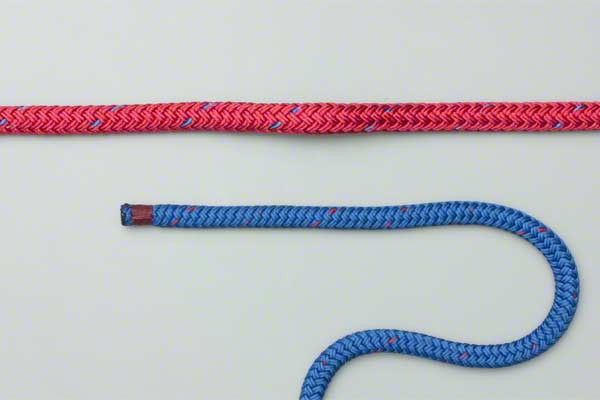
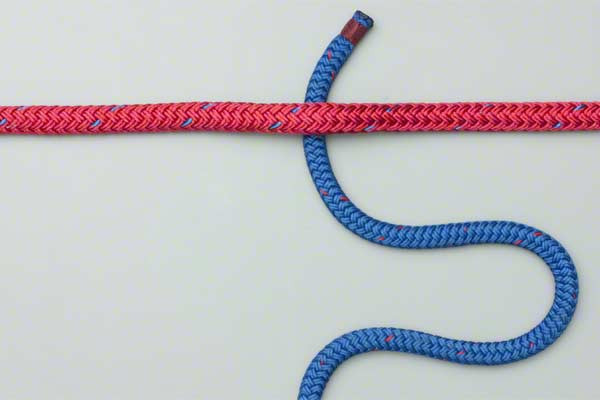
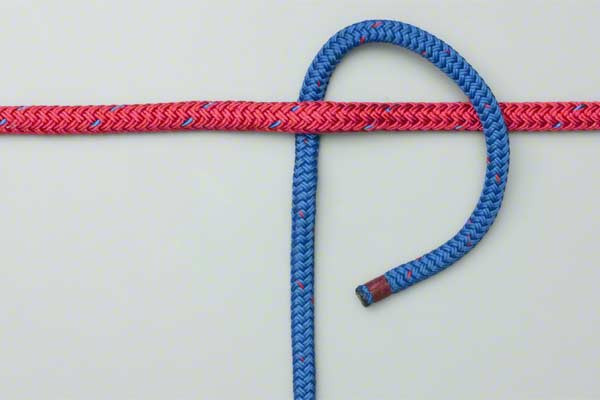
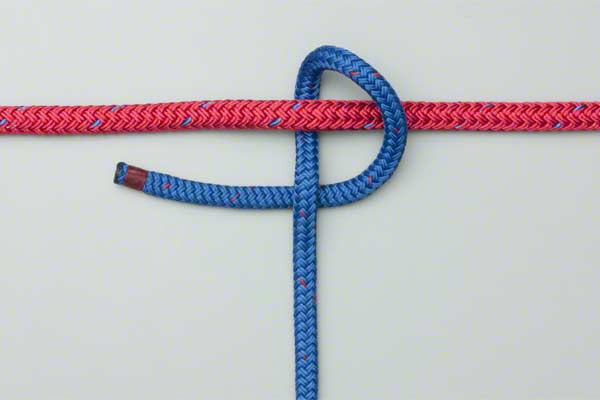
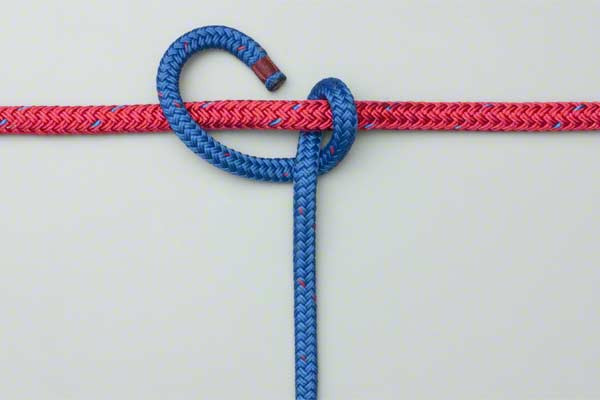
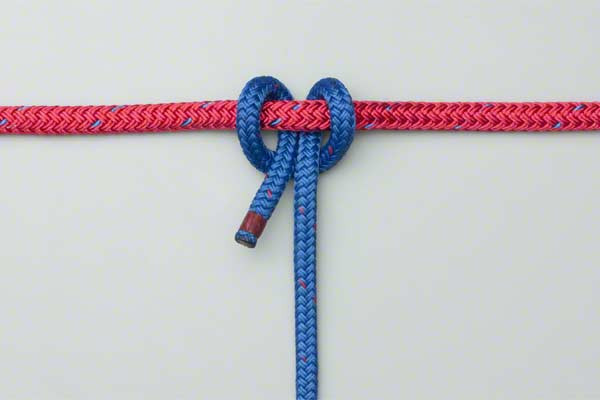
Following the proper sequence is essential for the integrity of the knot. Use the following instructions to tie the Cow Hitch Using End correctly.
- Pass the rope around the object,
- Back around itself,
- Around the object in the reverse direction,
- And down beside itself.
Once these steps are completed, pull both the working end and the standing part of the rope to "set" the knot against the object. The resulting knot should look like two parallel wraps around the object with a bight (loop) crossing over them on the back side.
Common Mistakes to Avoid
Even though the Cow Hitch Using End is straightforward, a few common errors can compromise its safety and effectiveness.
- Inconsistent Tension: If the knot is not pulled tight after the final step, it can "roll" or capsize, especially when using modern, high-lubricity ropes like Dyneema.
- Crossing the Lines: In step 4, ensure the rope goes down beside itself and not over or under the previous wraps in a way that creates an unintentional overlap. This can cause the knot to bind or become impossible to untie after being under a heavy load.
- Using for Critical Loads: While the Cow Hitch is a staple of outdoor rope techniques, it is not a "life-safety" knot. It should not be used for climbing or as the primary attachment for heavy overhead lifting. In those cases, a more secure hitch like the Round Turn and Two Half Hitches or a Clove Hitch with a backup is preferred.
- Ignoring the Tail: Always leave a sufficient "tail" (the working end). A good rule of thumb is to leave a tail length at least five times the diameter of the rope to ensure that any minor slippage doesn’t result in the knot coming undone.
Related Knots and Splicing
Understanding how the Cow Hitch Using End relates to other knots will deepen your mastery of rope knots and utility work.
- Clove Hitch: A classic hitch used to start and finish lashings; it is more secure than a cow hitch when the rope is pulled from only one direction.
- Bowline: Known as the "King of Knots," it creates a fixed loop at the end of a rope that will not slip or bind under load.
- Timber Hitch: Used specifically for towing logs or poles, this knot utilizes multiple wraps to create high friction against a rough surface.
- Prusik Knot: A friction hitch used in climbing that is essentially a Cow Hitch wrapped multiple times around a thicker standing line.
- Taut-Line Hitch: An adjustable friction hitch used on lines under tension, perfect for securing tent guy-lines where length needs to be adjusted.
Final Words
The Cow Hitch Using End is a cornerstone of outdoor rope techniques. Its simplicity is its greatest strength, allowing for quick attachment and easy removal. Whether you are a professional rigger or a weekend camper, the ability to tie this knot from the working end of a rope is a skill that will serve you in countless scenarios.
Remember that the key to any good knot is practice. Take a length of rope and a fixed object, and repeat the steps—pass the rope around the object, back around itself, around the object in the reverse direction, and down beside itself—until the movement becomes muscle memory. By mastering the Cow Hitch Using End, you add a versatile and reliable tool to your outdoor utility kit, ensuring you are prepared for whatever the trail or the sea throws your way.
Always prioritize safety, check your knots twice, and ensure you are using the right rope for the right job. Happy tying!
