
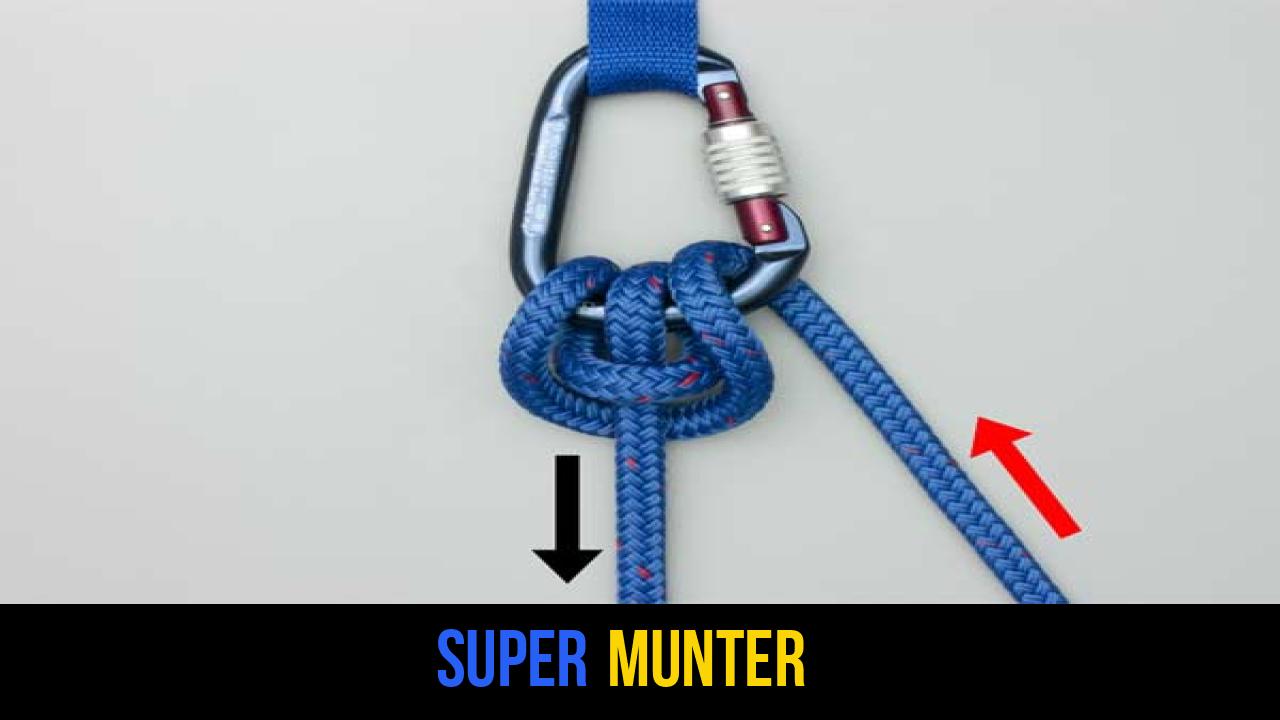
In the world of technical ropework, few tools are as versatile and indispensable as the Munter Hitch family. While the standard Munter Hitch is a staple for belaying and rappelling in emergency situations, there are times when the load exceeds the braking power of a single hitch. This is where the Super Munter comes into play. As a high-friction variation of the classic Italian Hitch, the Super Munter provides the necessary control for managing heavy loads, such as in search and rescue (SAR) operations or when lowering a heavy haul bag during a big wall climb.
Understanding rope knots and their specific mechanical advantages is a core skill for any climber, arborist, or rescue professional. The Super Munter stands out because it offers massive braking power without requiring specialized mechanical devices. However, with great friction comes the need for great precision. In this guide, we will explore the nuances of the Super Munter knot, how to tie it correctly, and the safety considerations you must keep in mind to use it effectively in the field.
Alternative Names: Monster Munter, Double Munter, Super Italian Hitch.
What Is a Super Munter?
The Super Munter is an advanced friction hitch created by adding an extra wrap to a standard Munter Hitch. By doing so, the user effectively doubles the surface area where the rope contacts itself and the carabiner, resulting in significantly increased braking force.
Practical Uses and Applications
The primary function of the Super Munter is lowering heavy loads. While a standard Munter Hitch can become difficult to control when the weight exceeds that of a single person, the Super Munter remains manageable even under the weight of a two-person rescue load (the "litter" and the "tender").
- Search and Rescue (SAR): It is a preferred method for improvised lowering systems when a dedicated descent control device is unavailable.
- Big Wall Climbing: Used for lowering heavy haul bags or managing gear during complex transitions.
- Emergency Situations: If a rappeller loses their primary belay device and needs to descend with a heavy pack, the Super Munter provides the extra security needed to prevent an uncontrolled slide.
- Tensioning Systems: It can be used in temporary rope bridges or tensioned lines where a high-friction release is required.
Unlike many other outdoor rope techniques, the Super Munter has a unique characteristic: it does not twist the rope as severely as a standard Munter Hitch. Because the second wrap reverses the direction of the first, the "pigtails" or kinks that usually plague Munter hitches are largely neutralized.
Materials and Tools Needed
To tie a secure and functional Super Munter knot, you cannot just use any piece of hardware. The geometry of the hitch requires specific equipment to ensure it doesn’t jam or accidentally release.
1. The Carabiner
The most critical component is a large, HMS (pear-shaped) locking carabiner.
- Size Matters: The carabiner must be large enough to accommodate three strands of rope across the wide end (the "basket"). A standard "D-shaped" carabiner is too narrow and will cause the rope strands to overlap, potentially jamming the system.
- Locking Mechanism: Always use a locking carabiner (screw-gate or auto-lock) to prevent the rope from "walking" its way out of the gate—a common danger with friction hitches.
2. The Rope
The Super Munter works with various rope knots and types, but performance varies:
- Dynamic Ropes: Common in climbing; the stretch can make the initial bite of the knot feel "spongy."
- Static Ropes: Preferred for rescue and hauling; the lack of stretch provides more immediate control.
- Diameter: Thinner ropes (8mm–9mm) benefit significantly from the Super Munter’s added friction, whereas very thick ropes (11mm+) may become difficult to feed through the carabiner due to bulk.
How to Tie Super Munter?
Tying the Super Munter requires careful attention to the orientation of the rope. Follow these steps exactly as outlined to ensure the knot functions correctly and provides the intended friction.
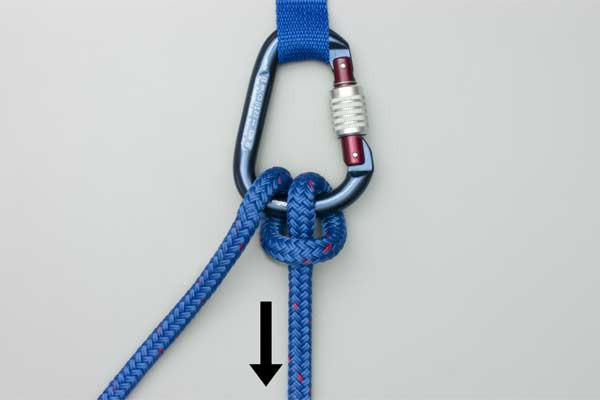
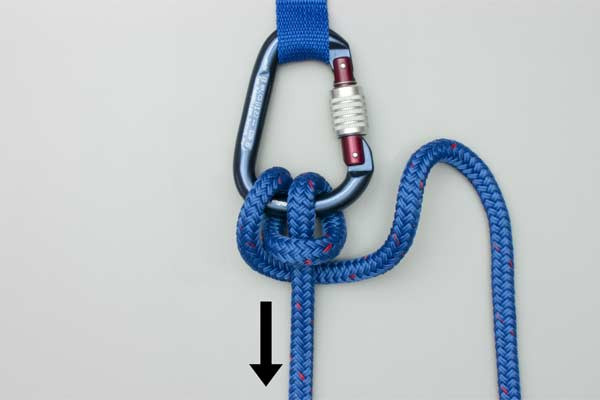
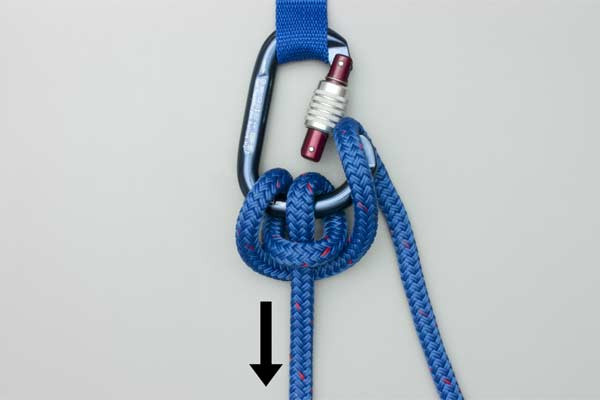
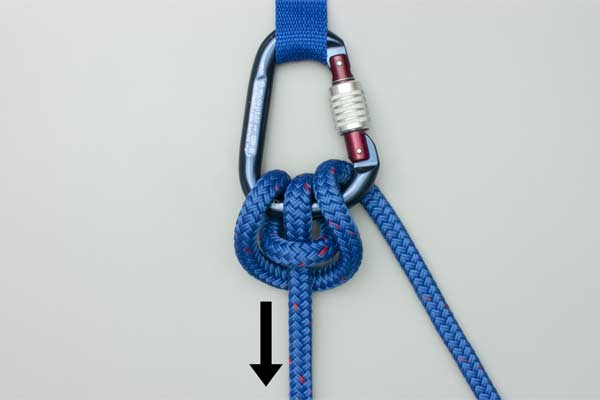
- Start with a Munter Hitch.
- Pass the tail around the loaded end.
- Tuck a bight of the tail through the gate into the carabiner.
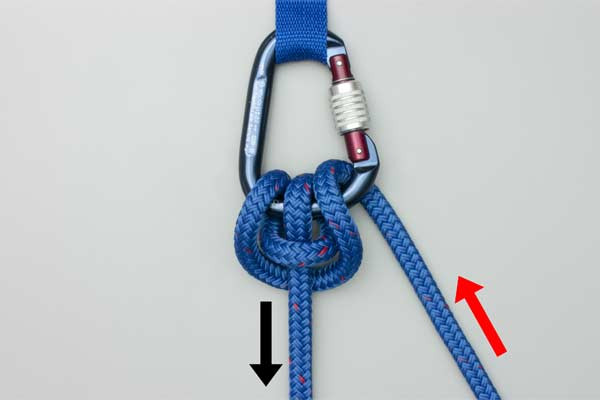
- Ease the tail (red arrow) to lower the load (black arrow).
Common Mistakes to Avoid
Even experienced practitioners can make errors when transitioning from standard outdoor rope techniques to the Super Munter. Safety is paramount when dealing with the high forces this knot is designed to handle.
1. Using a Small Carabiner
If the carabiner is too small, the wraps of the Super Munter will stack on top of each other rather than sitting side-by-side. This creates unpredictable friction and can make it nearly impossible to "ease the tail" smoothly. Always use a dedicated HMS-rated carabiner.
2. Incorrect Gate Orientation
When "tucking a bight of the tail through the gate," ensure the rope is not rubbing against the screw-down sleeve of the locking carabiner. If the rope moves across the sleeve in a direction that unscrews it, the vibration and friction can unlock the gate, leading to a catastrophic failure.
3. Misidentifying the Loaded End
The "loaded end" is the side of the rope attached to the weight you are lowering. If you pass the tail around the wrong side, you will not create the "Super" friction required, and the knot will behave like a poorly dressed standard Munter.
4. Failure to Lock Off
The Super Munter is not "self-locking." If you let go of the brake strand (the tail), the load will fall. If you need to stop the lowering process and free your hands, you must secure the system with a Munter Mule Overhand (MMO) or a similar tie-off.
Related Knots and Splicing
To fully master rope knots, it is helpful to understand the "family tree" of the Super Munter. Here are a few related techniques:
- Munter Hitch: The foundational friction hitch used for belaying or rappelling; simple to tie but prone to twisting the rope.
- Clove Hitch: A quick-hitch used to secure a rope to a carabiner or post; it is a binding knot rather than a friction/slide knot.
- Munter Mule Overhand (MMO): A combination of a slip knot and an overhand knot used to securely lock off a Munter or Super Munter under load.
- Prusik Knot: A friction hitch (or "soft mechanical") that bites onto a standing rope; often used as a safety backup when lowering with a Super Munter.
Final Words
The Super Munter is a powerhouse among outdoor rope techniques. It bridges the gap between simple hitches and complex mechanical descent devices, providing a high-friction solution that can be tied with nothing more than a rope and a single carabiner.
Whether you are a climber preparing for "what-if" scenarios or a rescue professional looking to refine your improvised systems, mastering the Super Munter knot is a vital addition to your skill set. Remember that with increased friction comes increased heat; always monitor your rope for glazing if lowering heavy loads over long distances. Practice in a controlled environment, ensure your carabiner is locked, and always maintain control of the brake strand. By following these principles, you ensure that the Super Munter remains a reliable tool in your technical arsenal.
Disclaimer: Technical ropework is inherently dangerous. Always seek professional instruction and practice in a safe, supervised environment before attempting to use these techniques in high-stakes situations.
