
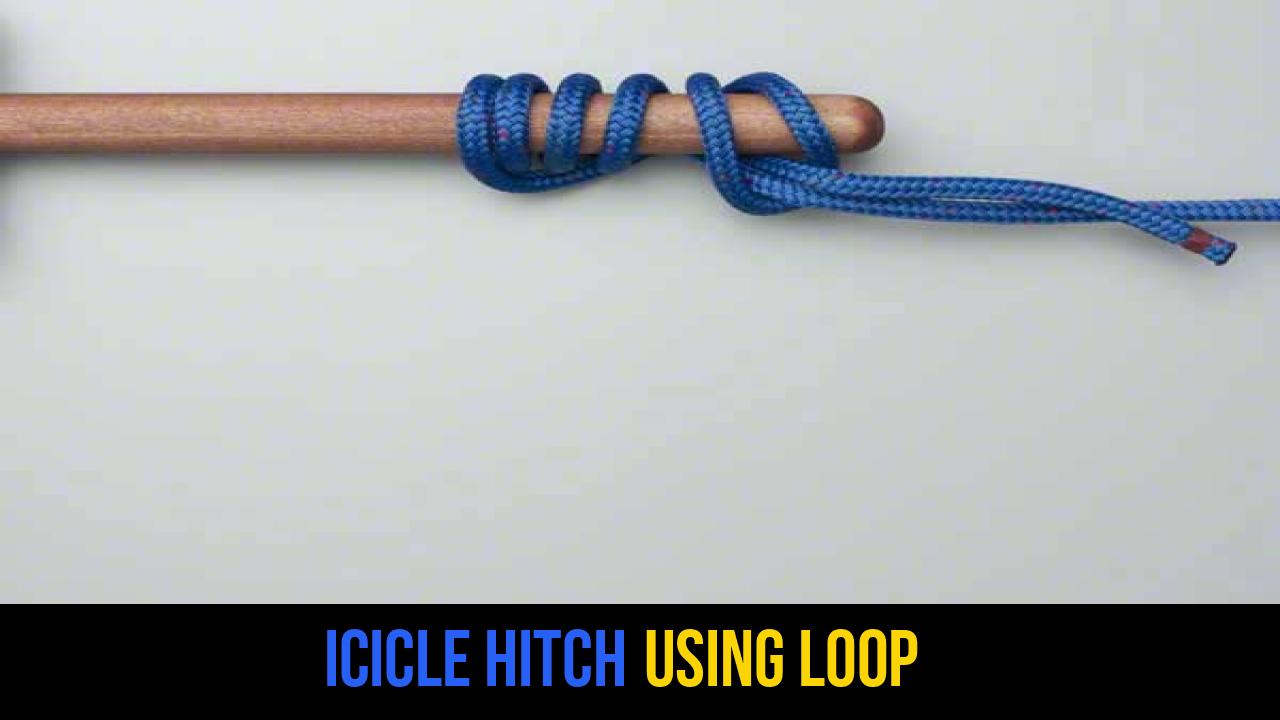
In the world of rope knots, few hitches are as celebrated for their sheer gripping power as the Icicle Hitch. Whether you are a sailor, an arborist, or a general outdoor enthusiast, understanding how to secure a line to a smooth, tapered, or vertical object is a fundamental skill. The Icicle Hitch Using Loop is a specific variation of this knot that utilizes a bight (a loop of rope) to increase security and ease of application, especially when working with the middle of a line or when a quick-release or high-friction grip is required.
The primary challenge with many traditional hitches—such as the Clove Hitch—is that they tend to slip when the force is applied parallel to the object they are tied around. The Icicle Hitch was designed specifically to overcome this. It is widely regarded as one of the best "slide-and-grip" knots available, capable of holding firm even on a smooth plastic pipe or a tapered spar.
By the end of this guide, you will understand the mechanics of this knot, the best materials to use, and the exact steps to execute it perfectly every time.
Alternative Names: Icicle Hitch on a Bight, Bight Icicle Hitch, Parallel Load Hitch.
What Is an Icicle Hitch Using Loop?
The Icicle Hitch Using Loop is a friction hitch (or "slide-and-grip" knot) used to fasten a rope to a cylindrical object. What sets it apart from other outdoor rope techniques is its incredible resistance to sliding. While most knots fail when pulled in the direction of the pole or spar, the Icicle Hitch actually bites harder into the surface as more tension is applied.
Practical Applications
This knot is indispensable in several professional and recreational fields:
- Arboriculture: Used for hauling branches or securing rigging lines to smooth trunks where a vertical pull is necessary.
- Sailing and Maritime: Ideal for securing a line to a tapered spar or a slick railing where other hitches would slide off the end.
- Construction and DIY: Excellent for lifting smooth pipes or poles vertically.
- Search and Rescue: Used in systems where a high-friction grip is needed on a fixed line or pole to stabilize loads.
The "Using Loop" version is particularly effective because it allows the knot to be tied quickly and provides a balanced distribution of tension across the wraps, ensuring the knot remains stable even under fluctuating loads.
Materials and Tools Needed
To tie a successful Icicle Hitch Using Loop knot, the choice of materials is critical. Friction knots rely on the interaction between the rope’s surface and the object’s surface.
Rope Selection
- Synthetic Ropes (Nylon/Polyester): These are generally preferred for their durability. However, very slick ropes (like some HMPE or Dyneema lines) may require extra wraps to ensure the knot doesn’t slip.
- Natural Fiber Ropes (Manila/Hemp): These provide excellent natural "bite" and friction, making them great for traditional applications, though they are less durable in wet conditions.
- Diameter: For most applications, a rope with a diameter between 8mm and 12mm is ideal. Thinner cords (accessory cords) can be used for smaller poles, but the ratio of rope diameter to pole diameter should generally be small to ensure the wraps can "bite" effectively.
Tools and Considerations
- The Pole/Spar: Ensure the surface is free of sharp burrs that could cut the rope. The Icicle Hitch works best on smooth, cylindrical surfaces.
- Gloves: When tightening high-friction knots, wearing leather work gloves is recommended to prevent rope burn.
How to Tie Icicle Hitch Using Loop?
Follow these steps exactly to ensure the knot is secure and functional. Precision in the placement of the wraps is the key to this knot’s success.
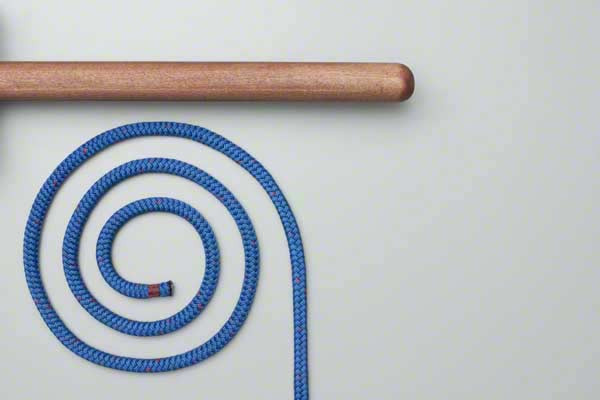
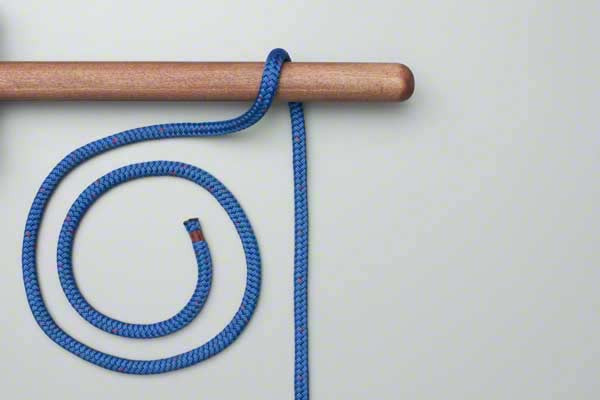
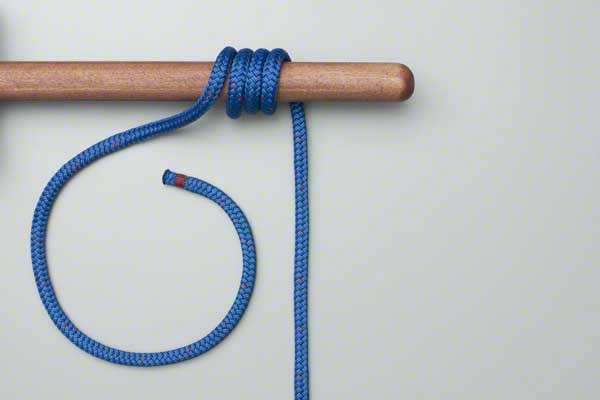
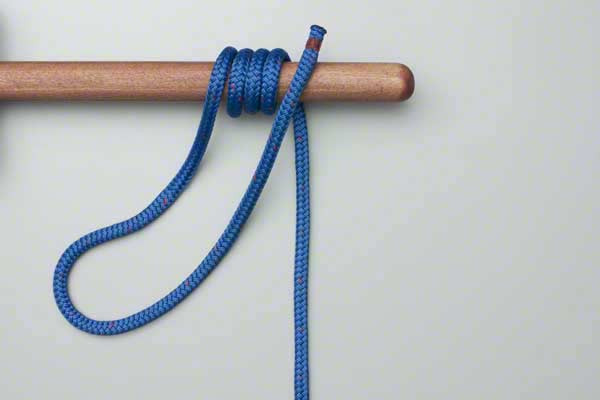
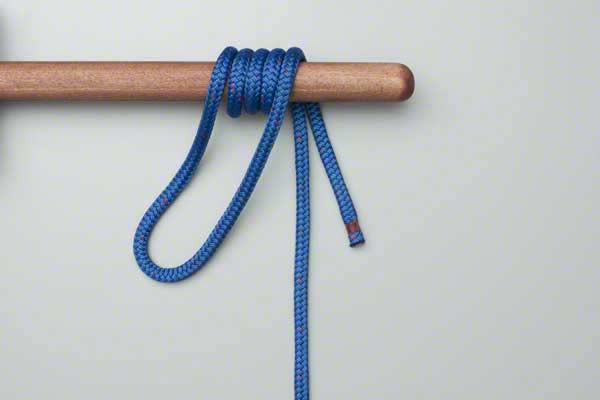
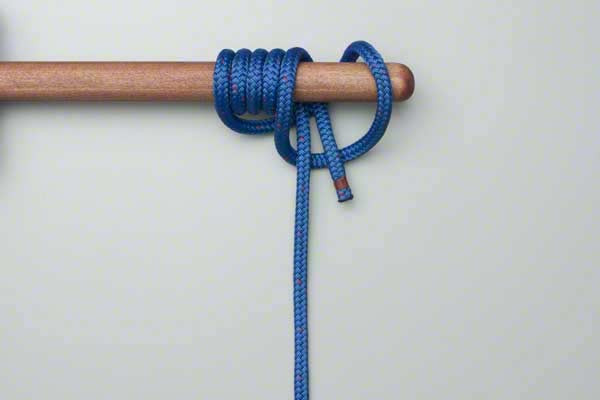
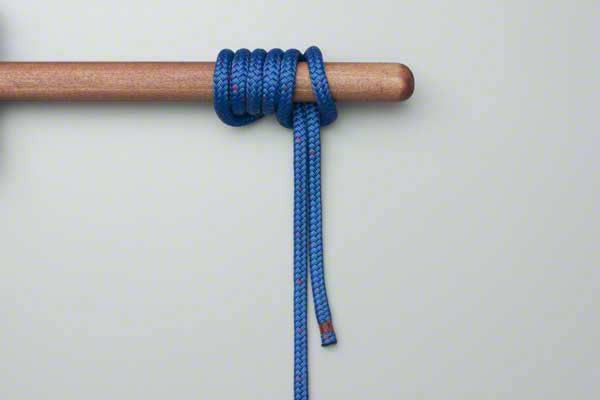
- Wrap the rope around the pole four times moving away from the pole end.
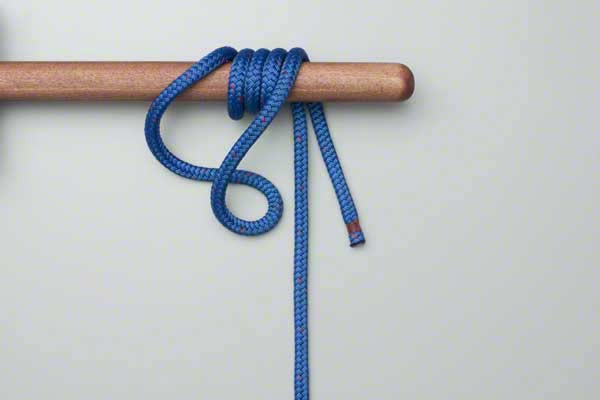
- Leave a loop hanging and pass the end of the rope back over the pole alongside the standing end.
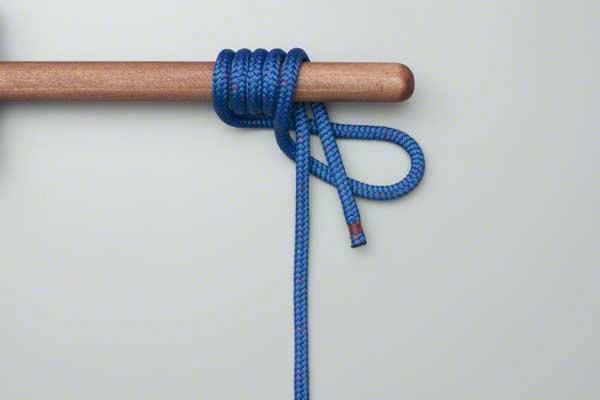
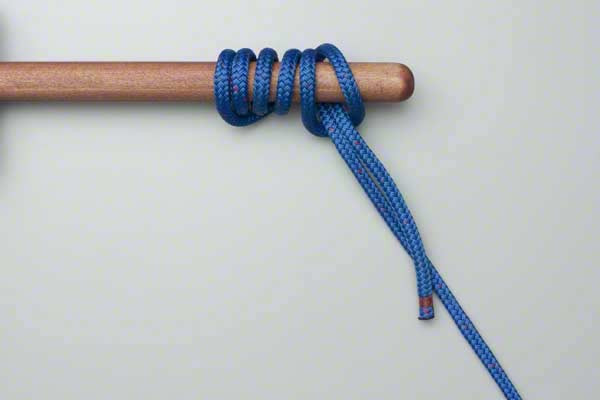
- Pass the loop behind both ends and hook it over the pole.
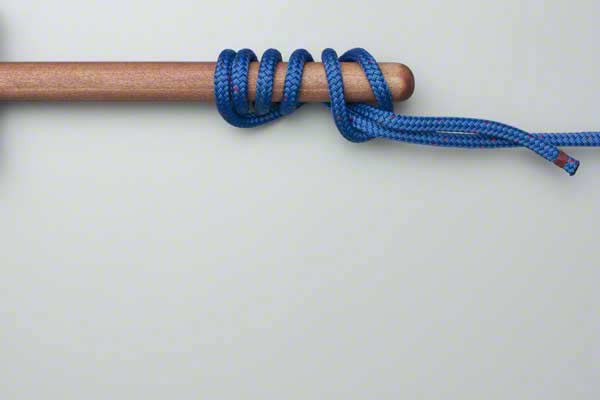
- Tighten the knot.
- The final load should be parallel to the pole.
Common Mistakes to Avoid
Even seasoned professionals can make errors when tying friction hitches. To ensure your Icicle Hitch Using Loop is safe, avoid these common pitfalls:
1. Insufficient Wraps
The instructions call for four wraps. While you can sometimes use more for extremely slick surfaces, using fewer than four significantly reduces the surface area contact, which can lead to the knot sliding under heavy loads.
2. Crossing the Wraps
The four wraps should lie neatly side-by-side. If the wraps cross over one another during the initial tying phase, the pressure will not be distributed evenly, and the "bite" of the knot will be compromised.
3. Failure to "Dress" the Knot
"Dressing" a knot refers to the process of tidying it up and ensuring all parts are aligned before applying a full load. If the Icicle Hitch Using Loop knot is loose or messy when tension is applied, it may deform or fail to grip.
4. Incorrect Direction of Pull
The Icicle Hitch is designed for a parallel load. If you apply tension at a 90-degree angle (perpendicular) to the pole, the knot may still hold, but it is not being used for its intended purpose and may not perform as well as a specialized hitch like the Timber Hitch or Clove Hitch.
5. Ignoring Surface Material
If the pole is covered in oil, ice, or extreme debris, the friction may be neutralized. Always wipe down the area of the pole where the knot will be seated.
Related Knots and Splicing
Understanding how the Icicle Hitch Using Loop fits into the broader family of rope knots will help you choose the right tool for every job.
The Prusik Knot
The Prusik is a classic friction hitch used primarily in climbing and rescue. It is a symmetrical knot that grips a rope when tension is applied and can be moved when the tension is released. Unlike the Icicle Hitch, it is typically used on another rope rather than a solid pole.
The Klemheist Knot
Similar to the Icicle Hitch, the Klemheist is used to grip an object or rope. However, it is strictly unidirectional. It is often preferred when using webbing or slings because it is easier to slide up a line than the Prusik but bites very hard when pulled down.
The Rolling Hitch
The Rolling Hitch is often the "little brother" to the Icicle Hitch. It is simpler to tie but does not have the same extreme gripping power on very smooth or tapered surfaces. It is excellent for taking the tension off a fouled line or for temporary stays.
The Clove Hitch
The Clove Hitch is one of the most common outdoor rope techniques. While it is fast to tie and easy to adjust, it is notorious for slipping or binding under heavy, parallel loads. The Icicle Hitch is essentially the high-performance upgrade to the Clove Hitch for vertical applications.
Final Words
The Icicle Hitch Using Loop is a masterclass in the physics of friction. By utilizing multiple wraps and a secure looping mechanism, it provides a level of security on smooth, vertical surfaces that few other knots can match. Whether you are securing gear in a storm, rigging a complex haul system in the woods, or simply need a reliable way to lift a pipe, this knot is a vital addition to your repertoire of rope knots.
Remember that mastery comes with practice. Take a spare piece of cord and a smooth cylinder—like a broom handle or a PVC pipe—and practice the steps until the movement becomes muscle memory. In the field, a well-tied knot is not just a convenience; it is a critical component of safety and efficiency.
By following the precise instructions provided and selecting the right materials, you can trust the Icicle Hitch Using Loop to hold fast when it matters most. Keep exploring new outdoor rope techniques to expand your capabilities and stay prepared for any challenge nature or the job site throws your way.
