
In the world of professional rigging, arboriculture, and technical rock climbing, the ability to secure a load safely and efficiently is a foundational skill. Among the various outdoor rope techniques used by experts, the Basket Hitch stands out as one of the most reliable and high-strength methods for connecting a sling to an anchor point or a load.
Whether you are an arborist securing a heavy limb for removal or a climber setting up a top-rope anchor, understanding the mechanics of the Basket Hitch knot is essential. This hitch is prized for its simplicity and its ability to distribute weight effectively across the material, theoretically doubling the load capacity of the sling when compared to a single-leg vertical hitch.
Commonly referred to by several names depending on the industry, this hitch is a staple in any rigger’s toolkit.
Alternative Names: U-Hitch, Double-Leg Hitch, Cradle Hitch, or Simple Loop Hitch.
What Is a Basket Hitch?
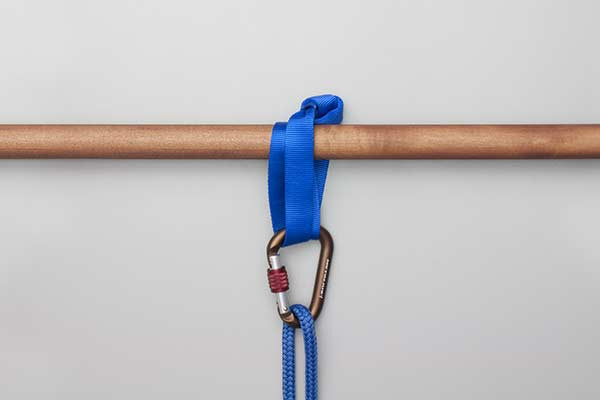
A Basket Hitch is a rigging configuration where a sling or webbing is passed around an object (such as a tree branch, a steel beam, or a structural anchor) and both ends of the sling are brought back together to be secured by a single connector, typically a carabiner or a shackle.
The name "basket" comes from the way the sling cradles the object, much like a basket holding its contents. In technical terms, this hitch is highly efficient because it utilizes two legs of the sling to support the load. This means that if you have a sling rated for 20kN in a vertical pull, a properly executed Basket Hitch can technically support up to 40kN, provided the angles are kept narrow and the hardware is rated for the force.
Practical Applications
The versatility of the Basket Hitch makes it indispensable in several fields:
- Arboriculture: Used to attach rigging lines to branches for controlled lowering.
- Rock Climbing: A primary method for girth-hitching or "basket-hitching" trees or large rock horns to create a bomber anchor.
- Industrial Rigging: Used to lift heavy pipes, beams, or machinery where a secure, non-slip grip is required.
- Search and Rescue (SAR): Employed in litter tie-ins and system anchors where redundant strength is paramount.
Materials and Tools Needed
To perform a Basket Hitch correctly, you need high-quality components that meet the safety standards of your specific activity (e.g., UIAA for climbing or ANSI for industrial work).
1. Webbing Sling or Rope
While this hitch can be made with a rope, it is most commonly performed with a webbing sling. Tubular nylon webbing is the standard in the outdoor industry because it is soft, supple, and holds knots well. For the specific method described below, a "closed-loop" created with a Beer Knot is preferred.
2. The Beer Knot
The Beer Knot is a specialized knot used to join two ends of tubular webbing. By sliding one end of the webbing inside the other, it creates a clean, high-strength loop that is less bulky than a standard Water Knot.
3. Carabiner
A high-strength, locking carabiner is necessary to "capture" the two loops of the hitch. In professional settings, an auto-locking or screw-gate carabiner ensures that the gate does not accidentally open under load or vibration.
4. Edge Protection
If you are wrapping the Basket Hitch around a rough surface, such as a concrete beam or a jagged rock, edge protection (like a heavy-duty sleeve) is vital to prevent the webbing from fraying or snapping under tension.
How to Tie a Basket Hitch?
To ensure maximum safety and strength, follow these instructions precisely. This specific method utilizes a webbing sling pre-joined with a Beer Knot.
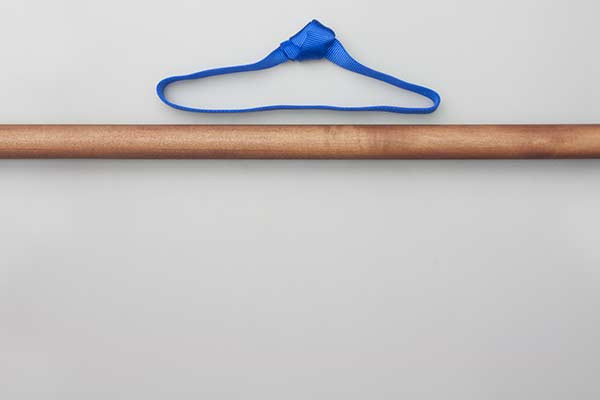
- Position the webbing sling above the branch with the Beer Knot centered.
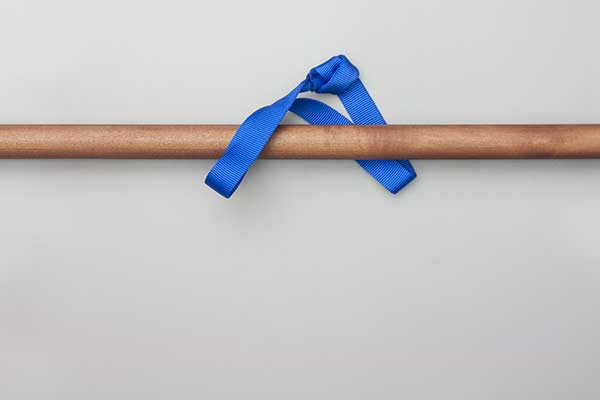
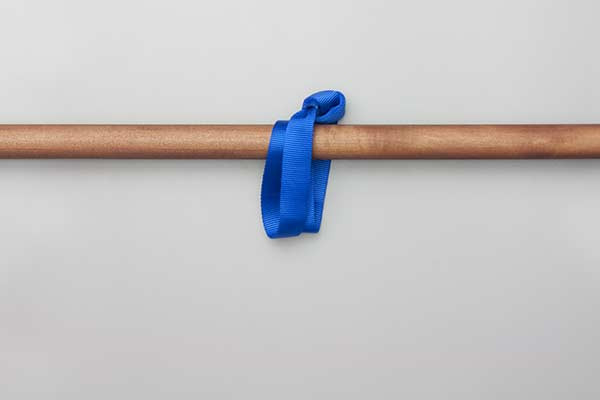
- Wrap the two ends of the sling down each side of the branch and bring them together.
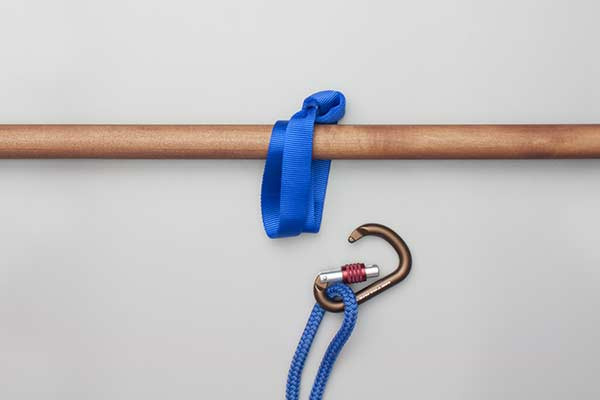
- Hook the Carabiner into the loops to take the load.
Common Mistakes to Avoid
Even though the Basket Hitch is straightforward, small errors can lead to catastrophic failure. Pay close attention to these safety considerations:
1. Tri-Loading the Carabiner
One of the most dangerous mistakes is "tri-loading" the carabiner. When the two loops of the Basket Hitch are pulled at a wide angle, they can apply force to the spine and the gate of the carabiner simultaneously. Carabiners are designed to be loaded along their major axis (top to bottom). To avoid this, keep the "legs" of the hitch as parallel as possible.
2. Knot Placement
As noted in the instructions, the Beer Knot should be centered on top of the branch or anchor. You should never place a knot directly in the carabiner or on a sharp bend, as this significantly reduces the breaking strength of the webbing.
3. Sharp Bends and "D/d Ratio"
The diameter of the object you are wrapping (D) should be significantly larger than the diameter of the rope or webbing (d). If you wrap a thin sling around a very sharp or small-diameter edge, the internal fibers of the webbing can be crushed or severed under load.
4. Overlooking Wear and Tear
Before every use, inspect your webbing for "fuzziness," UV discoloration, or nicks. Because the Basket Hitch is often used in high-friction environments (like dragging against tree bark), the material degrades faster than a standard rope.
Related Knots and Splicing
Understanding the Basket Hitch is just one part of mastering rope knots. Here are a few related techniques often used in conjunction with rigging:
- Girth Hitch: A simple loop-through knot used for attaching slings to anchors; it’s faster than a basket hitch but reduces sling strength by nearly 30-50%.
- Beer Knot: A specialized knot used to join two ends of tubular webbing by inserting one inside the other, creating a high-strength, streamlined loop.
- Clove Hitch: A versatile binding knot used to secure a rope to a post; it is easily adjustable but can slip under extremely heavy, cyclic tension.
- Figure-Eight on a Bight: A secure, non-slip loop knot used frequently in climbing to attach to a harness; it is highly recognizable and easy to inspect.
- Water Knot: The traditional way to join flat webbing, though it is bulkier than the Beer Knot and requires frequent inspection as it can "creep" over time.
Final Words
The Basket Hitch is a masterclass in efficiency and strength. By following the simple steps of positioning your sling, wrapping the load, and securing the loops with a rated carabiner, you create a connection point that is significantly stronger than many other hitches.
For the modern outdoorsman or technician, mastering outdoor rope techniques like the Basket Hitch is about more than just utility—it is about safety. Always remember to inspect your gear, understand the physics of your load, and practice your knots in a controlled environment before heading into the field. With the right knowledge and high-quality gear, the Basket Hitch will become a reliable pillar of your rigging systems for years to come.