
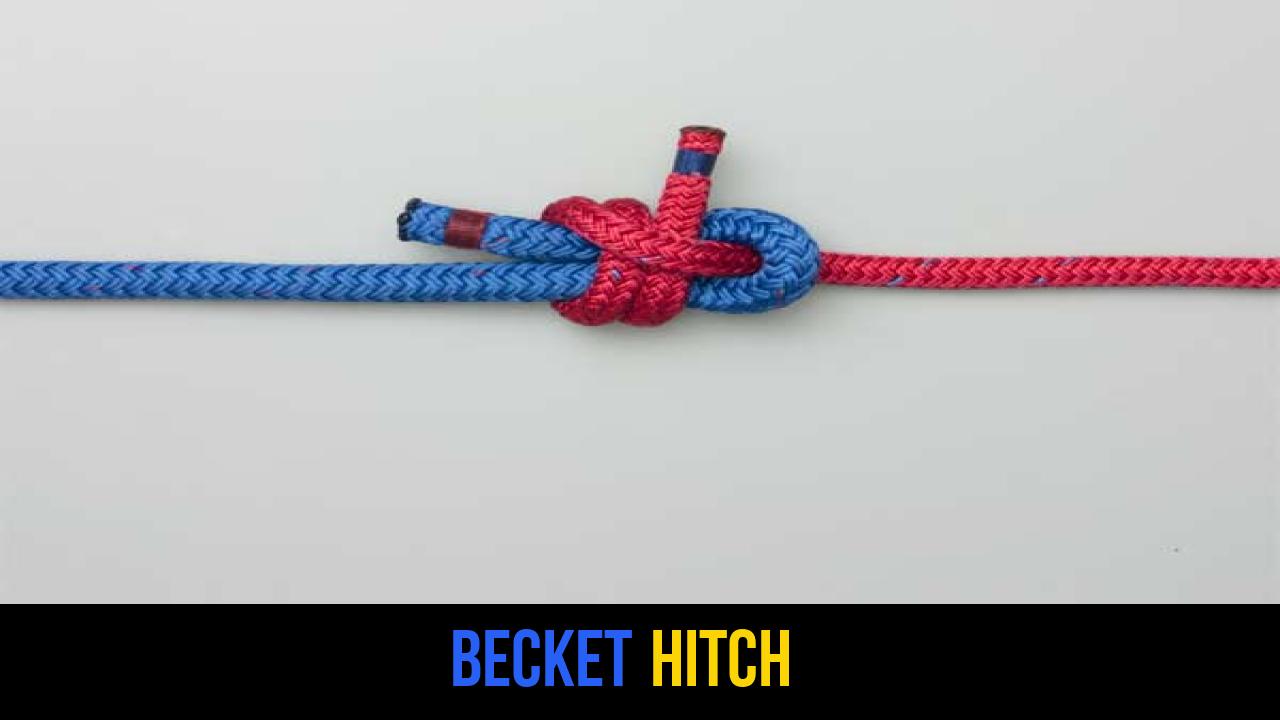
In the world of rope knots, few are as fundamentally important yet frequently overlooked as the Becket Hitch. As an essential tool for sailors, arborists, and outdoor enthusiasts, this knot serves a specific and vital purpose: securely joining two ropes of unequal diameters or attaching a line to a pre-formed eye (a "becket").
Whether you are rigging a hammock in the deep woods or managing a complex pulley system on a sailboat, mastering the Becket Hitch is a hallmark of a skilled outdoorsman. It is renowned for its simplicity, its ability to hold under significant tension, and the ease with which it can be untied even after being heavily loaded. In many ways, it is the "brother" to the common Sheet Bend, distinguished primarily by its application to a fixed loop or "becket."
Also known as: Sheet Bend, Weaver’s Knot, or Beating-up Hitch.
What Is a Becket Hitch?
The Becket Hitch is a functional hitch used to fasten a rope to an eye or a loop at the end of another rope or a piece of hardware. Technically, when you tie this knot into a fixed loop (like the eye of a block or a spliced loop), it is called a Becket Hitch. If you were to tie it using two loose ends of rope, it would be referred to as a Sheet Bend.
Practical Uses and Applications
The versatility of this knot makes it a staple in various industries:
- Maritime and Sailing: Its most common use is attaching a line to the "becket" of a pulley block. This allows for the creation of mechanical advantage in tackle systems.
- Hammock Camping: Many lightweight hammock suspensions use a variation of the Becket Hitch to connect a thin dyneema "whoopie sling" or lead line to a thicker tree strap.
- Search and Rescue: When ropes of different materials or thicknesses must be joined quickly, the Becket Hitch provides a reliable, non-jamming solution.
- General Utility: From extending a clothesline to securing loads in a truck bed, this knot is a go-to for outdoor rope techniques.
Materials and Tools Needed
Before you begin practicing, it is important to understand that the security of the Becket Hitch relies heavily on the materials used. Because this knot is often used to join unequal lines, the choice of rope is critical.
Rope Types
- The Thicker Rope (Blue): Often called the "static" or "standing" line. In professional settings, this might be a polyester double-braid or a thick nylon rope.
- The Thinner Rope (Red): This is the "working" line. It should ideally be more flexible than the thicker rope to allow it to "bite" into the bight effectively.
Considerations for Safety
- Texture: Highly "slick" ropes (like some high-modulus polyethylenes) may require a "Double Becket Hitch" (an extra turn) to prevent slipping.
- Tensile Strength: Always ensure that both ropes are rated for the load you intend to apply. The knot is only as strong as its weakest point.
- Inspection: Before tying, inspect your ropes for fraying, UV damage, or chemical degradation.
How to Tie Becket Hitch?
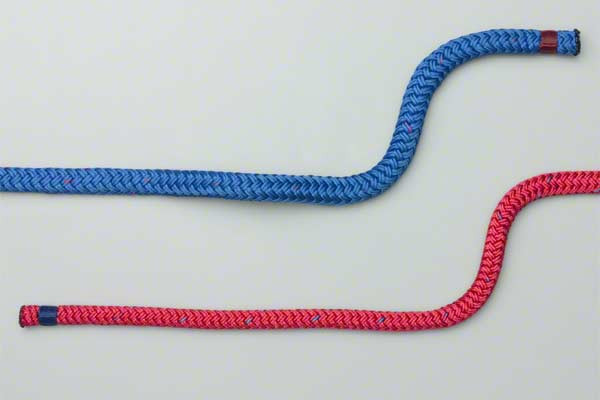
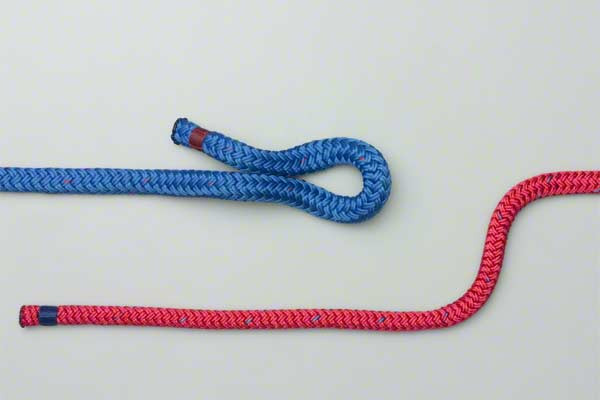
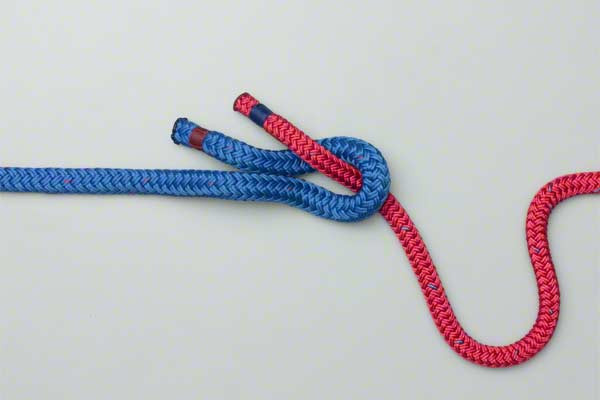
To ensure maximum security and proper form, follow these steps exactly. We will refer to the thicker rope as the blue rope and the thinner rope as the red rope to help you visualize the process.
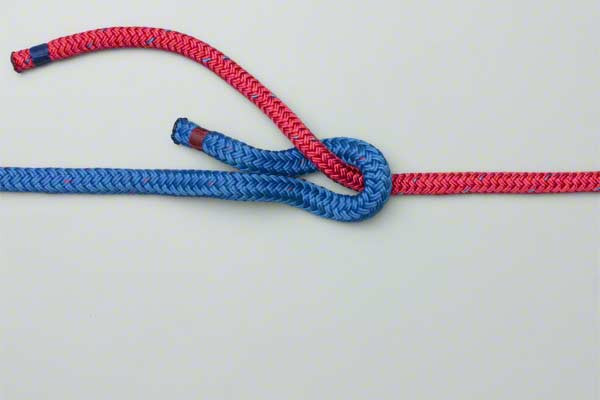
- Form a bight in the thicker rope (blue) and hold it in one hand.
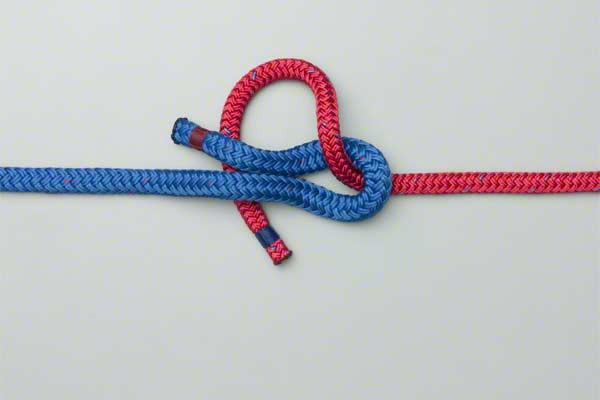
- Pass the thinner rope (red) through the bight and behind the (blue) tail and standing ends in that order.
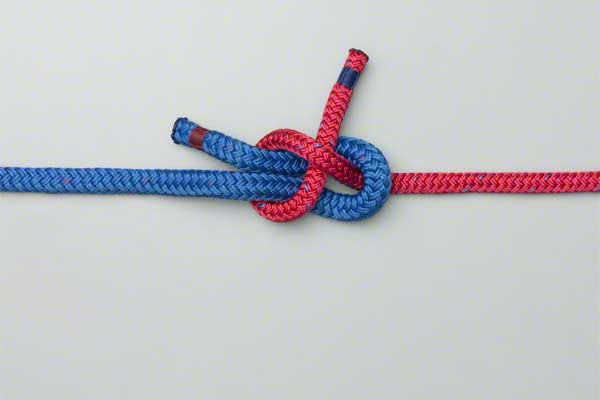
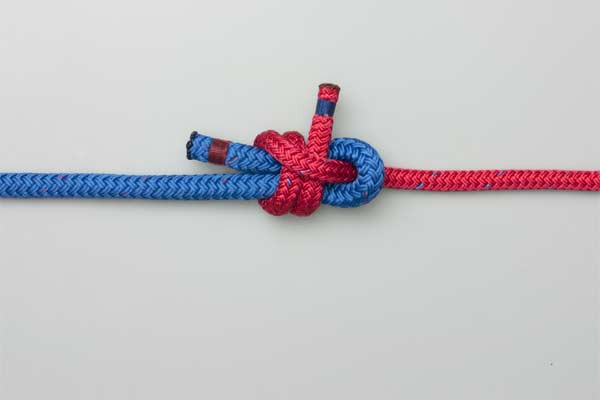
- Finally, tuck the smaller rope under itself to finish the knot.
Pro Tip: After tucking the smaller rope, pull all four ends firmly to "set" the knot. This ensures the thinner rope is properly trapped against the bight of the thicker rope.
Common Mistakes to Avoid
Even though the Becket Hitch is straightforward, a few common errors can lead to knot failure. As an expert in outdoor rope techniques, I recommend paying close attention to these details:
1. Reversing the Ropes
The most common mistake is trying to form the bight with the thinner rope. The Becket Hitch works because the thinner rope wraps around the thicker, more stable bight. If you reverse them, the thinner rope may collapse the bight of the thicker rope, causing the knot to slip or capsize.
2. Tail Placement
Both tails (the short ends of the ropes) should end up on the same side of the knot. If the tails are on opposite sides, the knot is significantly weaker and prone to slipping under cyclical loading.
3. Insufficient Tail Length
Always leave plenty of "tail" (at least 5-10 times the diameter of the rope). Ropes tend to stretch and settle under load; a short tail can be sucked back into the knot, leading to a total failure.
4. Dressing the Knot
A "sloppy" knot is a dangerous knot. Ensure the wraps are parallel and not crossing over each other in an unintended way. Rope knots perform best when their geometry is clean and compressed.
Related Knots and Splicing
Understanding the Becket Hitch is often a gateway to learning other essential hitches and bends. Here are a few related techniques:
- The Sheet Bend: Identical in structure to the Becket Hitch, used specifically for joining two separate rope ends of different diameters.
- The Double Sheet Bend: A more secure version where the thinner rope is wrapped twice around the bight; essential for synthetic or wet ropes.
- The Bowline: Often used to create the permanent "becket" or loop that the Becket Hitch is then tied into.
- Eye Splice: A permanent way to create a loop in a rope’s end, often found on the blocks where a Becket Hitch is traditionally applied.
Technical Deep Dive: Why the Becket Hitch Works
From a mechanical perspective, the Becket Hitch is a masterpiece of friction. When the thinner rope (red) passes behind the two strands of the bight (blue) and then tucks under itself, it creates a "nipping point."
As tension is applied to the standing parts of the ropes, the tuck is squeezed against the bight. The more you pull, the tighter the thinner rope grips itself and the blue rope. This is why the knot is so effective for unequal diameters; the smaller rope has a smaller radius of curvature, allowing it to "bite" into the surface of the thicker rope more effectively than a thicker rope could bite into a thinner one.
Material Science in Knotting
When using modern synthetic fibers like Dyneema or Spectra, the coefficient of friction is much lower than that of traditional nylon or manila. In these cases, technical specialists often recommend the Double Becket Hitch. By adding a second wrap around the bight before tucking the tail, you double the surface area of contact, drastically increasing the friction and security of the knot.
Practical Applications in the Field
Case Study: The Hammock Suspension
In the lightweight backpacking community, weight is everything. Hikers often use a 1-inch polyester webbing strap around a tree to protect the bark. To connect their thin hammock lead line to this strap, they use a Becket Hitch. It is preferred over hardware (like carabiners) because it weighs nothing and can be untied instantly by "breaking" the back of the knot, even after a 200-pound hiker has spent the night in the hammock.
Case Study: Sailing Blocks
On a classic sailing vessel, many blocks (pulleys) have a small metal or rope loop at the bottom called the becket. To start a "luff tackle" or a "block and tackle" system, the line must be anchored to this becket. The Becket Hitch is the standard for this application because it remains low-profile and does not interfere with the rotation of the sheaves (the wheels inside the pulley).
Final Words
The Becket Hitch is a testament to the elegance of traditional seamanship and outdoor utility. By understanding the simple logic of forming a bight in a thicker line and securing it with a thinner one, you gain the ability to adapt to countless situations in the wild or on the water.
Remember, the key to proficiency with rope knots is practice. Take two pieces of scrap rope—ideally of different colors and thicknesses—and repeat the steps until the motion becomes muscle memory. Whether you are securing a load or setting up camp, the Becket Hitch is a reliable partner that will not let you down.
Summary of Key Takeaways:
- Always form the bight with the thicker rope.
- Ensure both tails are on the same side.
- Use the Double version for slippery synthetic ropes.
- Keep the knot dressed and the tails long.
By incorporating the Becket Hitch into your repertoire of outdoor rope techniques, you ensure a safer, more efficient experience in all your technical endeavors.
