

In the world of outdoor rope techniques, few hitches offer the specific combination of security and stability found in the Boom Hitch. Whether you are a seasoned sailor, an arborist, or a camping enthusiast, mastering various rope knots is a fundamental skill that ensures safety and efficiency in the field. The Boom Hitch is a specialized binding knot traditionally used to secure a rope to a spar, pole, or "boom," particularly when the load might be subject to heavy tension or shifting angles.
While many beginners start with the basic Clove Hitch, they quickly realize that under high-tension or vertical loads, simpler hitches can slip or become "capsized." The Boom Hitch addresses these vulnerabilities through a series of strategic wraps that increase friction and distribute pressure across the surface of the object. This article provides an in-depth look at this robust knot, its practical applications, and a definitive guide on how to tie it correctly.
Alternative Names: The Boom Hitch is occasionally referred to as a variation of a Spar Hitch or a High-Friction Binding Knot.
What Is a Boom Hitch?
The Boom Hitch is a high-security friction hitch. Unlike a standard hitch that might rely on a single crossover to hold its form, the Boom Hitch utilizes multiple turns around the object—typically a cylindrical spar or boom—to create a "snubbing" effect. This mechanical advantage allows the knot to grip the surface tightly, making it excellent for situations where the rope must not slide along the length of the pole.
Practical Applications
- Maritime Use: As the name suggests, it is frequently used in sailing to secure lines to the boom or other spars where a secure, non-slip attachment is required.
- Construction and Rigging: In traditional timber framing or scaffolding, the Boom Hitch can be used to hoist poles or secure cross-beams.
- Search and Rescue: When creating high-line systems or anchors around trees or sturdy posts, this knot provides the necessary reliability.
- General Outdoor Utility: It is perfect for hanging heavy gear, securing hammocks to thick branches, or creating a tensioned clothesline in a basecamp.
Materials and Tools Needed
To tie a successful Boom Hitch, you must consider both the rope and the object you are tying it to.
Rope Considerations
- Static Rope: For most applications involving the Boom Hitch, a static or low-stretch rope (like polyester or nylon) is preferred. This ensures the knot remains tight without the "bounce" found in dynamic climbing ropes.
- Diameter: A rope with a diameter between 8mm and 12mm is generally easiest to handle for this specific knot. Thinner cords may bite into the surface too much, while excessively thick ropes might become bulky.
- Texture: A "supple" rope with a braided sheath offers better knot security than a very stiff, plastic-coated utility cord.
The "Boom" or Object
- Surface Texture: The Boom Hitch works best on semi-rough surfaces like wood, matte-finished metal, or composite spars.
- Diameter of the Spar: Ensure the object is at least twice the diameter of the rope to allow the turns to seat properly without overlapping awkwardly.
How to Tie a Boom Hitch?
Precision is key when executing outdoor rope techniques. Follow these steps exactly to ensure the knot is secure and functional.
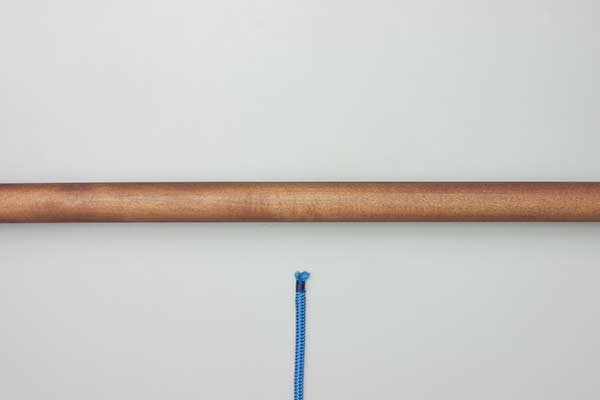
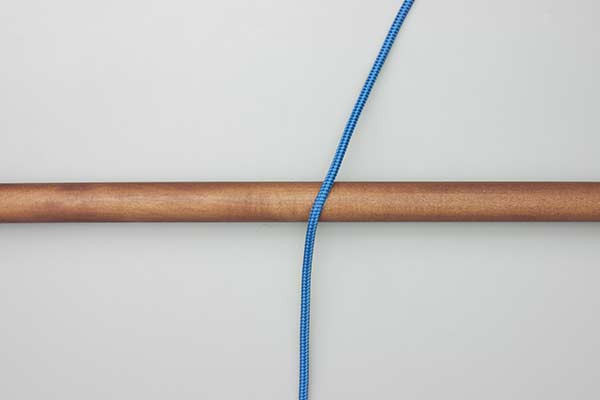
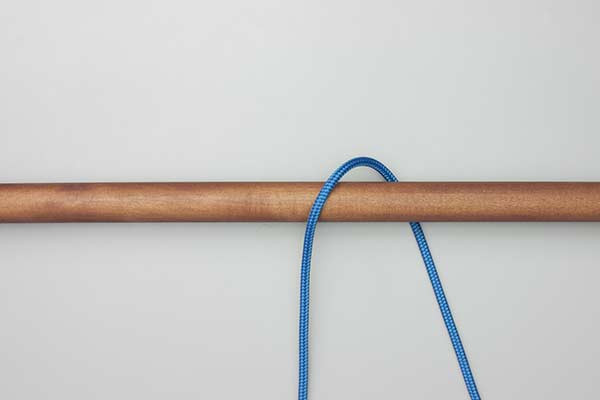
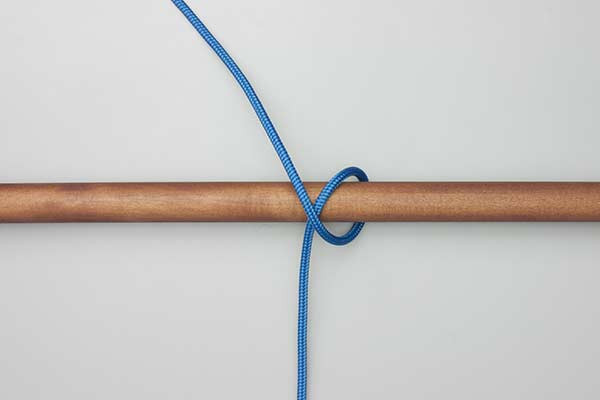
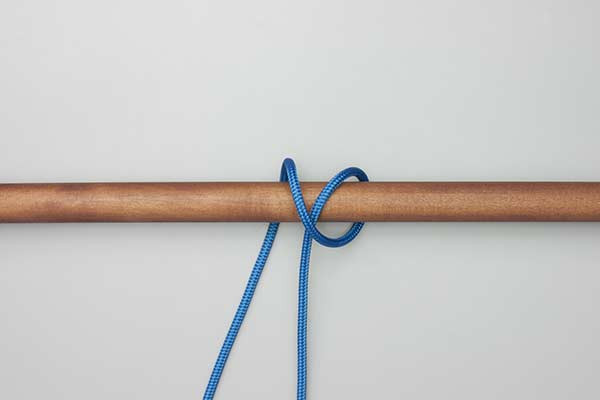
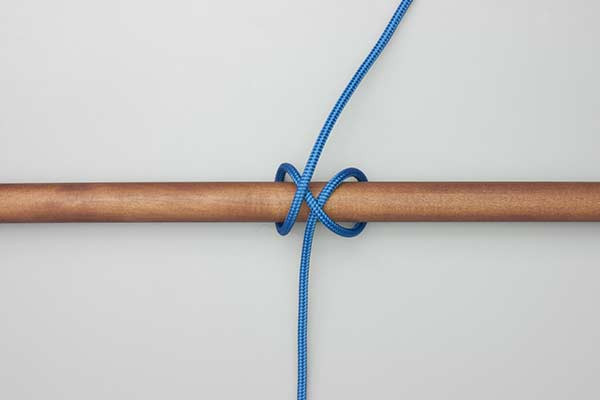
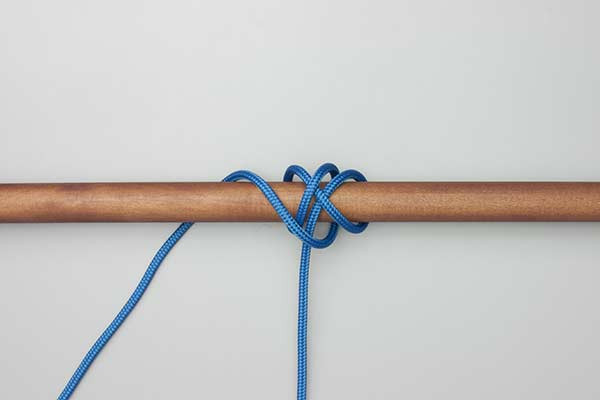
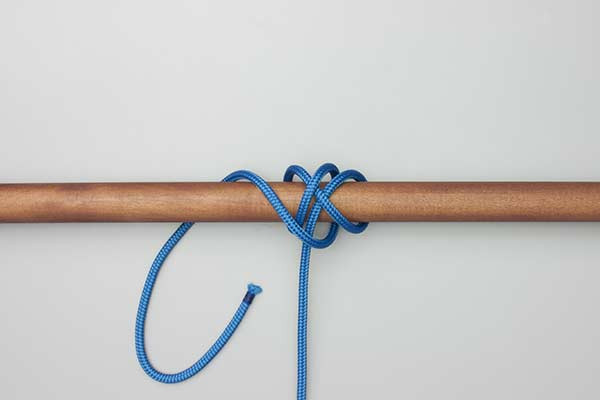
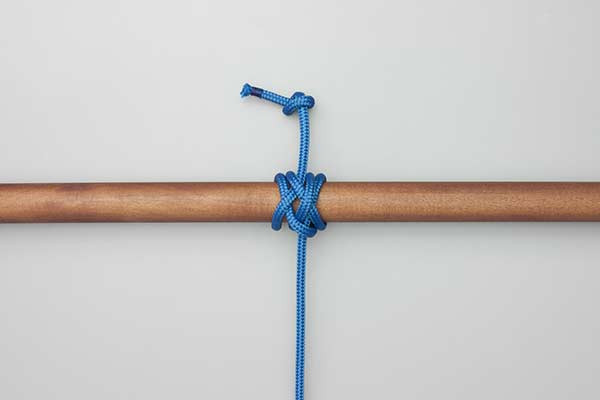
- Wrap turn one around the boom to one side and turn two around the boom towards the other side.
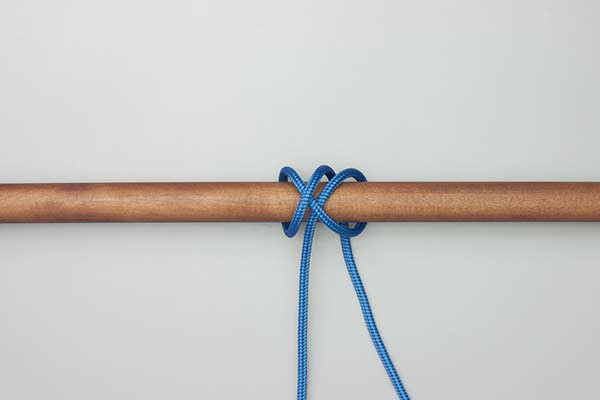
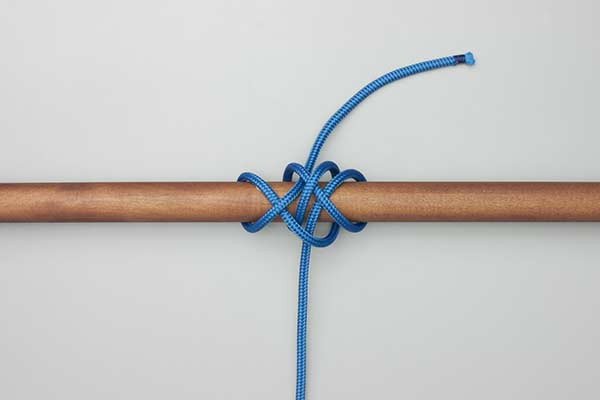
- Wrap turn three towards the original side but on top of the first turn.
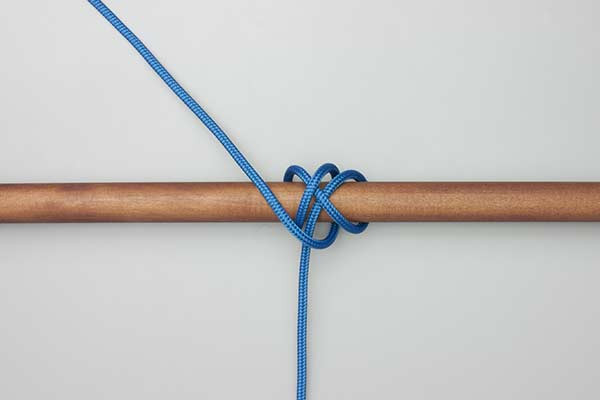
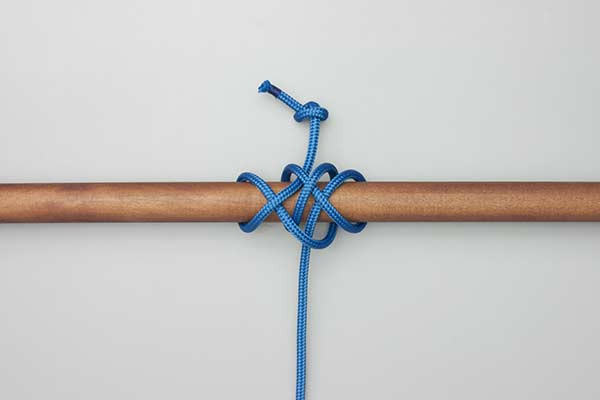
- Finally wrap turn four outside and then under, turn two.
- Tie an Overhand Knot in the tail and tighten the knot.
Common Mistakes to Avoid
Even experienced riggers can make errors when tying complex rope knots. To ensure your Boom Hitch is safe, avoid these common pitfalls:
- Crossing the Turns Incorrectly: The security of the Boom Hitch relies on the specific sequence of the wraps. If turn three does not sit directly on top of turn one, the friction balance is lost, and the knot may slip.
- Insufficient Tail Length: Always leave enough "tail" after the final Overhand Knot. A tail that is too short can be pulled back into the knot under extreme load, leading to total failure. Aim for at least 4-6 inches of tail.
- Loose Initial Wraps: If the first two turns are loose, the subsequent turns will not be able to compress them against the boom. Always maintain tension on the standing part of the rope while tying.
- Neglecting the Safety Knot: The final Overhand Knot is not optional. It acts as a stopper that prevents the working end from sliding back through the hitch if the load shifts.
- Using Slippery Rope: On very smooth surfaces (like polished stainless steel), synthetic ropes like polypropylene can slide. In these cases, consider an extra turn or using a rope with a more "toothy" grip.
Related Knots and Splicing
Understanding the Boom Hitch is a gateway to learning other essential outdoor rope techniques. Here are a few related knots that serve similar purposes:
The Clove Hitch
The Clove Hitch is the simplest way to secure a rope to a post. While fast to tie, it is prone to slipping if the rope is rotated or if the tension is inconsistent, making the Boom Hitch a superior choice for critical loads.
The Rolling Hitch
The Rolling Hitch is designed to resist longitudinal pull along a spar. It is similar to the Boom Hitch in its use of multiple turns but is specifically optimized for pulling in one direction rather than providing a general-purpose grip.
The Timber Hitch
Used primarily for dragging logs or heavy spars, the Timber Hitch is a self-tightening loop. It is very secure under a constant pull but can easily fall apart if the tension is removed, unlike the more stable Boom Hitch.
The Icicle Hitch
The Icicle Hitch is perhaps the most heavy-duty friction hitch. It is designed to hold a load even when pulled parallel to a smooth pole. It is more complex than the Boom Hitch but offers maximum security in vertical applications.
Final Words
The Boom Hitch is an indispensable tool in the arsenal of anyone who works with ropes. Its ability to provide a high-friction, secure attachment to a cylindrical object makes it a standout choice among rope knots. By following the specific four-step wrapping process and securing the end with an Overhand Knot, you create a termination that is both reliable and professional.
As with all outdoor rope techniques, practice is the only way to achieve mastery. We recommend practicing the Boom Hitch with different rope types and on various diameters of wood or metal until the movements become second nature. Always inspect your knots before applying a heavy load, and remember that a well-tied knot is the first line of defense in any rigging or outdoor scenario. Whether you are on the deck of a boat or setting up a complex campsite, the Boom Hitch will serve you well for years to come.
