
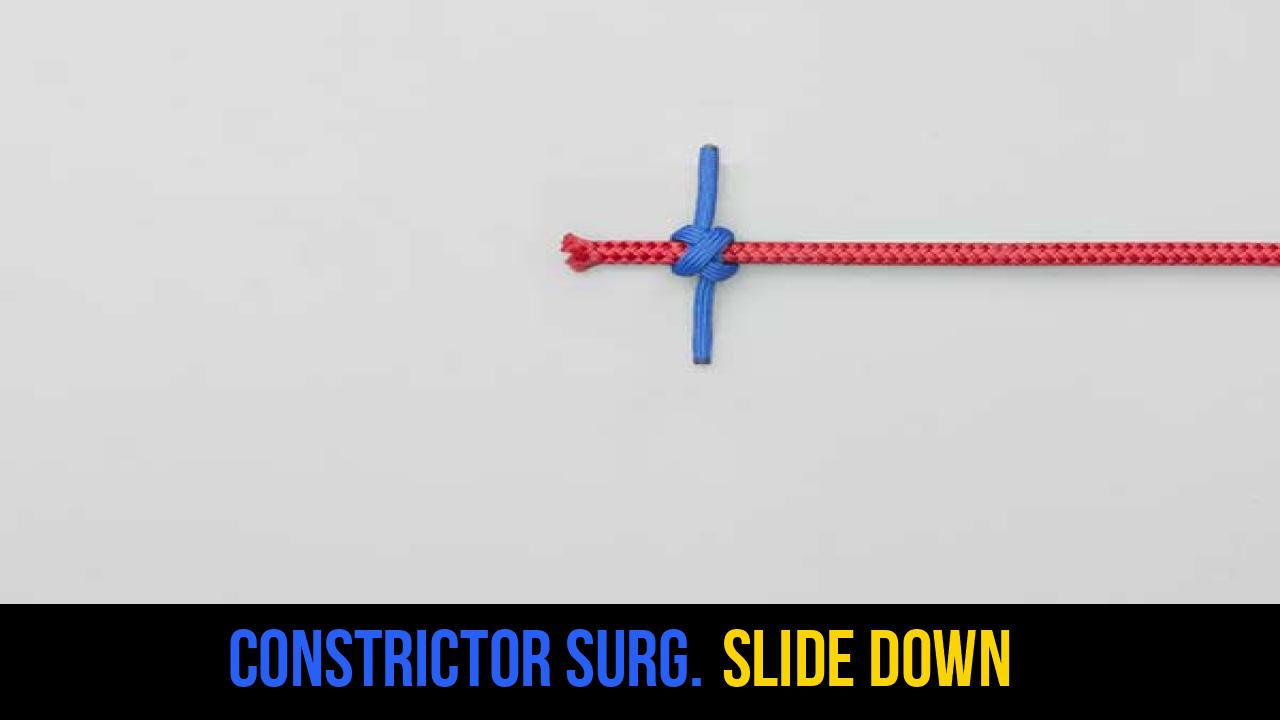
In the world of technical outdoor gear and rope mastery, few things are as vital as the ability to secure a load or bind materials with absolute confidence. Among the vast library of rope knots, the Constrictor Surg. Slide Down stands out as a specialized variation of the classic constrictor knot. This knot is renowned for its incredible gripping power and its ability to remain secure even under significant vibration or movement.
Whether you are an expert in bushcraft, a technical climber managing gear, or an outdoor enthusiast looking to expand your utility skills, understanding how to apply mechanical advantage through knots is a game-changer. The "Slide Down" method is a specific procedural approach that allows the user to position the knot with surgical precision, often utilizing tools to maintain tension before the final set.
Alternative names for this and similar techniques include: The Surgeon’s Constrictor, Sliding Miller’s Knot, Forceps Constrictor, and the Technical Binding Hitch.
What Is a Constrictor Surg. Slide Down?
The Constrictor Surg. Slide Down is a high-friction binding knot designed to be semi-permanent. Unlike a standard Clove Hitch, which can slip if the tension is inconsistent, the Constrictor family of knots features an internal "locking" mechanism where the rope ends are pinned under a riding turn.
In a technical or "outdoor workshop" context, the Constrictor Surg. Slide Down is used when you need to bind an object (often referred to in historical texts as the "vessel" or the "workpiece") where manual finger placement might be difficult or where extreme tension must be maintained during the transition from the tool to the object.
Practical Applications in the Outdoors:
- Tool Repair: Securing a split wooden handle on an axe or shovel.
- Splicing Prep: Holding rope strands in place before beginning a permanent splice.
- Gear Compression: Binding rolled-up sleeping pads or heavy-duty canvas bags.
- Emergency Lashing: Creating a rigid frame for a litter or shelter where rope slippage could be catastrophic.
Materials and Tools Needed
To successfully execute the Constrictor Surg. Slide Down, you must select the right materials. Because this knot relies on friction and "biting" into itself, the type of cordage used is critical.
1. Rope Selection
- Paracord (550 Cord): Excellent for general practice and light-duty binding. Its slight elasticity helps the knot "lock" into place.
- Bank Line (Tarred Nylon): The preferred choice for many outdoor professionals. The tarred coating adds extra grit, making the Constrictor Surg. Slide Down nearly impossible to undo once tightened.
- Static Cord: High-modulus polyethylene (HMPE) or polyester cords are great for high-strength applications, though they require more effort to "set" the knot.
2. Tools
- Forceps or Long-Nose Pliers: In this specific technique, a clamping tool is used to guide the knot and hold the target object.
- Cutting Tool: A sharp knife or specialized rope cutter is necessary to trim the ends once the knot is finalized.
How to Tie Constrictor Surg. Slide Down?
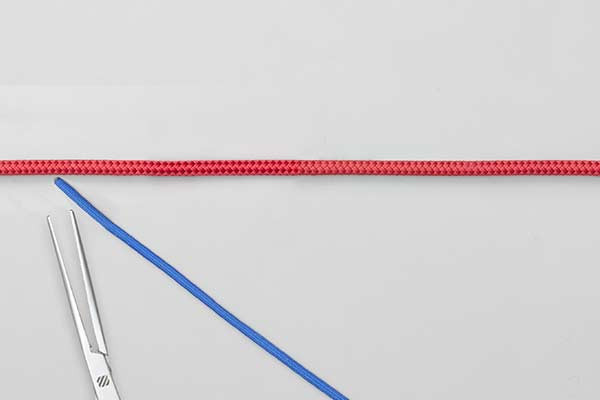
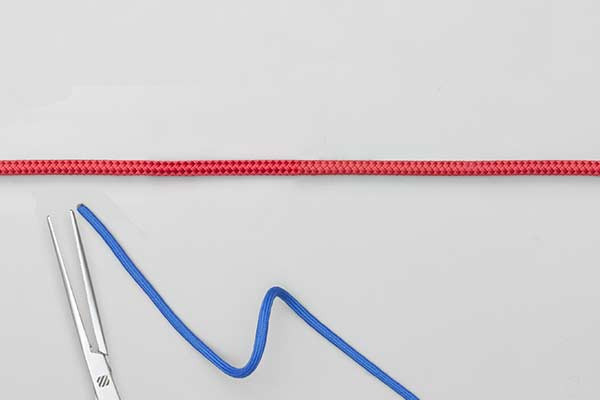
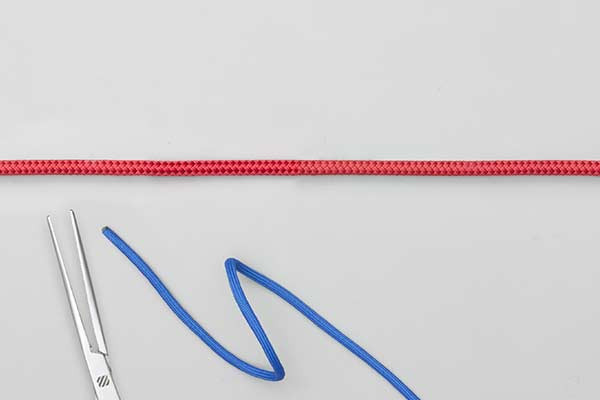
To achieve the maximum security offered by this technique, follow these precise steps as outlined in the technical instruction source. This method utilizes a tool (forceps) to ensure the knot is positioned perfectly on the intended object.
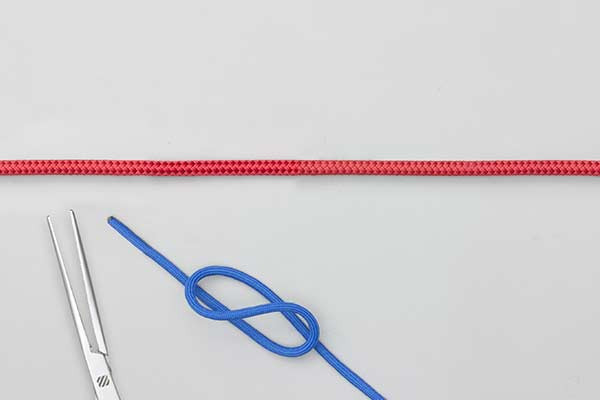
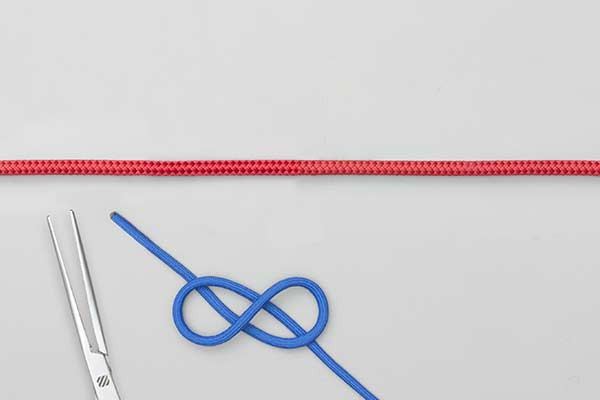
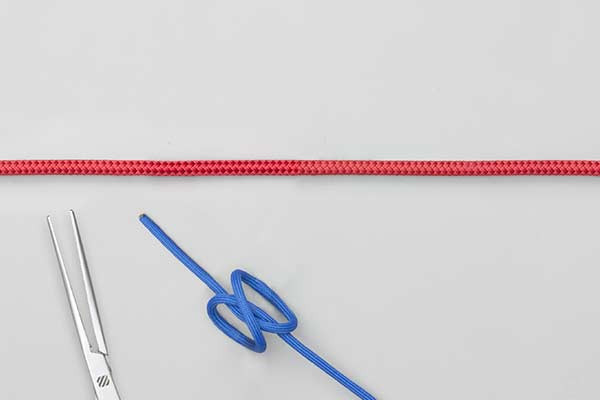
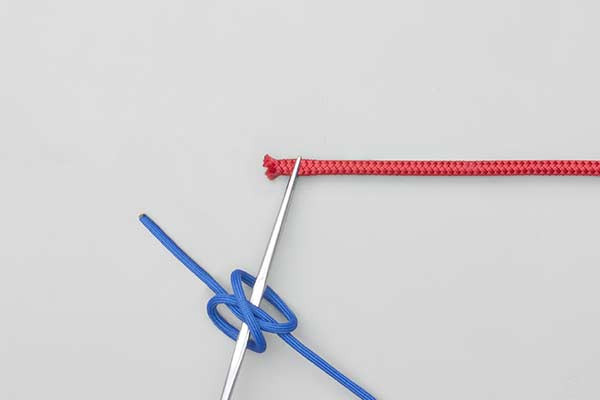
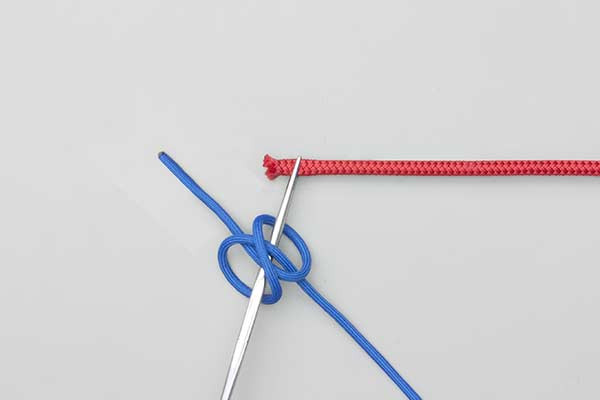
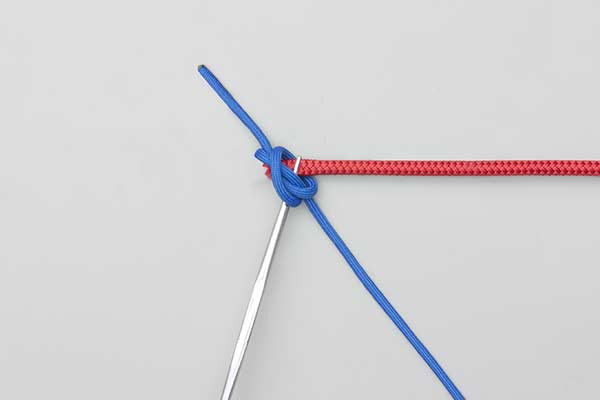
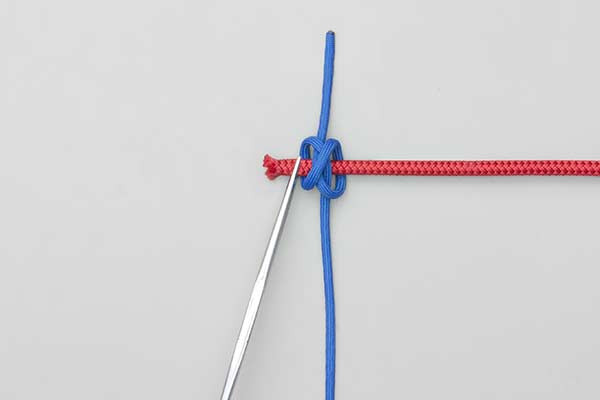
- Twist the two ends of the suture to form the constrictor knot.
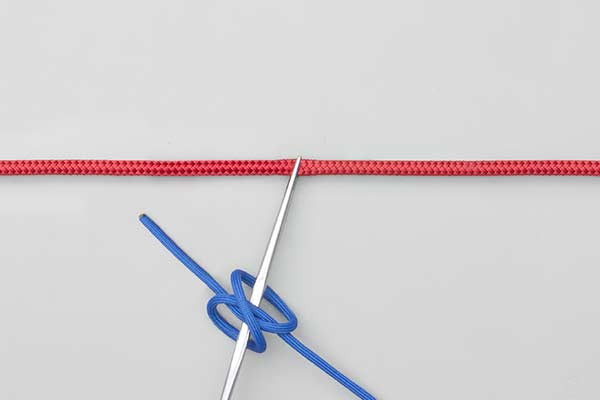
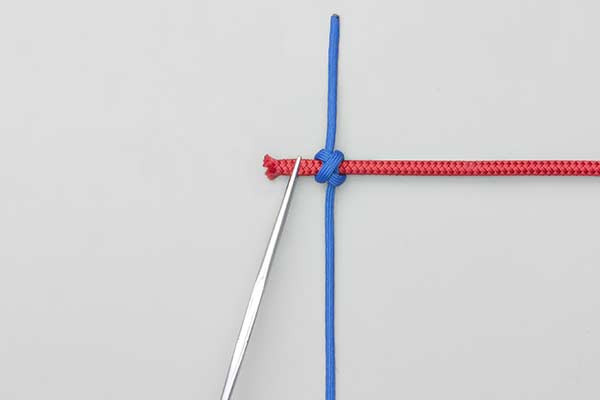
- Pass the forceps through the Constrictor and clamp the vessel.
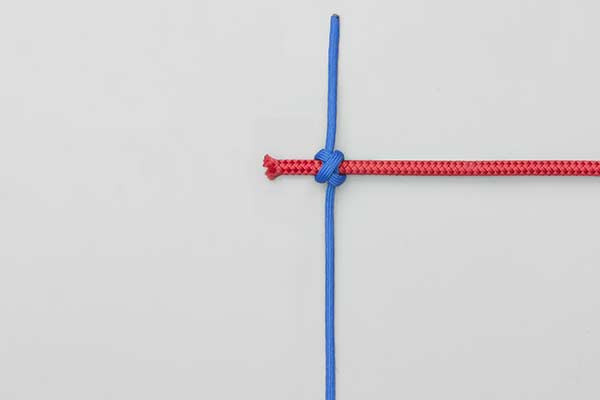
- Divide the vessel and slide the Constrictor down the forceps and on to the vessel.
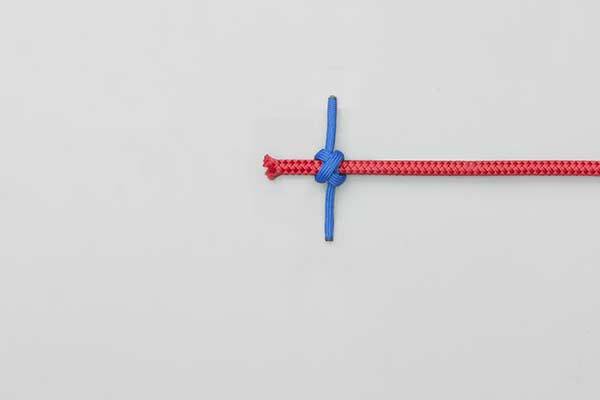
- Tighten the knot, remove the forceps, and cut the ends.
Technical Breakdown of the Steps
While the instructions above are the standard procedure, understanding the mechanics behind each step can help a beginner master the rope knots more effectively.
The Initial Twist
When you twist the two ends, you are essentially creating an overhand knot that is trapped beneath a bridge of the same rope. This creates the "binding" action. If the twist is not done correctly, the knot will collapse into a simple hitch rather than a true constrictor.
Using the Forceps
The use of forceps is a master-class technique in precision. By passing the tool through the center of the knot, you create a "guide path." This ensures that the tension remains on the cordage while you are positioning it. In an outdoor survival or gear repair scenario, this prevents the materials from shifting while you are trying to secure them.
Sliding and Tightening
The "Slide Down" portion of the Constrictor Surg. Slide Down is what gives this knot its name. By sliding the knot off the smooth surface of the tool and onto the rougher surface of the "vessel" or workpiece, you allow the friction to take over immediately. Tightening the knot should be done by pulling the ends in opposite directions with significant force.
Common Mistakes to Avoid
Even for those experienced in outdoor rope techniques, the Constrictor family of knots can be tricky. Avoid these common pitfalls:
- Incorrect Crossing: If the riding turn does not cross over the ends correctly, the knot will not lock. It will behave like a loose Clove Hitch.
- Insufficient Tension: This knot is designed to be tight. If you do not apply enough force during the "Tighten the knot" phase, the internal friction won’t engage, and the knot may eventually vibrate loose.
- Using Too Thick a Rope: If the rope diameter is too large relative to the object being bound, the "bridge" of the knot won’t be able to clamp down effectively.
- Forgetting the "Permanent" Nature: Remember, a well-tied Constrictor Surg. Slide Down is often impossible to untie. Do not use this on gear that you plan to disassemble frequently unless you are prepared to cut the cord.
Safety Tips for Technical Knot Tying
- Protect Your Hands: When tightening high-friction knots like the Constrictor Surg. Slide Down, use "knot bones" or wrap the rope around a stick to pull. Pulling directly with your pinky fingers can cause rope burns or "degloving" injuries under high tension.
- Inspect the Cordage: Always check for frays or UV damage before tying a knot that is intended to hold a load or secure a vital piece of gear.
- Mind the "Vessel": If you are binding something fragile (like a plastic pipe or a soft wooden handle), the extreme pressure of a constrictor knot can actually crush or deform the object.
Related Knots and Splicing
To become a true expert in rope knots, it is helpful to understand how the Constrictor Surg. Slide Down relates to other hitches and bindings:
- Clove Hitch: A fundamental knot used to start many lashings; it is easier to tie and untie than the constrictor but significantly less secure.
- Miller’s Knot: A binding knot often used for securing the tops of sacks; it is very similar to the constrictor but easier to untie.
- Surgeon’s Knot: An evolution of the basic overhand knot that adds an extra twist to increase friction during the first stage of tying.
- Transom Knot: A specialized knot used to join two items at right angles, often used in conjunction with constrictor-style finishes.
- Double Constrictor: An even more secure version of the standard constrictor that adds an extra riding turn for maximum grip on smooth surfaces.
Final Words
The Constrictor Surg. Slide Down is more than just a simple way to tie two ends of a rope together; it is a technical solution for high-stakes binding. By utilizing a tool-assisted sliding method, you ensure that the knot is placed exactly where it is needed with maximum possible tension.
In the field, whether you are repairing a backpack frame, securing a bundle of firewood, or performing advanced gear maintenance, the ability to execute this knot with precision is a testament to your skill as an outdoorsman. Practice the "twist and slide" motion until it becomes second nature, and you will find that the Constrictor Surg. Slide Down becomes one of the most reliable tools in your technical repertoire.
Mastering outdoor rope techniques takes time, but the security and peace of mind provided by a perfectly set constrictor knot are well worth the effort. Always remember to choose the right cordage for the job, apply consistent tension, and prioritize safety in every lash and hitch you move.
