
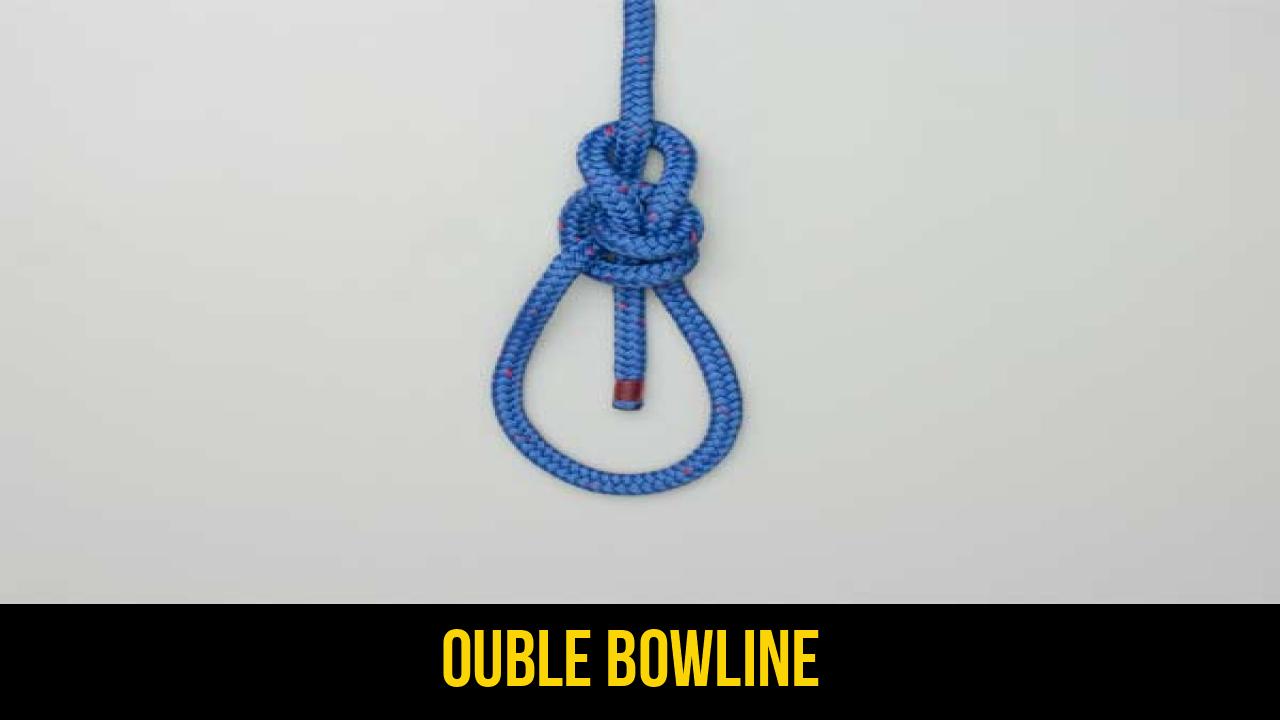
The world of rope knots is vast, serving as the literal backbone of various industries, from maritime exploration to modern-day arboriculture and search-and-rescue operations. Among the most trusted and versatile configurations is the Double Bowline knot. While the standard bowline is often hailed as the "King of Knots," its "double" counterpart offers an extra layer of security and stability that is indispensable in high-stakes environments.
Understanding how to manipulate rope and secure lines is a fundamental skill within outdoor rope techniques. Whether you are securing a load on a vehicle, setting up a complex rigging system, or simply practicing your bushcraft skills, the Double Bowline knot provides a reliable loop that will not slip under tension, yet remains relatively easy to untie even after being subjected to heavy loads.
In this guide, we will delve deep into the mechanics, applications, and specific instructions for tying this essential knot. By the end of this article, you will have a professional-level understanding of how to integrate the Double Bowline into your technical repertoire.
Alternative Names: Round Turn Bowline, Water Bowline (variation), Double-Loop Bowline.
What Is a Double Bowline?
The Double Bowline is an advanced variation of the traditional bowline knot. It is specifically designed to create a fixed loop at the end of a rope. What distinguishes the "Double" version from the standard version is the addition of an extra turn in the initial stage of tying. This extra turn creates what is essentially a Clove Hitch around the working end, providing significantly more friction and security.
Practical Uses and Applications
The primary advantage of the Double Bowline knot is its resistance to "shaking loose." Standard bowlines can occasionally untie themselves if the rope is very stiff or if the knot is subjected to cyclic loading (repeated loading and unloading). The Double Bowline mitigates this risk.
- Arborist Work: Tree climbers often use this knot to secure throw lines or to create anchor points where the rope might be subjected to erratic movements.
- Maritime and Sailing: In heavy weather, where a standard bowline might slip in synthetic, high-modulus fibers, the Double Bowline provides the necessary grip.
- Search and Rescue: While the Figure-Eight on a Bight is the standard for life-support in climbing, the Double Bowline is frequently used in rescue rigging for its ease of adjustment and untying after holding a victim’s weight.
- General Utility: It is perfect for hoisting heavy equipment or securing guy-lines for large canvas tents in high-wind conditions.
Materials and Tools Needed
Before practicing your outdoor rope techniques, it is vital to select the correct materials. Not all ropes are created equal, and the performance of a knot is heavily dependent on the medium used.
Rope Types
- Kernmantle Rope: Common in climbing and rescue. These ropes consist of an inner core (kern) and an outer sheath (mantle). The Double Bowline knot holds exceptionally well in static kernmantle.
- Twisted Nylon: Often used in marine environments. The texture of twisted nylon provides excellent friction for the Double Bowline.
- Polypropylene: This is a "slick" rope often found in general hardware stores. Because polypropylene is slippery, the Double Bowline is actually preferred over the standard bowline to prevent slippage.
Considerations
- Rope Diameter: Ensure the rope diameter is appropriate for the load.
- Condition: Always inspect your rope for fraying, "hernias," or chemical damage before tying any critical knots.
- Safety Gear: If practicing for high-altitude or load-bearing tasks, always use rated carabiners and wear gloves to prevent rope burn during tensioning.
How to Tie Double Bowline?
Tying the Double Bowline requires precision. Follow these steps exactly as outlined to ensure the knot is formed correctly and maintains its structural integrity.
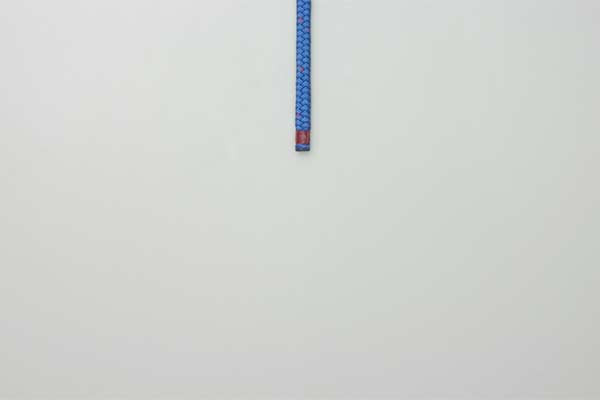
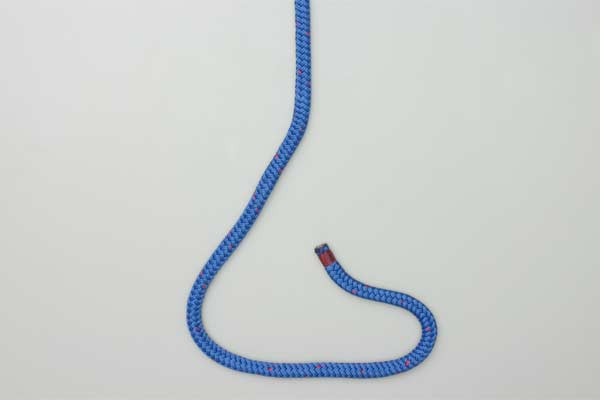
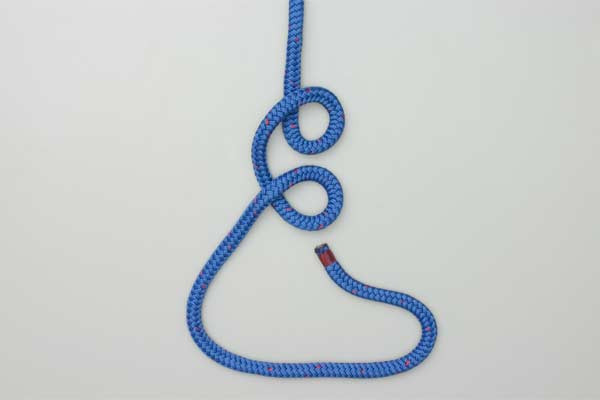
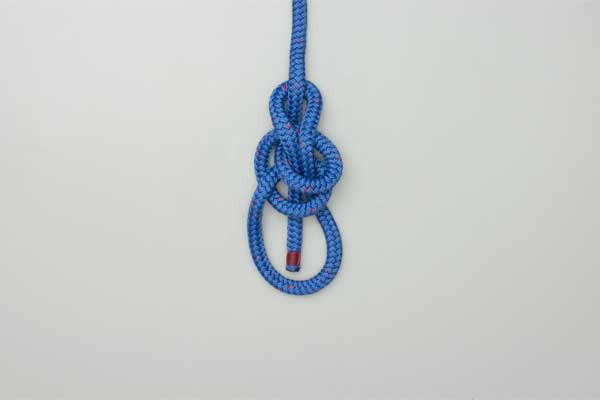
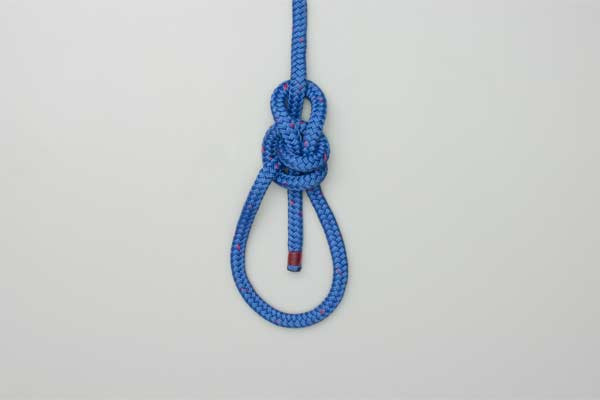
- Use enough rope to form the knot.
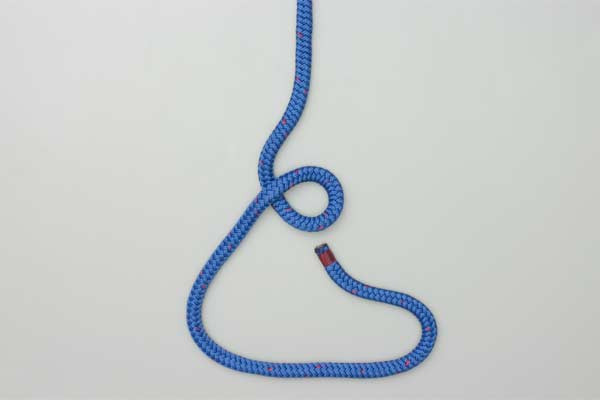
- In the standing end make one loop, and then another.
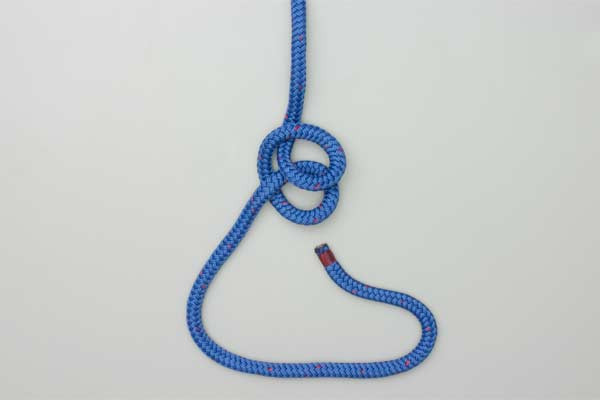
- Overlap the two loops as a Clove Hitch.
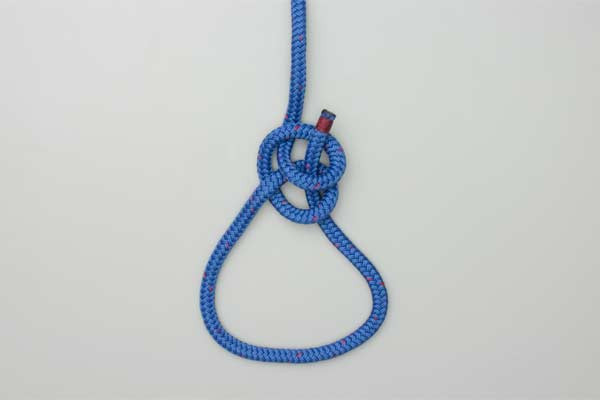
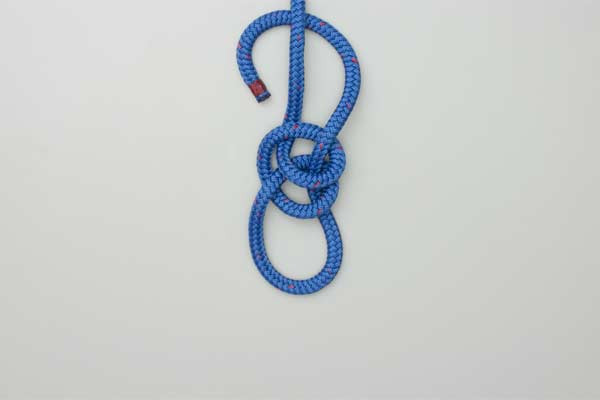
- Pass the tail end up through the Clove Hitch, around the standing end, and down through the Clove Hitch.
- Tighten the Clove Hitch to finish the knot.
Common Mistakes to Avoid
Even seasoned professionals can make errors when tying the Double Bowline knot. To ensure maximum safety, be mindful of the following pitfalls:
1. Incorrect Loop Overlap
When creating the Clove Hitch foundation in step three, it is crucial that the loops are overlapped in the correct direction. If the loops are not seated properly, the knot will not "set" and could collapse under load. Always visually verify that the two loops resemble a standard Clove Hitch before passing the tail through.
2. The "Inside" vs. "Outside" Tail
In a standard bowline, the tail (working end) usually ends up inside the loop. However, in various outdoor rope techniques, some prefer the tail to be on the outside to prevent it from interfering with carabiners. Ensure your tail is long enough (at least 4-6 inches) to prevent it from being sucked back into the knot under extreme tension.
3. Failure to "Dress" the Knot
"Dressing" a knot refers to the process of tidying it up, ensuring all strands are parallel and not crossing awkwardly. A poorly dressed Double Bowline is harder to inspect and may have a lower breaking strength.
4. Neglecting the Backup Knot
If you are using the Double Bowline for life-critical applications (such as in certain arborist or rescue scenarios), it is a best practice to tie a Stopper Knot (like a Double Overhand) with the remaining tail around the loop.
Related Knots and Splicing
Expanding your knowledge of rope knots involves understanding how different configurations relate to one another. Here are a few knots closely related to the Double Bowline:
- Standard Bowline: The foundation of all loop knots. It is fast to tie and reliable for non-critical loads, though less secure than the double version.
- Figure-Eight Loop: The gold standard for rock climbing. It is incredibly strong and visually easy to inspect, though it can "jam" after heavy loading.
- Water Bowline: Very similar to the Double Bowline, this knot uses two half-hitches to secure the loop, making it excellent for use in wet or marine conditions.
- Running Bowline: A bowline tied around its own standing part to create a sliding noose, frequently used for retrieving objects or cinching loads.
- Eye Splice: A permanent way to create a loop in the end of a multi-strand rope by weaving the strands back into themselves, offering maximum strength retention.
Final Words
The Double Bowline knot is a masterpiece of functional geometry. By mastering the transition from two simple loops into a secure Clove Hitch foundation, you gain the ability to create a high-security anchor in seconds. While the standard bowline is sufficient for many tasks, the Double Bowline is the professional’s choice when reliability cannot be compromised.
As with all outdoor rope techniques, proficiency comes through repetition. Practice tying this knot with different types of rope—thick, thin, wet, and dry—until the muscle memory is ingrained. Whether you are a sailor, a rescue technician, or an outdoor enthusiast, the Double Bowline is a tool that will serve you faithfully for a lifetime. Remember: a knot is only as good as the person tying it—stay focused, stay safe, and always double-check your work.
