
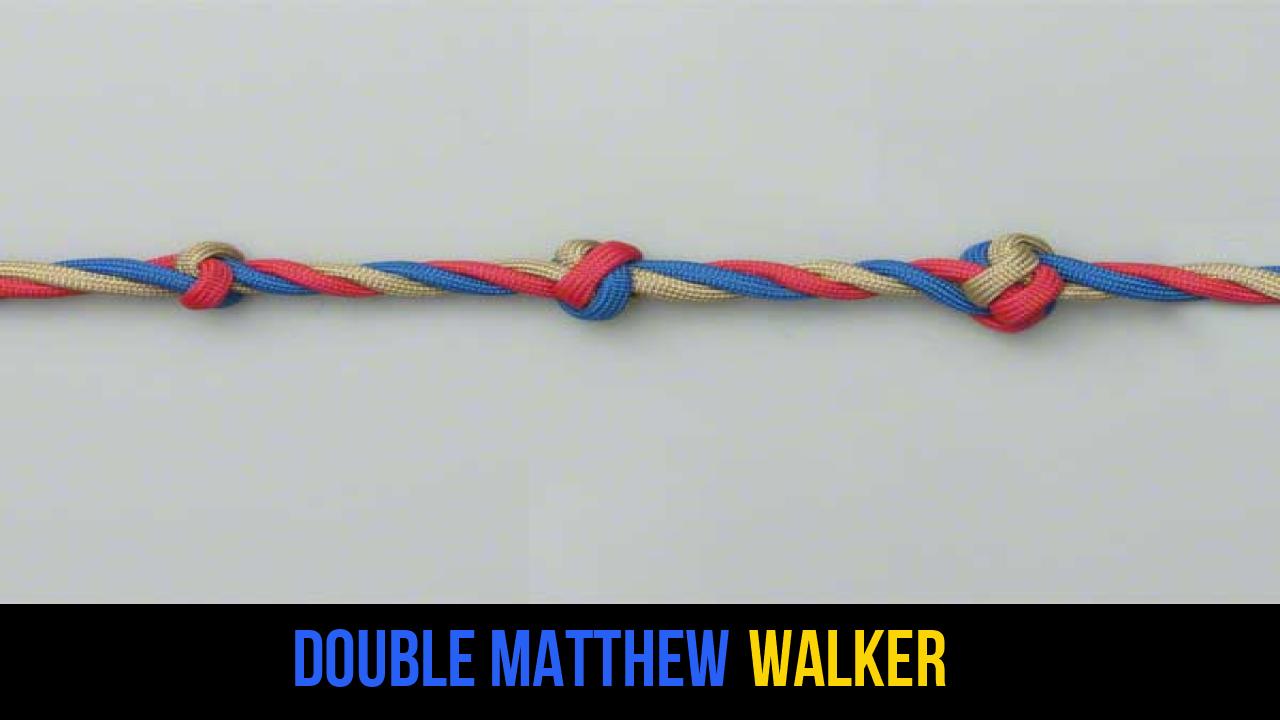
In the world of traditional seamanship and technical rope work, few knots command as much respect for their complexity and aesthetic beauty as the Double Matthew Walker. Known among sailors and outdoor enthusiasts as one of the most sophisticated stopper knots in existence, it represents a pinnacle of functional artistry.
Whether you are a seasoned sailor looking to refine your decorative rope work or an outdoor gear specialist interested in historical rope knots, understanding the mechanics of this knot is essential. Unlike basic knots that sit on the surface of the rope, the Double Matthew Walker knot is unique because it is tied using the individual strands of the rope itself, effectively becoming part of the rope’s structure.
In this guide, we will delve into the history, utility, and precise technical execution of this knot. By the end of this article, you will have a professional-grade understanding of how to incorporate this technique into your outdoor gear maintenance and decorative projects.
Alternative Names: Double Matthew Walker’s Knot, The Admiral’s Knot, Two-Strand Matthew Walker.
What Is a Double Matthew Walker?
The Double Matthew Walker is a multi-strand stopper knot traditionally used on the ends of hemp or manila ropes to prevent them from unravelling through a block or a hole. Historically, it was a point of pride for sailors; it is said to be one of the few knots that cannot be tied "in the hand" but must be built around the rope’s standing part.
Definition and Technical Structure
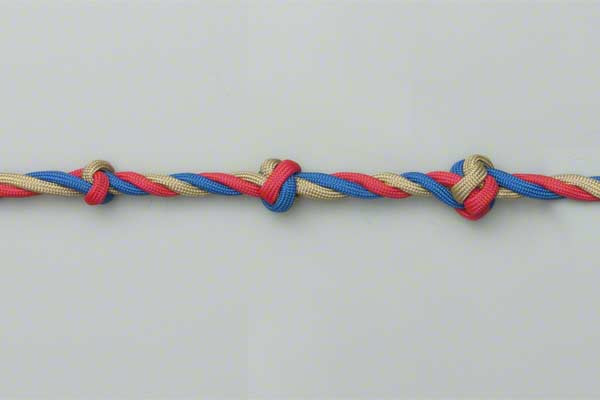
Technically, it is an evolution of the standard Matthew Walker knot. While the standard version passes each strand through its own loop once, the "Double" version involves a more complex pathing where strands pass under multiple adjacent strands before emerging. This creates a thicker, more bulbous, and significantly more secure "shoulder" on the rope.
Practical Uses in Modern Outdoor Gear
While modern synthetic ropes and heat-shrinking have replaced the functional necessity of stopper knots in some commercial sectors, the Double Matthew Walker remains vital in several areas:
- Lanyard Construction: Its symmetrical and robust profile makes it an excellent terminal knot for knife lanyards or equipment tethers.
- Maritime Restoration: Used in the rigging of traditional sailing vessels for manropes and gangway ropes.
- Decorative Knotting: It is a foundational knot for creating "fancy work" in nautical crafts.
- Tactile Identification: In low-light outdoor scenarios, the distinct shape of this knot allows users to identify the end of a line or a specific gear attachment by touch.
Materials and Tools Needed
Tying a Double Matthew Walker knot requires more than just a piece of string. Because this knot involves unlaying (untwisting) the rope, the choice of material is paramount to your success.
Recommended Rope Types
- Three-Strand Twisted Rope: This is the standard requirement. Natural fibers like Manila or Cotton are excellent for practice because they hold their shape well.
- Three-Strand Polyester or Nylon: These offer high durability for outdoor use but can be slippery.
- Paracord (Modified): While paracord is usually kernmantle (sheath and core), you can tie a version of this knot using three separate lengths of paracord bundled together to simulate strands.
Essential Tools
- Marlinspike or Fid: A pointed tool used to open the lay of the rope without damaging the fibers.
- Electrical Tape or Whipping Twine: Used to secure the ends of the individual strands to prevent them from fraying while you work.
- Sharp Knife or Heavy-Duty Scissors: For a clean trim once the knot is set.
- Heat Source (for synthetics): A lighter to singe the ends of nylon or polyester strands.
Considerations Before You Start
Ensure you have enough "working end" length. Because the Double Matthew Walker passes around the entire diameter of the rope, you will need to unlay at least 6 to 10 inches of rope to ensure you don’t run out of strand length mid-process.
How to Tie a Double Matthew Walker?
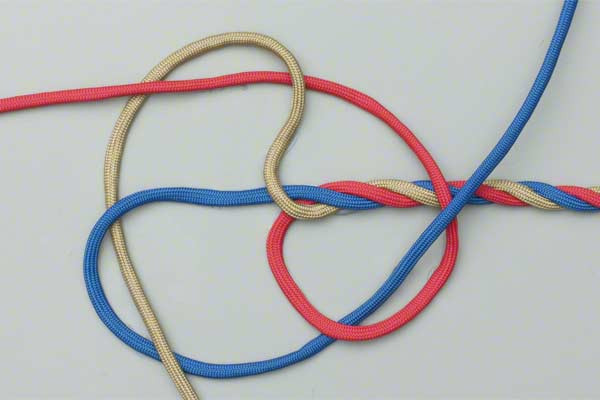
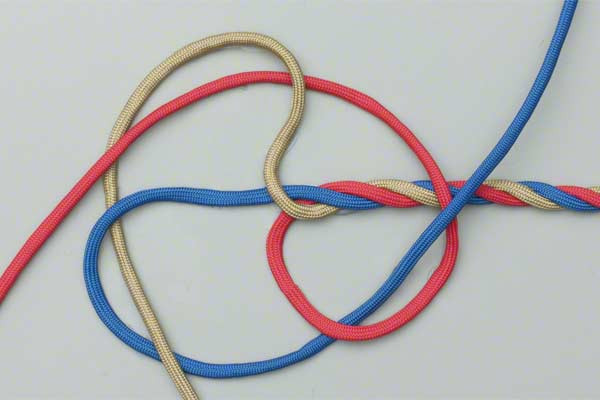
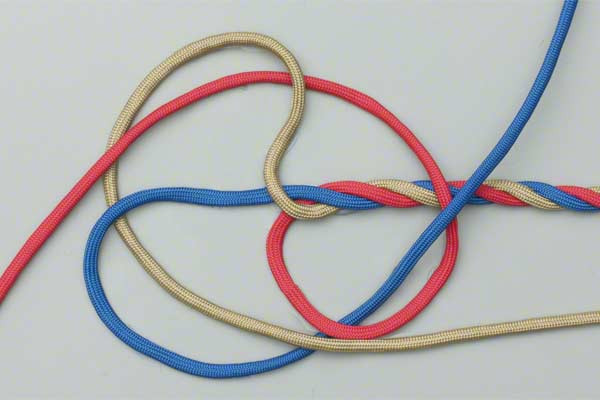
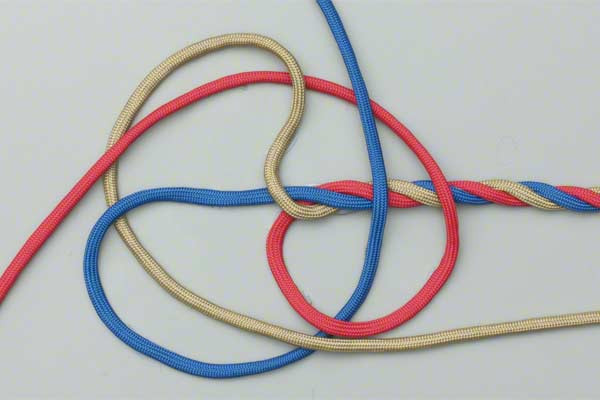
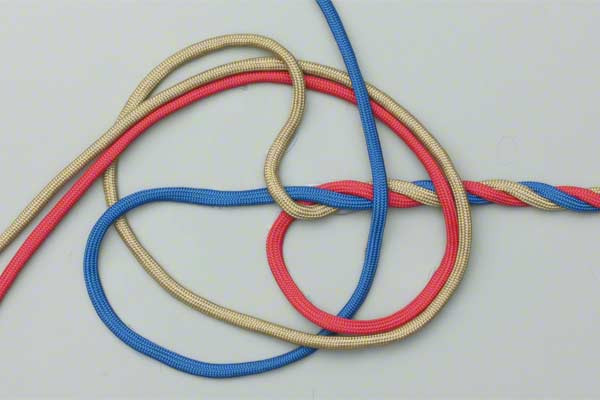
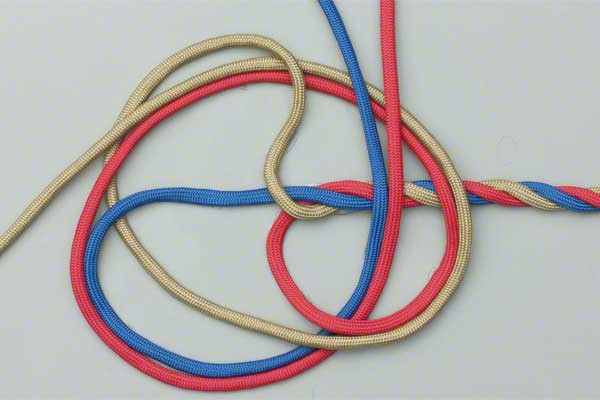
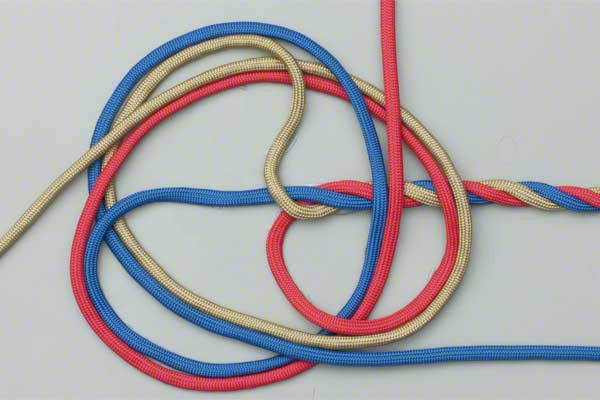
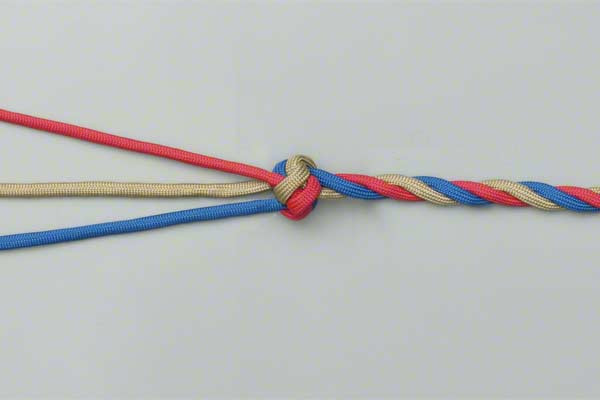
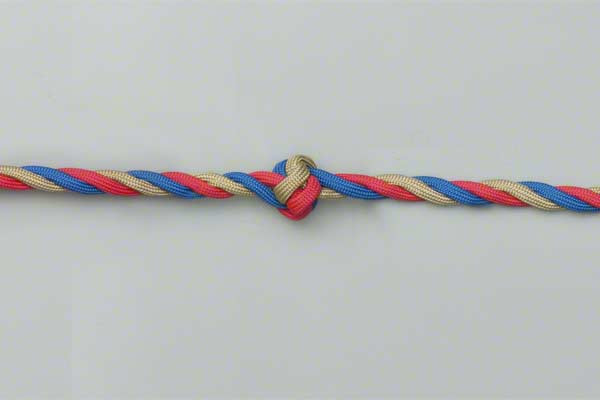
To achieve a perfect result, follow these instructions precisely. For clarity in these steps, we refer to the three strands as Gold, Red, and Blue. When working with a single-colored rope, it may help to mark the ends with colored tape to follow this sequence.
- Start with a Wall Knot.
- Position each strand near the one to follow.
- Gold follows red under blue and up through itself.
- Red follows blue under gold and up through itself.
- Blue follows gold under red and up through itself.
- Tighten carefully and re-lay the rope.
Common Mistakes to Avoid
Even for experts, the Double Matthew Walker knot can be temperamental. Avoiding these common pitfalls will ensure a professional finish.
1. Uneven Tensioning
The most frequent error is tightening one strand more than the others. This causes the knot to "capsize" or look lopsided. You must tighten the strands incrementally—pull a little on Gold, then Red, then Blue, and repeat until the knot is snug against the standing part of the rope.
2. Skipping the Wall Knot Base
The instructions explicitly state to Start with a Wall Knot. This provides the internal structure that allows the "Double" passes to sit correctly. Attempting to tie the Matthew Walker passes without this foundation will result in a knot that collapses under pressure.
3. Crossing Strands Incorrectly
In step 3, 4, and 5, the "under/up" sequence is critical. If a strand goes over instead of under, the symmetrical pattern will be broken. Always double-check that each strand is following the one ahead of it in a consistent clockwise or counter-clockwise direction.
4. Safety Tip: Edge Management
When using outdoor rope techniques for load-bearing applications, remember that any knot reduces the breaking strength of the rope. While the Double Matthew Walker is a stopper knot and not typically a life-safety bend, ensure the rope is "re-laid" (twisted back together) tightly above the knot to maintain its structural integrity.
Related Knots and Splicing
Expanding your knowledge of rope knots involves understanding how different techniques relate to one another. Here are a few knots closely associated with the Double Matthew Walker:
- The Standard Matthew Walker Knot: A simpler version of the double, requiring only one pass per strand; it is less bulky but equally elegant.
- The Wall Knot: The foundational component of many multi-strand knots, creating a simple crown-like ring around the rope’s diameter.
- The Crown Knot: Often used in conjunction with the Wall knot to create a "Wall and Crown," which serves as the basis for a back splice.
- The Diamond Knot: A highly decorative stopper knot that, unlike the Matthew Walker, stands out further from the rope, often used for decorative lanyards.
- The Footrope Knot: A more complex variation used historically on the yards of sailing ships to provide a secure grip for sailors’ feet.
Final Words
The Double Matthew Walker is more than just a way to stop a rope from fraying; it is a testament to the history of maritime skill and the evolution of outdoor rope techniques. While it requires patience and a keen eye for detail, the result is a knot that is both incredibly secure and visually striking.
For the modern outdoorsman or technician, mastering this knot adds a layer of sophistication to gear maintenance and customization. Whether you are securing a lanyard on a custom bushcraft knife or restoring a vintage rowing boat, the Double Matthew Walker knot remains a gold standard in the world of functional cordage. Practice with different materials, focus on even tensioning, and you will soon master one of the most respected knots in the nautical tradition.[/content]
