
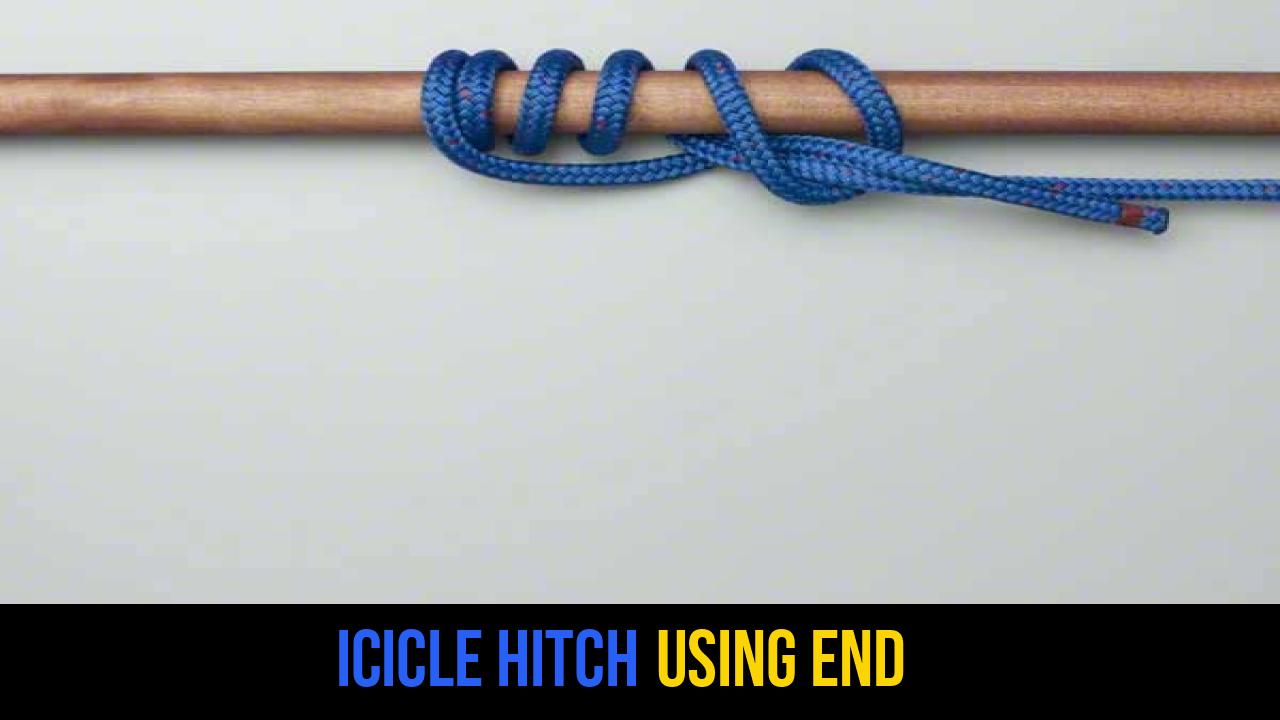
In the world of rope knots and outdoor rope techniques, few hitches command as much respect for their sheer gripping power as the Icicle Hitch. Specifically, the Icicle Hitch Using End is a specialized variation designed for situations where you have access to the end of your line and need to secure it to a smooth, cylindrical object. Whether you are a sailor, an arborist, or a survival enthusiast, understanding how to apply friction effectively is a fundamental skill.
The Icicle Hitch is renowned for its ability to hold fast even when the pull is applied parallel to the object it is tied around. While many hitches, such as the Clove Hitch, might slide or fail under a longitudinal load, the Icicle Hitch bites harder as more tension is applied. This article provides a comprehensive deep dive into this essential knot, covering its mechanics, materials, and the precise steps required to master it.
Alternative names for the Icicle Hitch include:
- The Smith Hitch (after its popularizer, John Smith)
- The Parallel Pull Hitch
- The Smooth Surface Grip Knot
What Is an Icicle Hitch Using End?
The Icicle Hitch Using End is a friction or "slide-and-grip" hitch. Its primary purpose is to attach a rope to a spar, pole, or even a smooth plastic pipe in a way that allows for a heavy load to be pulled parallel to the object.
The Mechanics of Friction
Most knots rely on the rope crossing over itself to create "nip." The Icicle Hitch takes this further by utilizing multiple wraps to increase the surface area contact between the rope and the pole. This maximizes the coefficient of friction. When tension is applied to the standing part of the rope, the wraps tighten and "choke" the pole, preventing the knot from sliding down the length of the object.
Practical Applications
- Marine Environments: Used for hauling smooth spars or poles out of the water or securing lines to slick railings.
- Arboriculture: Essential for dragging branches or logs where the pull must be in line with the wood’s length.
- General Utility: Ideal for hanging heavy tools or equipment from vertical poles where a standard hitch would slip to the bottom.
- Construction: Useful for hoisting pipes or conduits to higher elevations.
Materials and Tools Needed
To tie a secure Icicle Hitch Using End, the quality and type of your materials play a significant role in the knot’s performance.
1. Rope Selection
- Synthetic Ropes (Nylon/Polyester): These are excellent for the Icicle Hitch because they offer a balance of strength and flexibility. Nylon has a slight stretch which can help the knot "settle" into place, while Polyester offers superior UV resistance for outdoor use.
- Natural Fiber Ropes (Manila/Hemp): These provide excellent natural friction, making them very secure for this hitch, though they are less durable than synthetics in wet conditions.
- High-Tech Fibers (Dyneema/Spectra): These are extremely slippery. If using these, you may need to add extra wraps beyond the standard four to ensure the knot bites.
2. The Spar or Pole
The Icicle Hitch is specifically designed for smooth, tapered, or cylindrical objects. This includes:
- Wooden dowels or logs.
- Metal or PVC piping.
- Other ropes (when used as a friction hitch on a thicker line).
3. Safety Gear
When practicing outdoor rope techniques involving heavy loads, always wear gloves to prevent rope burn and ensure you are using a rope rated for the specific weight of your load.
How to Tie Icicle Hitch Using End?
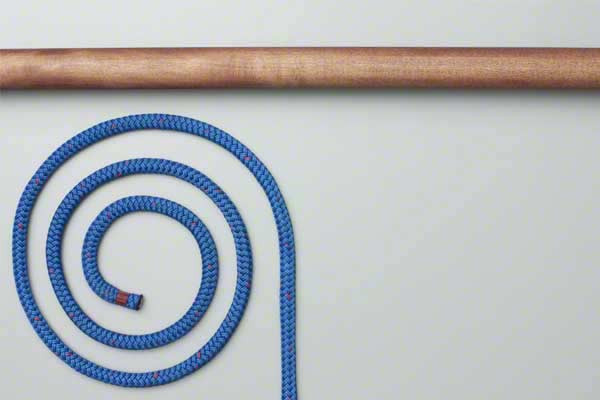
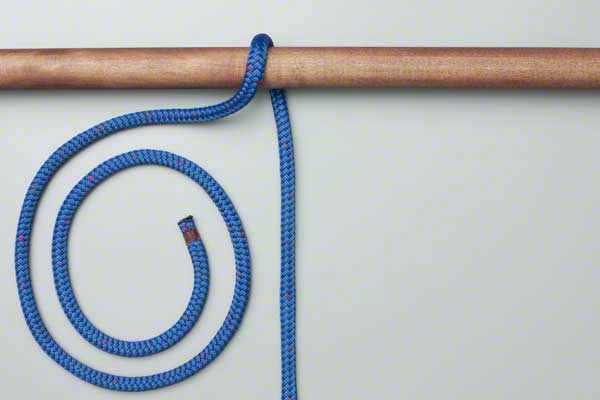
To ensure the highest level of security and performance, follow these instructions precisely. The Icicle Hitch Using End is a directional knot, meaning its orientation relative to the load is vital.
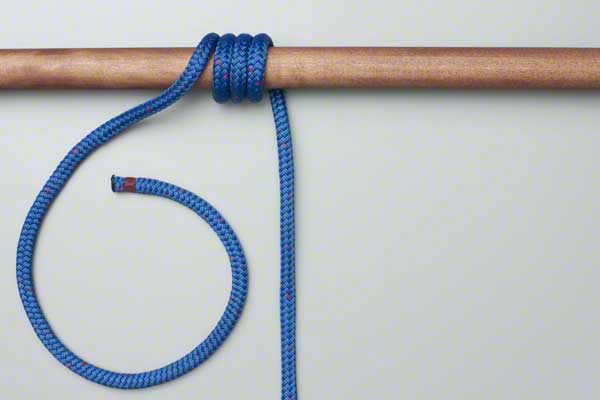
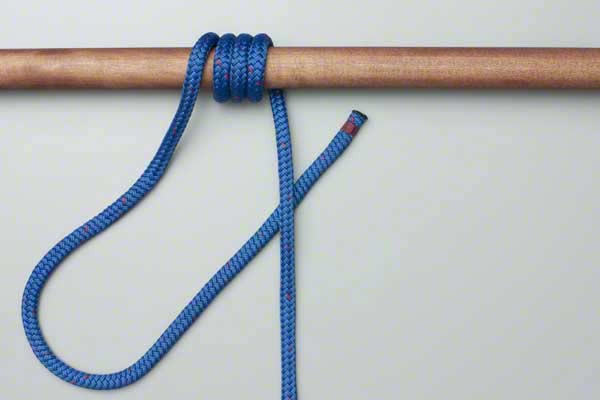
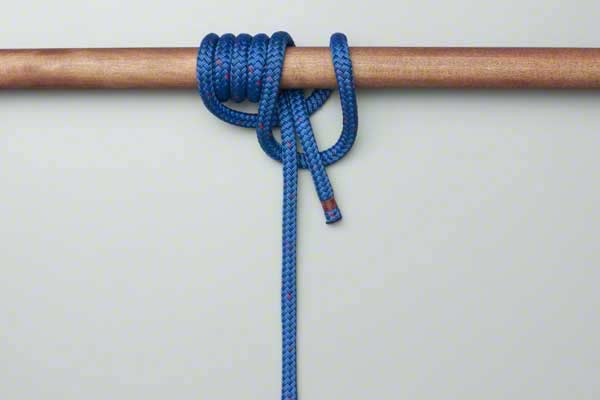
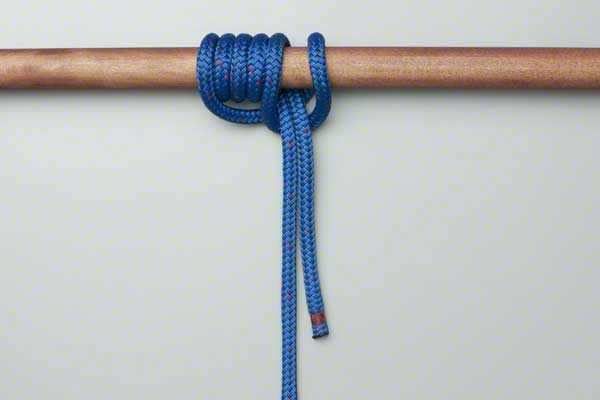
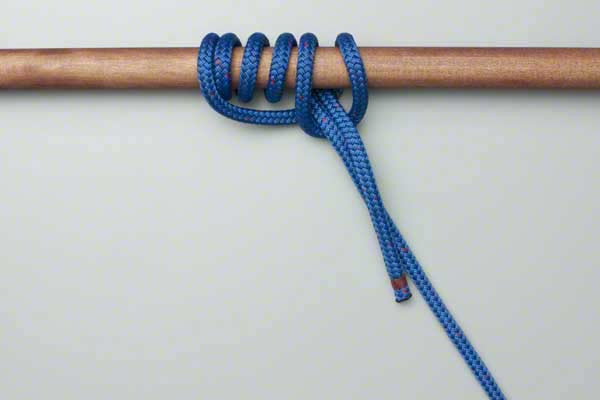
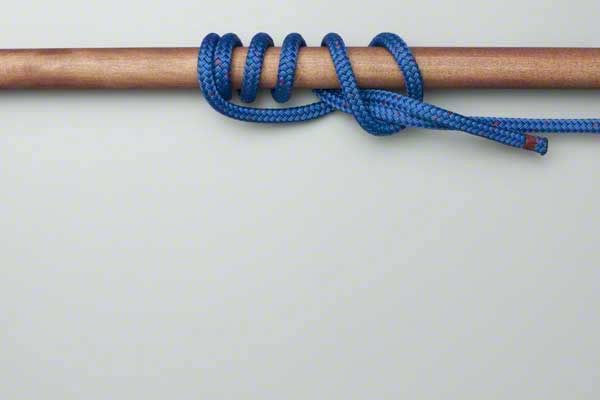
- Wrap the rope around the pole four times away from direction of load.
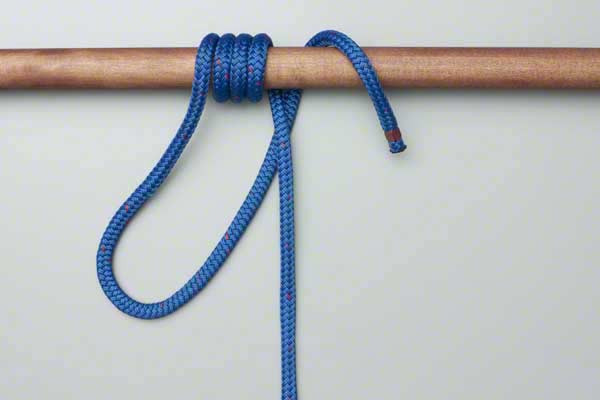
- Leave a loop hanging and pass the end of the rope behind the standing end and over the pole.
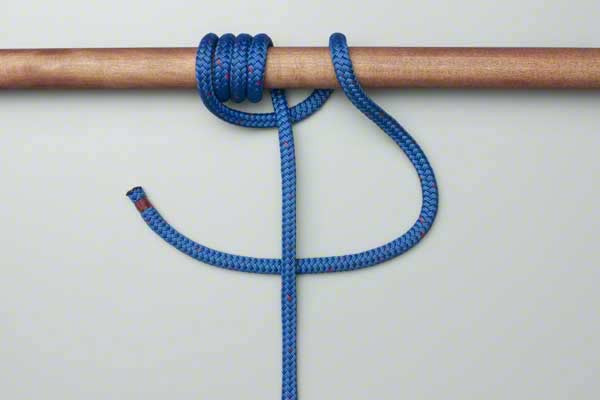
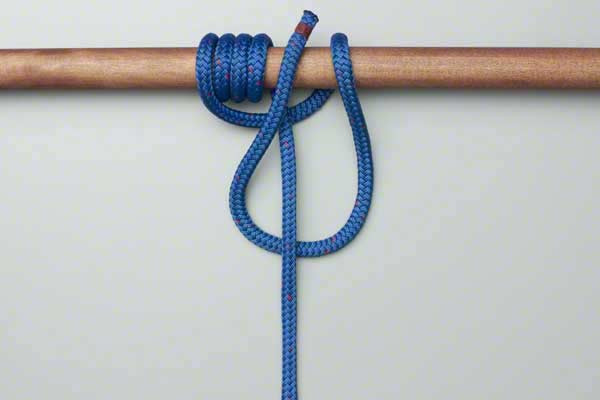
- Continue back behind the standing end, over the pole again, and down beside the standing end.
- Tighten.
The load should be parallel to the pole.
Common Mistakes to Avoid
Even experienced practitioners of rope knots can make errors when tying friction hitches. To ensure your Icicle Hitch Using End remains secure, watch for these common pitfalls:
1. Pulling in the Wrong Direction
The Icicle Hitch is designed for a parallel pull. If you pull at a 90-degree angle (perpendicular) to the pole, the knot may not perform better than a standard Clove Hitch. Always ensure the "standing end" (the part taking the weight) is aligned with the pole.
2. Insufficient Wraps
The instruction calls for four wraps. Reducing this number significantly decreases the friction. If the pole is exceptionally smooth (like polished steel) or the rope is very thin, you may actually need to increase the number of wraps to prevent slipping.
3. Failure to "Dress" the Knot
"Dressing" a knot means tidying it up so that the turns are parallel and not overlapping haphazardly. An undressed Icicle Hitch can develop "hot spots" of friction that might damage the rope or cause the knot to jam or slip unexpectedly.
4. Overlapping the Standing End Incorrectly
Pay close attention to the steps where the rope passes behind the standing end. If you cross over the front instead of behind, the "nip" that locks the knot into place will not engage, and the knot will simply unravel under tension.
Related Knots and Splicing
Understanding the Icicle Hitch Using End is often a gateway to learning other advanced rope knots. Here are a few related techniques:
- Prusik Knot: A classic friction hitch used primarily in climbing and rescue to ascend a fixed rope; it grips when loaded and slides when tension is released.
- Rolling Hitch: A versatile knot used to attach a rope to a rod or another rope; it is similar to the Icicle Hitch but generally considered slightly less secure on very smooth surfaces.
- Klemheist Knot: A friction hitch that is easier to tie with a loop of webbing; it provides a great grip in one direction but is easier to slide back up.
- Clove Hitch: A quick, temporary binding knot that is excellent for perpendicular loads but prone to slipping if the load becomes parallel to the post.
Final Words
The Icicle Hitch Using End is a masterclass in the application of friction and mechanical advantage. By following the precise steps of wrapping away from the load and properly crossing the standing end, you create a connection that is nearly impossible to slide.
As with all outdoor rope techniques, proficiency comes with practice. We recommend practicing this knot on various surfaces—from rough tree bark to smooth PVC pipe—to understand how different textures affect the "bite" of the rope. Whether you are securing a load for transport or setting up a complex rigging system, the Icicle Hitch is a reliable tool that every rope user should have in their repertoire. Remember: a knot is only as good as the person tying it, so take the time to dress and tighten your hitch every single time. [content]
