
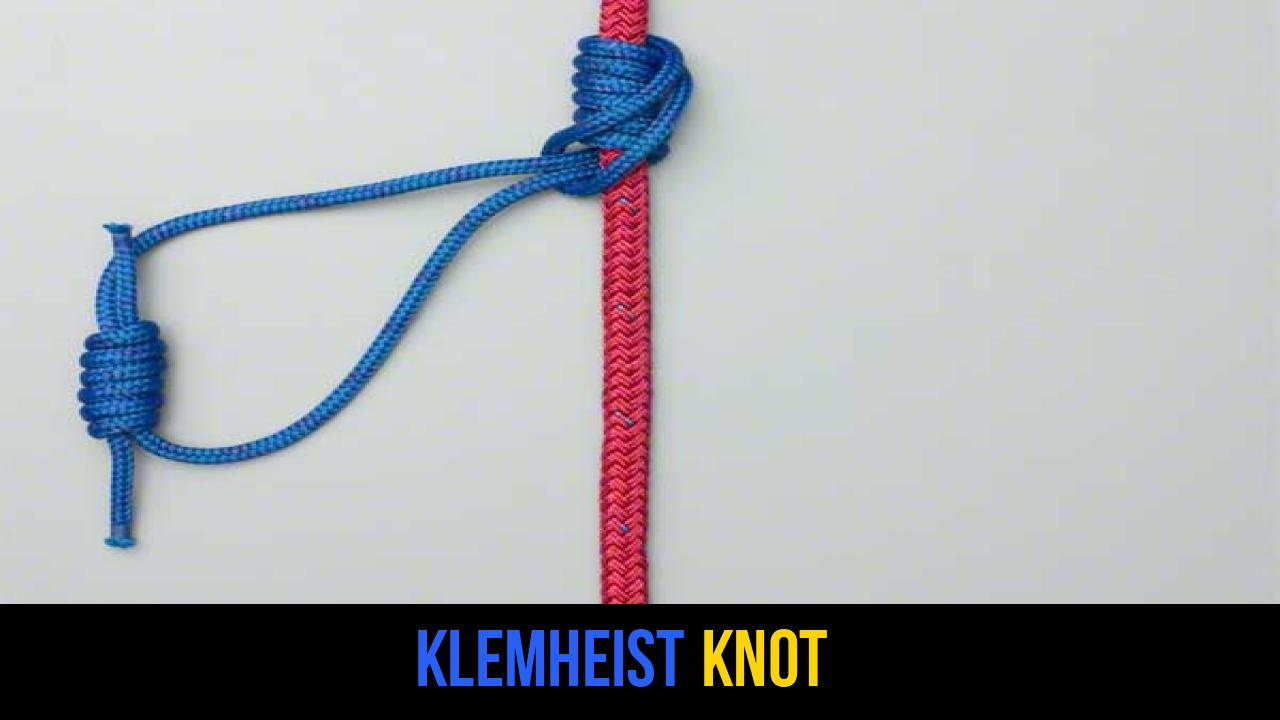
In the world of technical rope work, the ability to create a secure, moveable attachment point on a tensioned line is a fundamental skill. Whether you are an aspiring mountaineer, a professional arborist, or a search-and-rescue technician, understanding rope knots that utilize friction is essential. Among the most reliable and versatile of these is the Klemheist knot.
The Klemheist is a member of the friction hitch family—a group of knots designed to grip a rope when under tension but slide freely when the load is removed. It is prized for its simplicity, its ability to be tied with webbing (unlike the Prusik), and its high efficiency in one-way loading scenarios. In this comprehensive guide, we will explore the mechanics, applications, and precise methods for utilizing this critical component of outdoor rope techniques.
Alternative Names: Machard Knot (often used interchangeably in Europe), French Prusik (though this sometimes refers to the Autoblock), and the Hedden Knot.
What Is a Klemheist Knot?
The Klemheist knot is a directional friction hitch used to attach a smaller diameter cord or a sling to a larger diameter “standing” or “main” rope. Its primary function is to provide a secure handhold or a mechanical advantage point that “bites” into the main rope when pulled in one specific direction.
Practical Uses and Applications
The versatility of the Klemheist makes it a staple in several high-stakes environments:
- Ascending a Rope: If a climber falls into a crevasse or needs to ascend a fixed line, two Klemheist hitches can be used as makeshift “ascenders” for the feet and harness.
- Self-Rescue: It serves as a backup during a rappel or as a way to “escape the belay” if a partner is injured.
- Hauling Systems: In “Z-drag” or other mechanical advantage systems, the Klemheist acts as a “tractor” to grab the load-bearing rope and pull it toward the anchor.
- Arborist Work: Tree climbers use it for positioning and securing gear while navigating the canopy.
Unlike the symmetrical Prusik knot, which grips in both directions, the Klemheist is strictly directional. It is designed to slide up easily and lock down firmly.
Materials and Tools Needed
To tie a secure Klemheist knot, you must consider the relationship between your materials. Friction hitches rely on the “capstan effect,” where the surface area and the diameter ratio determine the grip.
The Main Rope
Typically, this is a static or dynamic climbing rope ranging from 9mm to 11mm in diameter. The rope should be clean; mud, ice, or excessive wear can affect how the hitch bites.
The Accessory Cord or Sling
- Diameter: For a cord-based Klemheist, use a cord that is 2mm to 3mm thinner than the main rope (e.g., a 6mm or 7mm cord on a 10mm rope). If the cord is too thick, it won’t grip; if it’s too thin, it may be impossible to slide after being loaded.
- Material: Nylon is standard, but high-tech fibers like Technora or Dyneema are popular for their high melting points. Friction creates heat, and a sliding knot can generate enough thermal energy to glaze or damage standard nylon.
- Webbing: One of the Klemheist’s greatest advantages is that it works effectively with flat nylon webbing (slings), whereas many other friction hitches do not.
Tools
- Locking Carabiner: To attach the “tail” of the knot to your harness or hauling system.
- Gloves: Recommended when practicing outdoor rope techniques to prevent rope burn.
How to Tie Klemheist Knot?
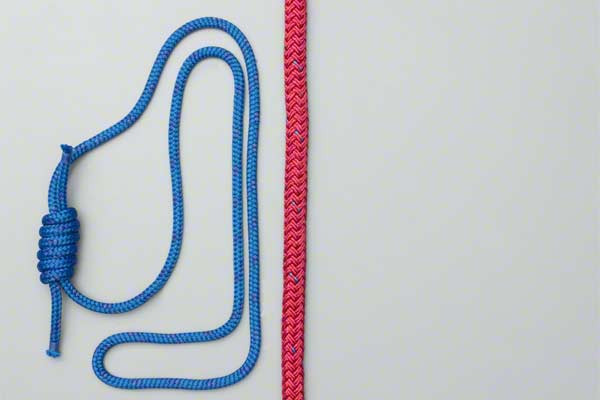
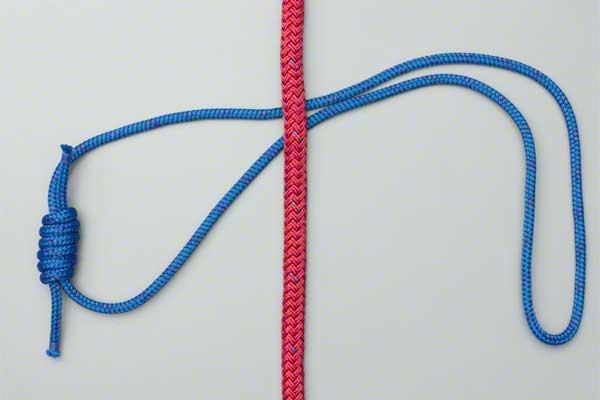
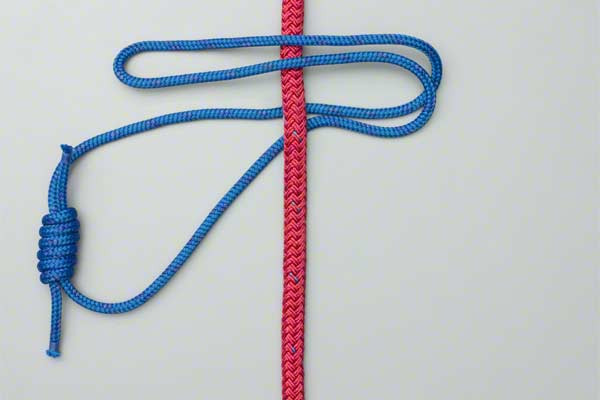
To ensure safety and reliability, follow these instructions precisely. The neatness of the wraps is the most important factor in the knot’s performance.
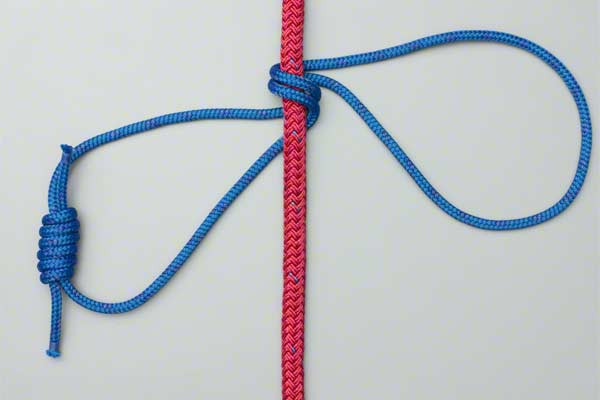
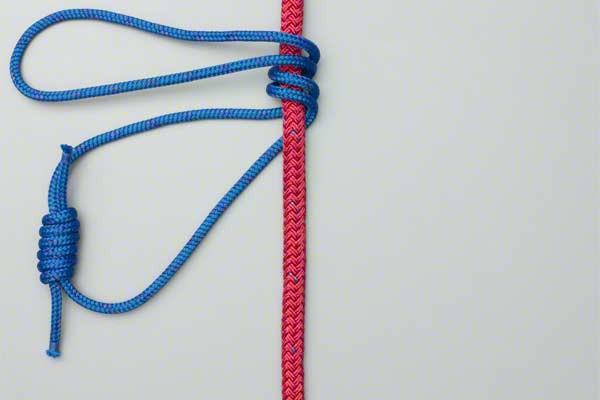
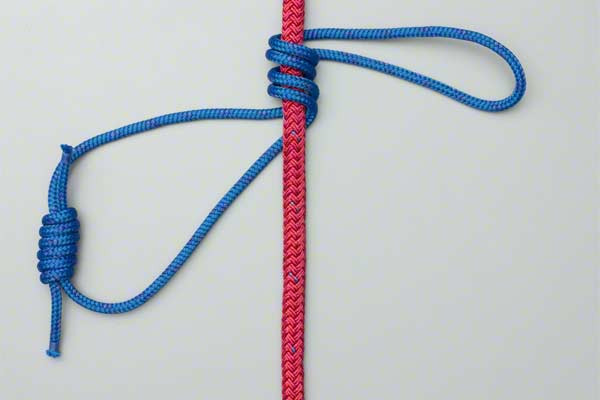
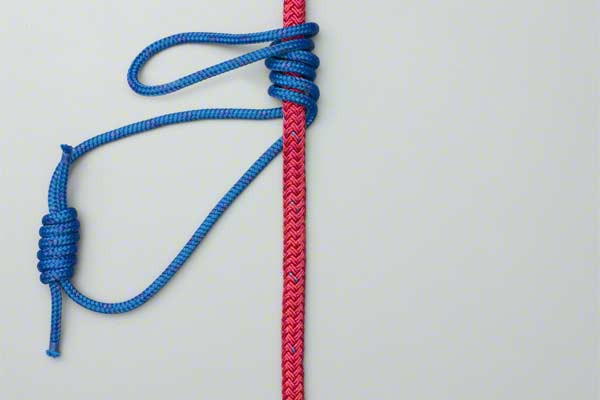
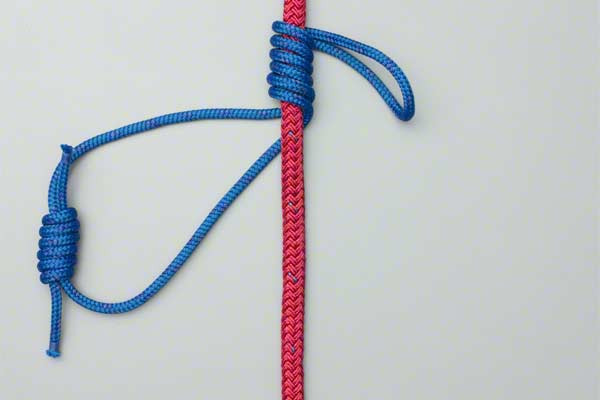
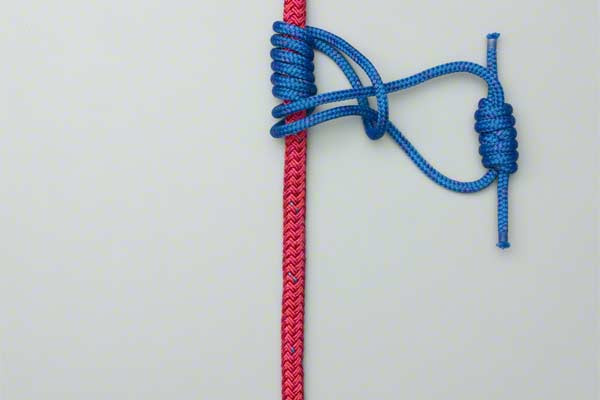
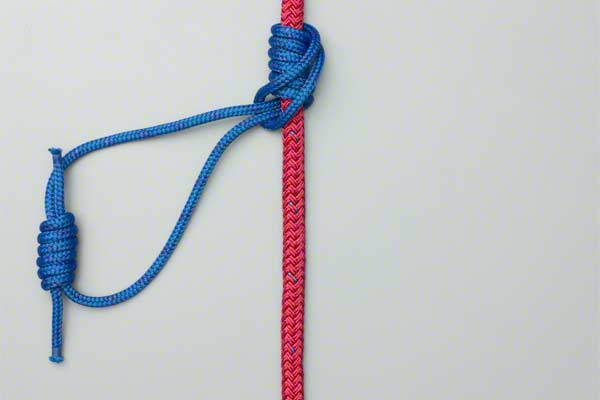
- Use a piece of cord formed into a loop.
- Pass the loop around the main rope.
- Make three complete turns, laying each turn on neatly.
- Pass the rest of the cord through the loop and pull it back down in the direction of the expected load.
Common Mistakes to Avoid
Even experienced professionals can make errors when fatigued or in a rush. Pay close attention to these common pitfalls to ensure your rope knots function as intended:
- Crossing the Turns: In step 3, the instructions emphasize “laying each turn on neatly.” If the turns overlap or cross over each other, the friction will be inconsistent. This can lead to the knot slipping unexpectedly or jamming so tightly that it cannot be moved.
- Incorrect Direction of Load: The Klemheist is a directional knot. The “tail” that passes through the loop must be pulled downward (away from the wraps). If you pull it upward, the knot will fail to cinch and will simply slide up the rope.
- Wrong Diameter Ratio: If you use a cord that is nearly the same diameter as the main rope, the knot will lack the “bite” required to hold a human load. Always maintain the 2-3mm difference.
- Forgetting to Dress the Knot: “Dressing” a knot means tidying it up and pre-tensioning it. Before trusting your weight to a Klemheist, snug it up by hand to ensure the wraps are tight against the main rope.
- Ignoring Wear and Tear: Check your accessory cord frequently. Because the Klemheist relies on friction, the inner core of the cord can eventually break down or the sheath can glaze.
Related Knots and Splicing
Understanding the Klemheist is just one part of mastering outdoor rope techniques. Here are several related knots often used in conjunction with or as alternatives to the Klemheist:
The Prusik Knot
The Prusik is the most famous friction hitch. It is a symmetrical knot that grips in both directions. While more difficult to slide after being loaded than the Klemheist, its bi-directional security makes it a favorite for tandem weighted rescues.
The Bachmann Hitch
This knot is tied around a carabiner. The carabiner acts as a handle, making the hitch incredibly easy to slide up the rope even while wearing thick winter gloves. It is less secure than a Klemheist but excellent for fast movement.
The Autoblock (Machard) Knot
Often used as a “third hand” backup while rappelling, the Autoblock is a simple wrap-around hitch. It is designed to be easily released even while under partial tension, making it ideal for controlled descents.
The Distel Hitch
Common in the arborist world, the Distel is a more advanced friction hitch that stays “responsive.” It requires a specific number of wraps above and below the bridge and is usually tied with a dedicated eye-to-eye friction cord.
Final Words
The Klemheist knot is an indispensable tool for anyone venturing into vertical environments. Its ability to grip firmly under load and slide easily when released—combined with its unique compatibility with flat webbing—gives it a distinct edge over many other rope knots.
Whether you are building a hauling system for a rescue scenario or simply need a reliable way to ascend a line, the Klemheist provides a high degree of safety when tied correctly. Remember that outdoor rope techniques are skills that require regular practice. Never attempt to use these knots in a life-safety situation without proper training from a certified instructor. By mastering the Klemheist, you add a versatile, “clutch-like” mechanism to your technical repertoire, ensuring you are prepared for the rigors of the Great Outdoors.
