
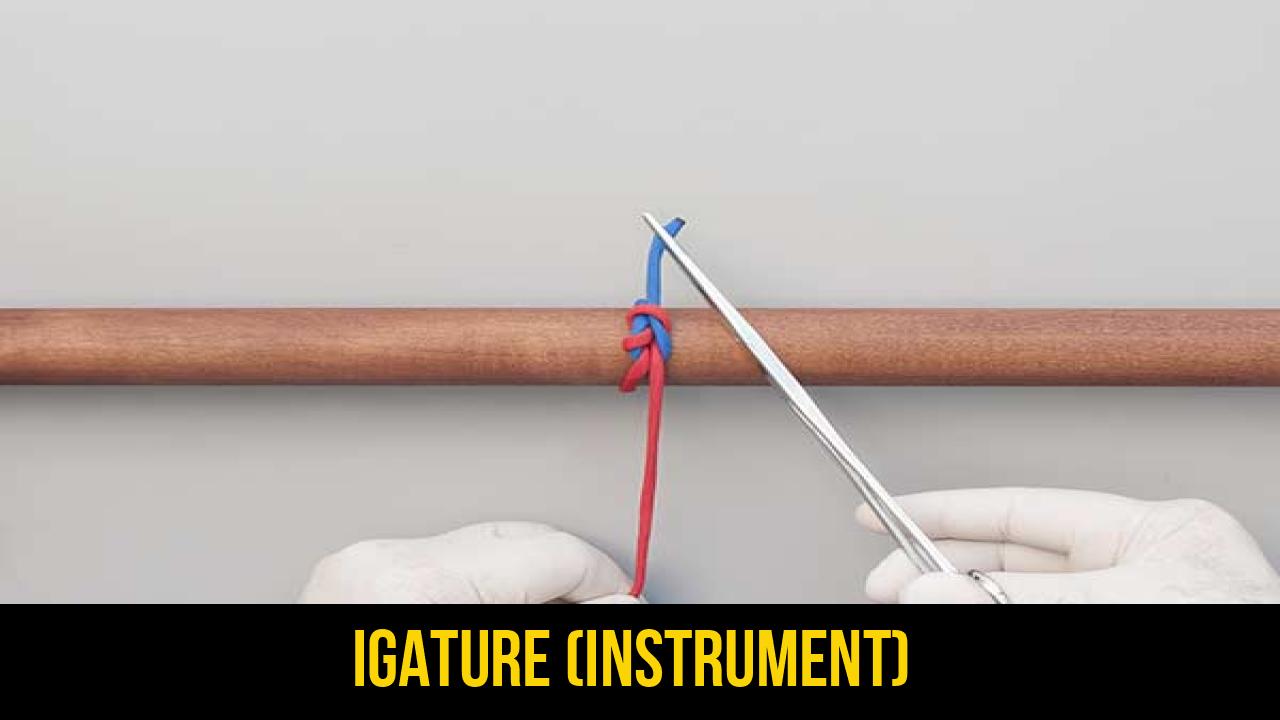
In the world of technical gear maintenance and precision craft, the ability to secure materials with absolute accuracy is a hallmark of a true specialist. While most rope knots are designed to be tied by hand, certain high-precision tasks require the mechanical advantage and dexterity offered by tools. This is where the Ligature (Instrument) knot comes into play. Often utilized in scenarios where fingers are too large or the cordage is too fine for traditional handling, this technique ensures a secure, high-tension bind that stays put under pressure.
Whether you are repairing ultra-lightweight outdoor equipment, engaging in intricate fly-fishing tasks, or performing delicate gear modifications, understanding the mechanics of the Ligature (Instrument) knot is essential. This knot is a variation of traditional binding techniques, adapted specifically for use with forceps or hemostats to achieve a level of tightness and security that manual tying often lacks.
Alternative Names: Instrument Tie, Forceps Knot, Surgeon’s Instrument Knot, Technical Binding Knot.
What Is a Ligature (Instrument)?
A Ligature (Instrument) is a specialized binding knot specifically designed to be executed using a tool, typically a pair of forceps or hemostats. Unlike standard outdoor rope techniques that rely on manual loops and tucks, the instrument tie allows the user to maintain constant tension on the standing line while precisely manipulating the working end.
Practical Uses in the Field
While its origins are rooted in technical precision, the practical applications for outdoor enthusiasts and gear specialists are vast:
- Gear Repair: Fixing fine mesh on high-end tents or repairing technical apparel where standard knots would be too bulky.
- Fly Fishing: Securing delicate leaders or creating custom rigs where traditional fisherman’s knots need an extra layer of security.
- Paracord Projects: Used in micro-paracord crafting to create seamless transitions and tight finishes.
- Emergency Repairs: When working with cold hands or in cramped spaces where manual dexterity is compromised, using a tool to complete a Ligature (Instrument) knot can be a lifesaver.
The primary advantage of this knot is the "Double Throw" phase, which provides significant friction, preventing the knot from slipping while the second half of the knot is being tied.
Materials and Tools Needed
To successfully execute a Ligature (Instrument) knot, you need the right combination of cordage and mechanical assistance.
1. The Tool (Forceps)
The most critical component is the instrument itself. Standard medical forceps or "hemostats" (available at most outdoor and fly-fishing shops) are ideal. Look for tools with:
- Serrated Jaws: To provide a non-slip grip on the cordage.
- Locking Mechanism: To hold the line securely while you make your wraps.
2. Cordage Selection
The Ligature (Instrument) knot performs best with specific types of lines:
- Monofilament and Fluorocarbon: Excellent for high-friction, low-visibility applications.
- Micro-Braid: High-strength lines used in technical gear.
- Fine Synthetic Thread: For repairing technical fabrics like Dyneema or Silnylon.
3. Considerations
Before tying, ensure your workspace is clear. Because this technique involves multiple wraps around a tool, any snagging on the environment can ruin the tension of the Ligature (Instrument) knot.
How to Tie Ligature (Instrument)?
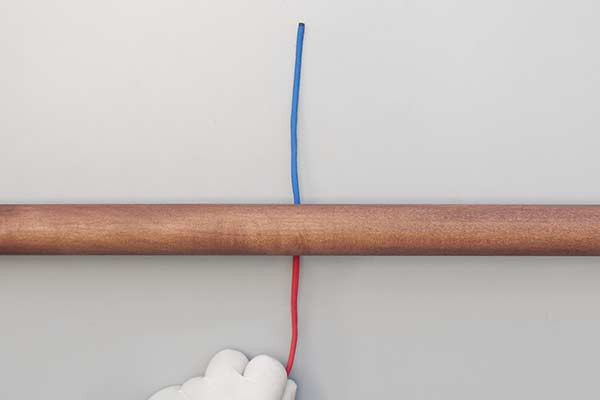
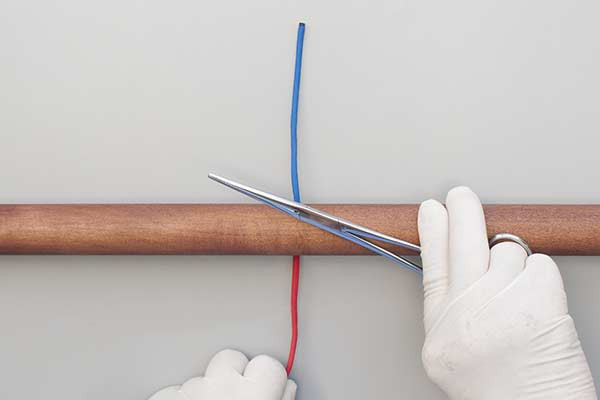
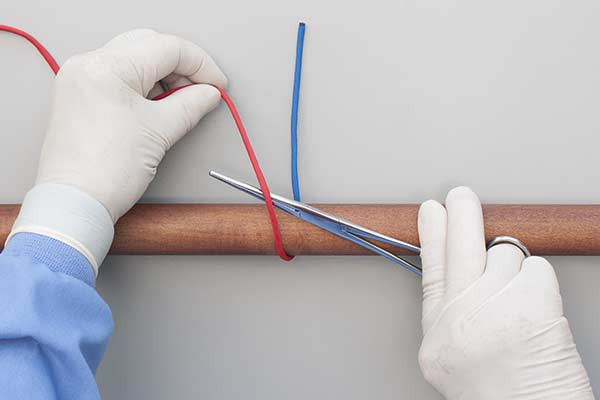
The following instructions are the standard procedure for completing this technical knot. Precision is key, so follow each step carefully to ensure the integrity of the bind.
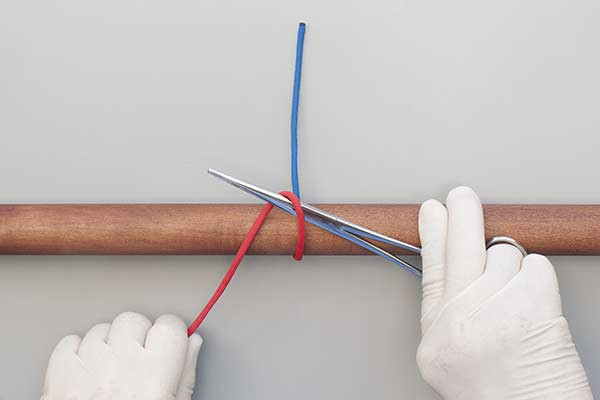
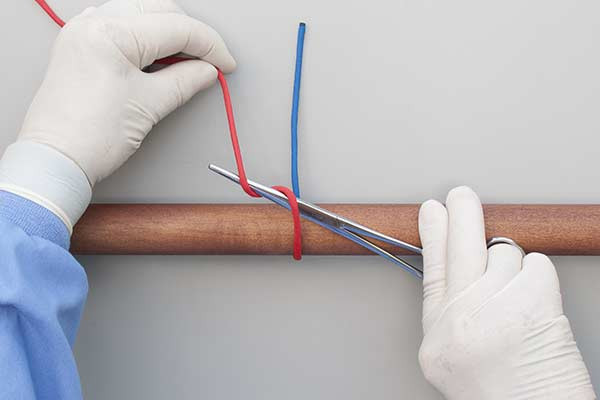
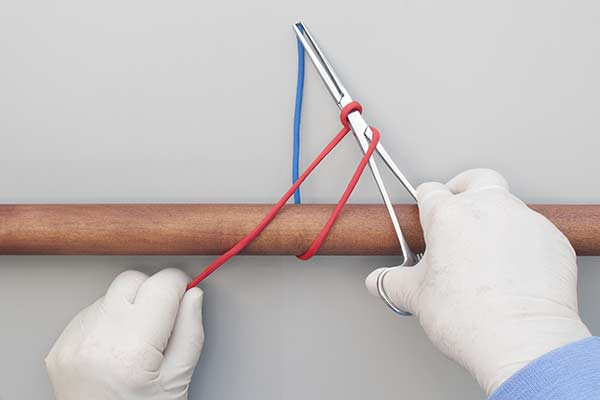
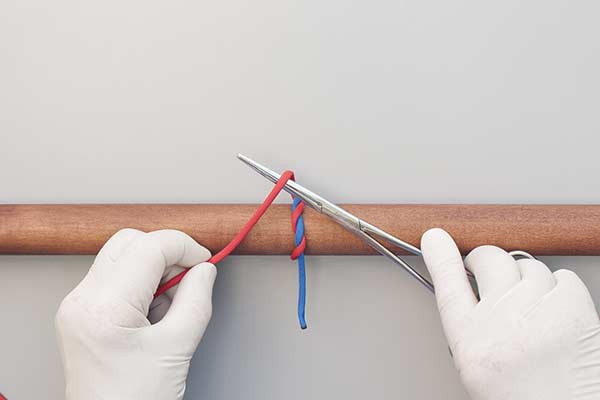
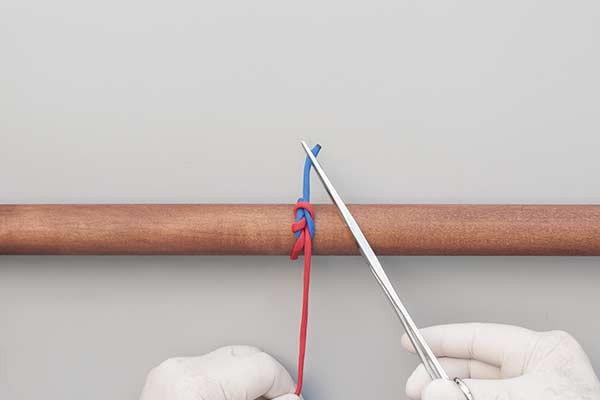
- With the short end away from you, position the forceps.
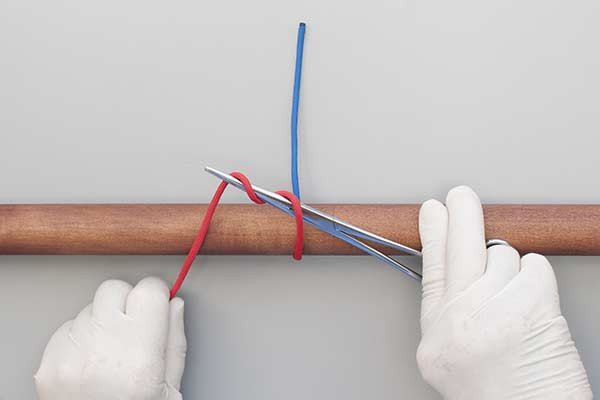
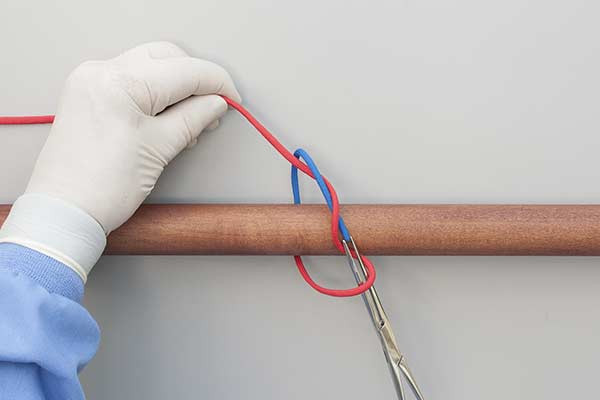
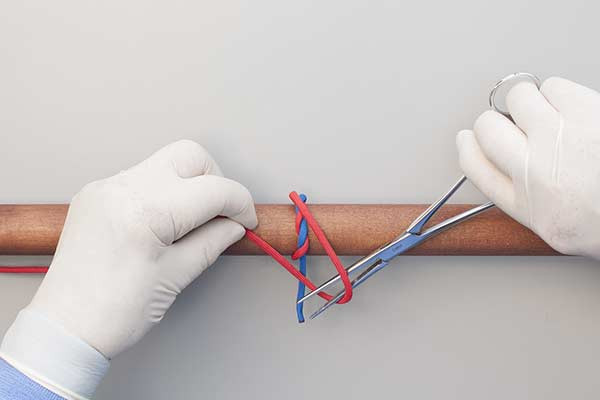
- Wrap the long end over, under, over, and then under the forceps.
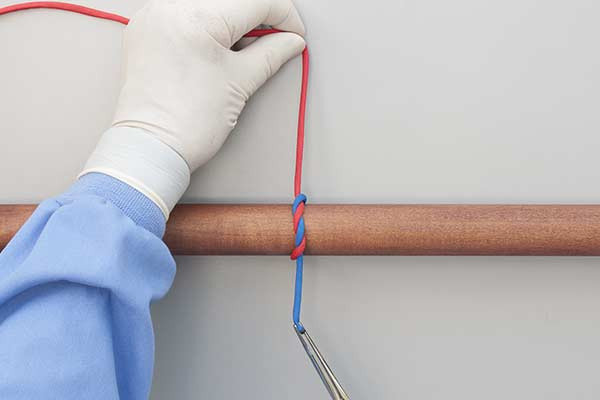
- Pick up the end and pull tight to make the Double Throw Knot.
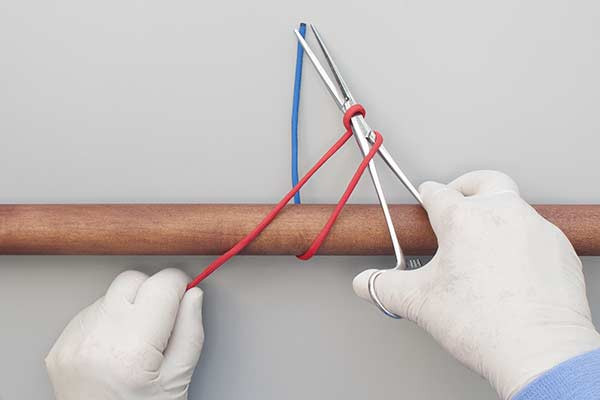
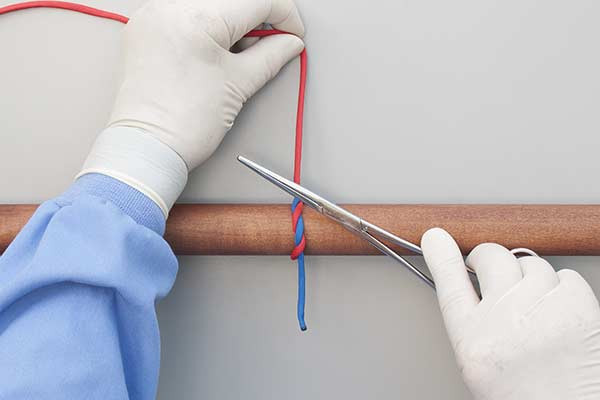
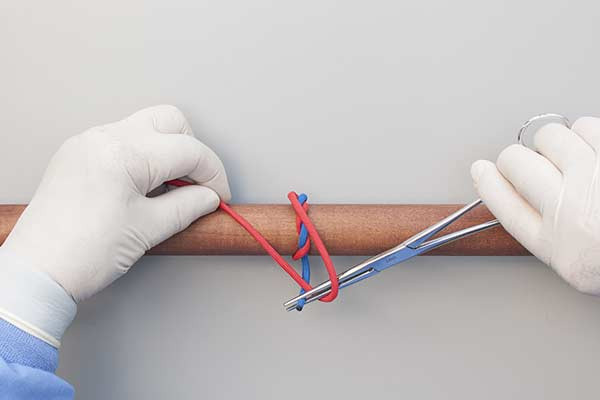
- Position the forceps again and wrap the long end across them.
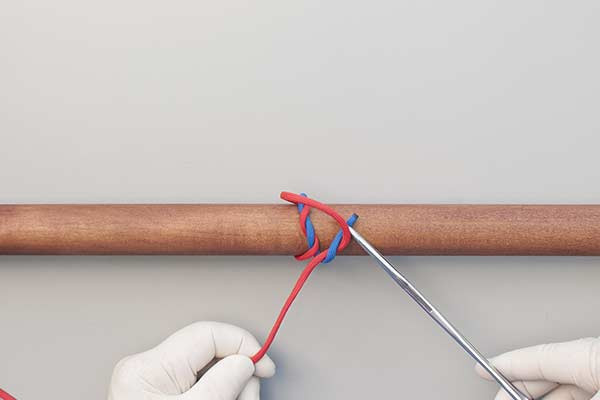
- Pick up the short end.
- Pull tight to complete the Ligature.
Common Mistakes to Avoid
Even for those experienced in rope knots, the transition to using instruments can lead to specific errors.
- Inconsistent Tension: The "Double Throw" (Step 3) is designed to hold tension. If you allow the line to slacken before completing the final throw, the knot may fail.
- Wrong Wrap Direction: In Step 2, the "over, under, over, under" sequence is vital. Reversing this or skipping a wrap will result in a knot that does not "bite" into itself correctly.
- Over-Tightening with the Tool: Forceps provide significant leverage. It is possible to snap fine cordage if you pull too hard during the final tightening. Always feel for the "seat" of the knot rather than just pulling with maximum force.
- Using Too Much Bulk: This knot is intended for fine lines. Attempting a Ligature (Instrument) knot with thick climbing rope is impractical and will not result in a secure bind.
Safety Tips
- Check for Burrs: Ensure your forceps do not have sharp edges that could fray or cut the line during the wrapping process.
- Practice with Visibility: Use a high-visibility line when first learning the technique before moving to clear monofilament.
Related Knots and Splicing
Understanding the Ligature (Instrument) knot is just one part of mastering outdoor rope techniques. Here are several related knots that complement this skill:
- Surgeon’s Knot: A manual version of the double-throw knot used to join two lines with extra friction to prevent slipping.
- Square (Reef) Knot: A foundational binding knot used to secure a rope or line around an object, though it lacks the security of a ligature.
- Clove Hitch: A versatile knot used to secure a line to a cylindrical object, often serving as the starting point for more complex lashings.
- Blood Knot: A preferred knot for joining two sections of monofilament nylon line while maintaining a high percentage of the line’s original strength.
- Improved Clinch Knot: A staple in fishing, used for securing a line to a hook or lure, emphasizing terminal tackle security.
Final Words
The Ligature (Instrument) knot is a sophisticated addition to any gear specialist’s repertoire. By utilizing tools to enhance manual dexterity, you can achieve a level of precision and security that is vital for technical repairs and delicate outdoor tasks.
Mastering this technique requires patience and practice, but the reward is a reliable, professional-grade bind that holds up under the rigors of the field. Remember to always match your knot to the material and the task at hand. With the Ligature (Instrument) in your skillset, you are better prepared for the intricate challenges that high-performance outdoor gear can present.
