
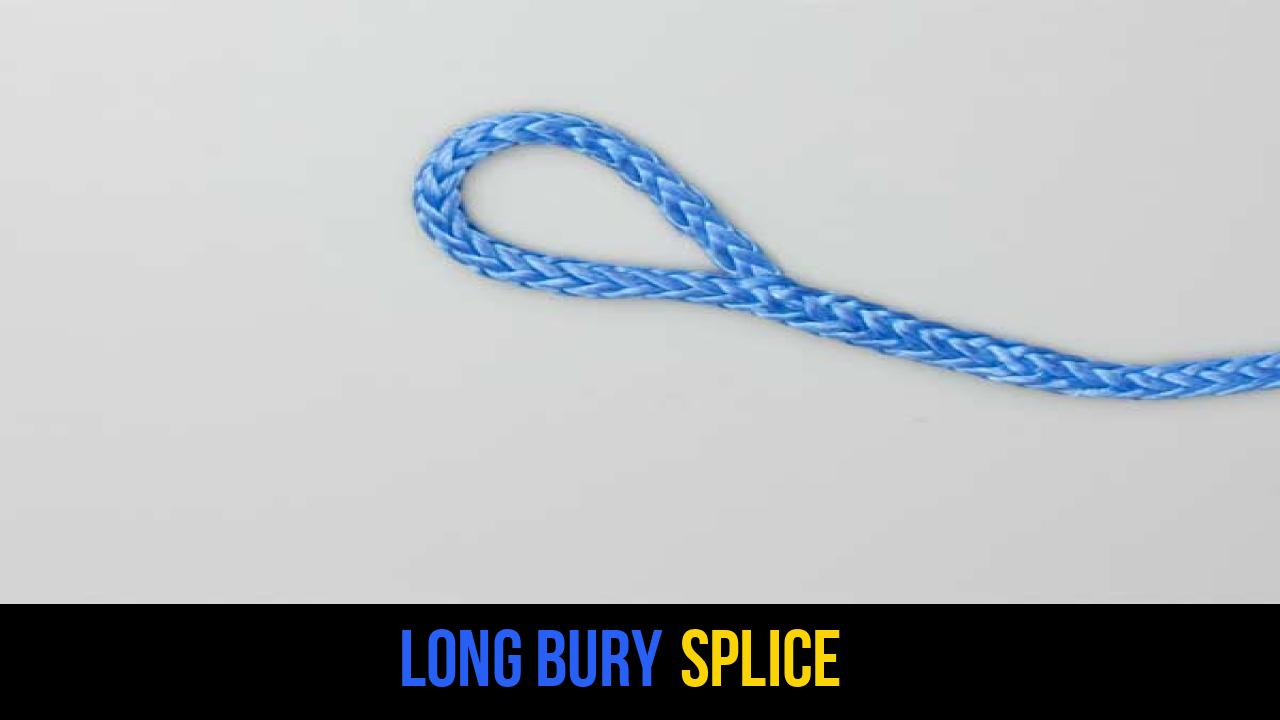
In the world of high-performance rigging, sailing, and arboriculture, the ability to join or terminate a rope without compromising its structural integrity is a hallmark of expertise. While traditional rope knots have served humanity for millennia, modern synthetic fibers—such as Dyneema, Spectra, and other High-Modulus Polyethylene (HMPE) materials—require a different approach. Enter the Long Bury Splice.
The Long Bury Splice is a sophisticated technique used primarily with hollow-braid ropes. Unlike a standard knot, which can reduce a rope’s breaking strength by up to 50%, a properly executed splice can retain nearly 100% of the rope’s rated capacity. This article provides a comprehensive deep dive into the mechanics, applications, and step-by-step execution of this essential splicing method.
Alternative Names: Hollow Braid Splice, AmSteel Bury, Straight Bury Splice, Dyneema Eye Splice (Bury Method).
What Is a Long Bury Splice?
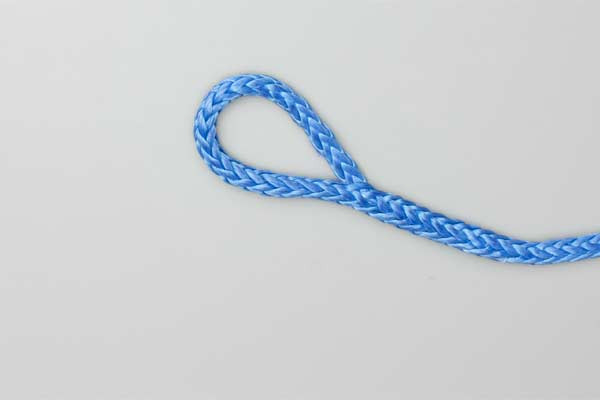
The Long Bury Splice is a method of terminating a rope by tucking its end back into its own hollow core. This technique relies on the "Chinese finger trap" principle: when the outer rope (the standing part) is put under tension, it constricts around the inner rope (the buried tail), creating a friction-based lock that is incredibly secure.
Practical Uses and Applications
This splice is a staple in industries where weight-to-strength ratios are critical.
- Sailing and Marine: Used for halyards, sheets, and soft shackles where heavy metal hardware is undesirable.
- Arboriculture: Tree climbers use long bury splices for friction savers and rigging slings.
- Off-Road Recovery: Synthetic winch lines almost exclusively use bury splices for their hook attachments because they are safer and lighter than steel.
- Hammock Camping: Enthusiasts use this technique to create "Whoopie Slings," allowing for adjustable, ultra-lightweight suspension systems.
Why Splicing Beats Knotting
When you tie a rope knot, the tight bends create stress concentrations where the fibers on the outside of the curve carry all the load, while the inner fibers are compressed. This imbalance leads to premature failure. A Long Bury Splice allows the load to be distributed evenly across all strands of the rope, maintaining the linear alignment of the fibers.
Materials and Tools Needed
Before beginning your splice, ensure you have the correct materials. This technique is specifically designed for hollow-braid 12-strand ropes. It will not work on parallel-core or most double-braid ropes without significant modification.
Recommended Tools:
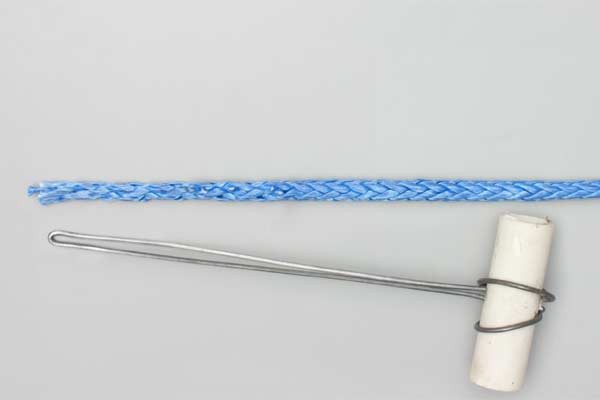
- Splicing Tool (Fid or Wire Puller): A hollow fid or a specialized wire pulling tool is essential for passing the rope through its own core.
- Sharp Cutting Tool: Ceramic blades or high-quality stainless steel shears are preferred, as HMPE fibers are notoriously difficult to cut.
- Marking Pen: A permanent marker (like a Sharpie) to indicate where to taper and where the bury begins.
- Tape: Masking tape or electrical tape to consolidate the end of the rope for easier insertion into the tool.
- Measuring Tape: To ensure the "bury" is long enough to meet safety standards (typically 2 to 3 "fid lengths").
How to Tie Long Bury Splice?
The following instructions outline the professional method for executing a Long Bury Splice. Follow these steps precisely to ensure the safety and longevity of your connection.
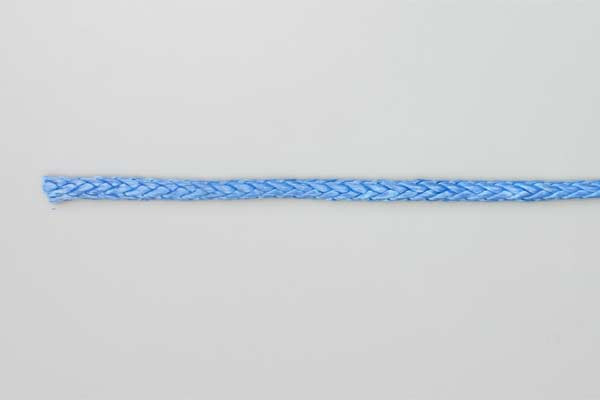
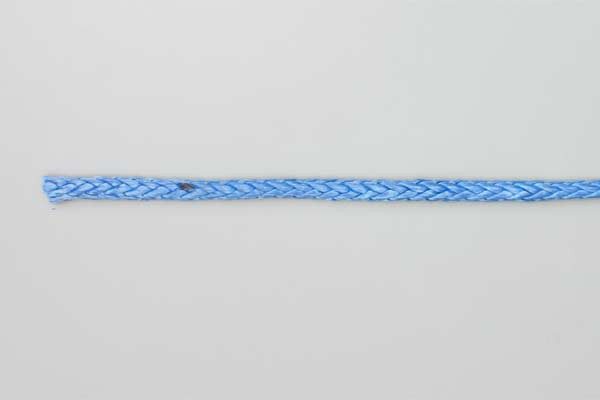
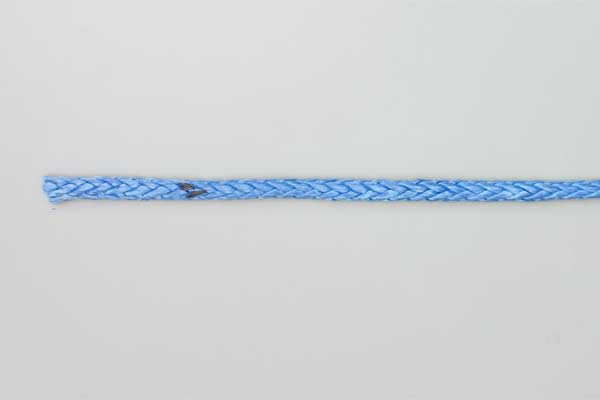
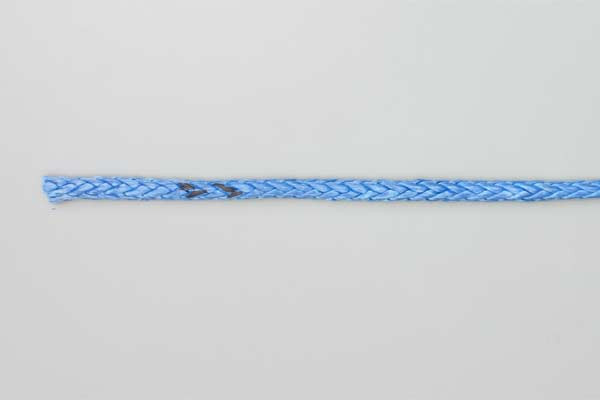
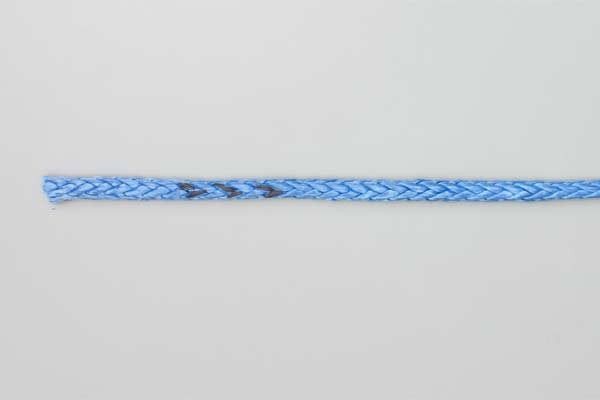
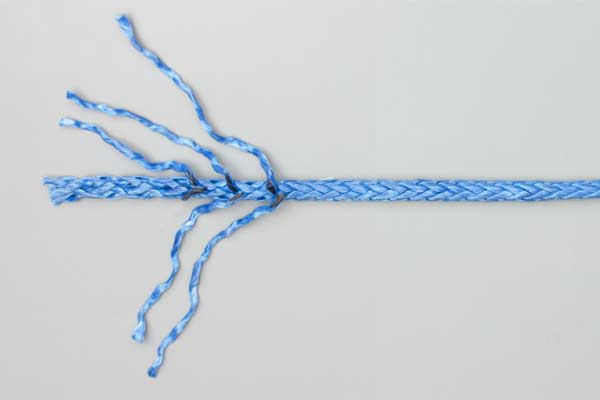
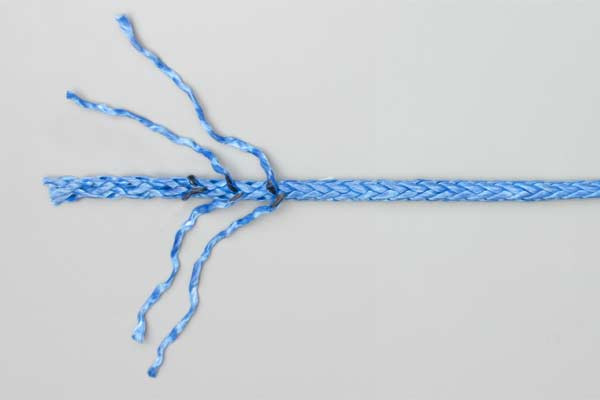
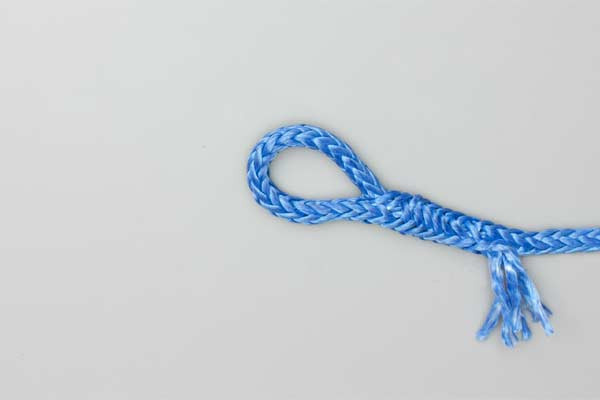
- For tapering mark 6 strands, choosing alternate pairs.
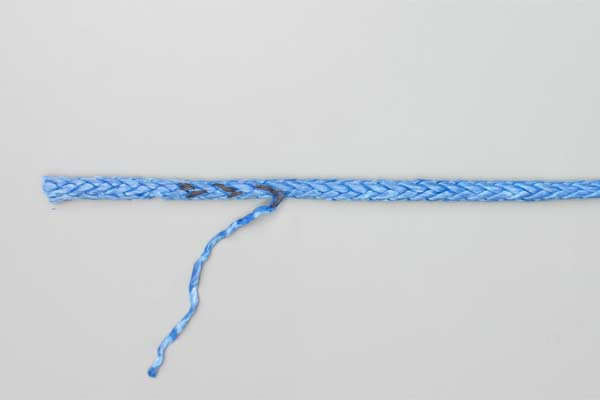
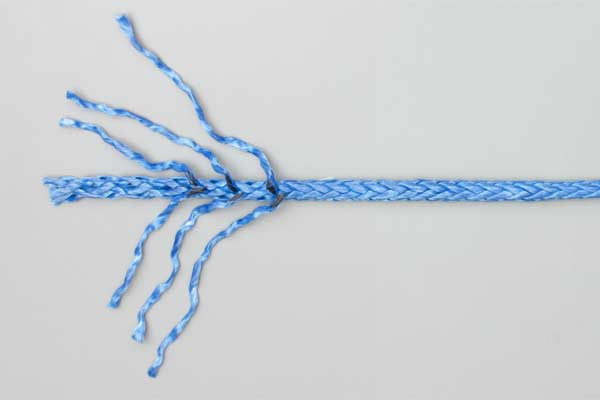
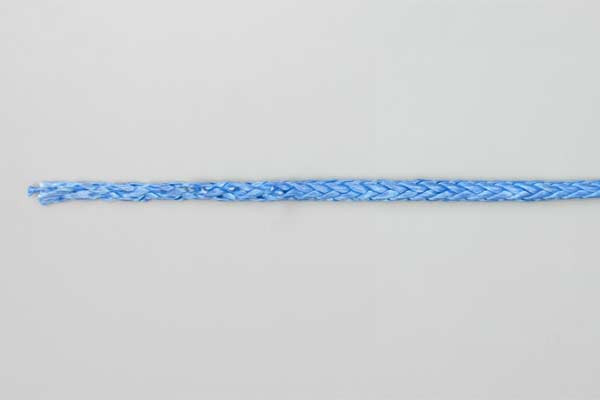
- Pull these six strands out of the rope and cut them off close to the rope.
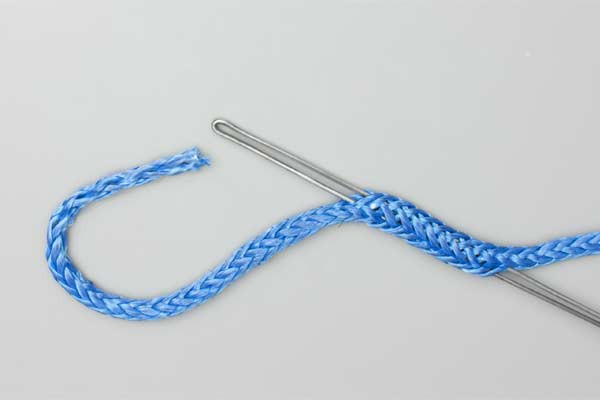
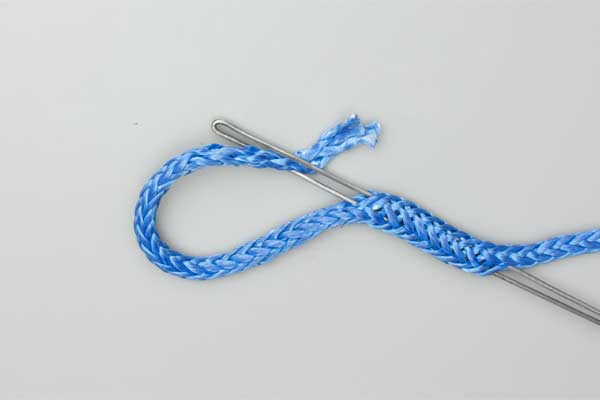
- Pass the splicing tool up the hollow core of the rope.
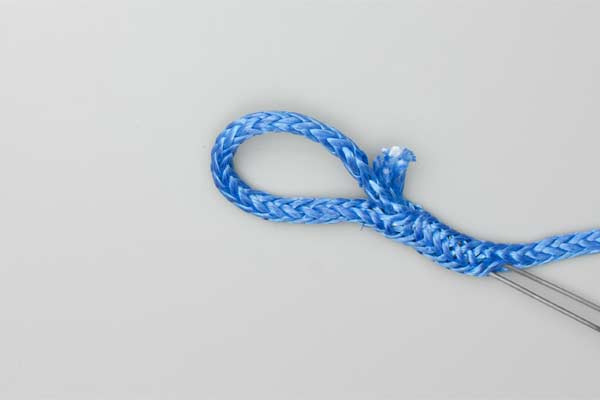
- Tuck the tapered tail into the tool and pull it through the rope.
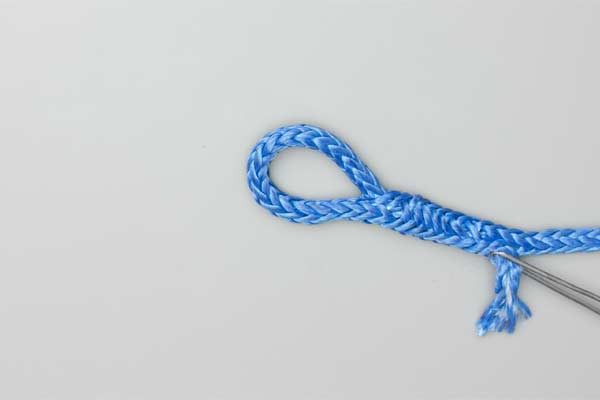
- Smooth out the rope to bury the end.
Technical Deep Dive: The Importance of the Taper
In the instructions above, the first two steps focus on "tapering." This is perhaps the most critical part of any outdoor rope techniques involving splices. If you were to bury a blunt, full-thickness rope end, it would create a "step" or a sudden change in the rope’s diameter.
Under load, this "step" becomes a point of high stress where the rope is likely to break. By removing alternate pairs of strands, you create a gradual transition. This allows the load to be transferred smoothly from the standing part of the rope to the buried tail, eliminating stress risers and ensuring the splice remains "invisible" to the forces acting upon it.
Common Mistakes to Avoid
Even for experienced riggers, the Long Bury Splice requires attention to detail. Avoid these common pitfalls:
1. Insufficient Bury Length
The friction that holds the splice in place depends on the length of the buried tail. A common rule of thumb for 12-strand HMPE is a bury length of at least 21 times the rope’s diameter. If the bury is too short, the tail can "crawl" and eventually pull out under cyclic loading.
2. Skipping the Taper
As mentioned, failing to taper the end results in a weak point. Always take the time to mark and pull the six strands as instructed.
3. Lack of "Milking"
After pulling the tail through, the outer cover will be bunched up. You must "milk" or smooth the cover firmly from the throat of the splice down toward the buried end. This sets the tension and ensures the "finger trap" mechanism is fully engaged.
4. Over-Tensioning During the Build
If you pull the strands too tight while tapering, you may distort the braid of the standing part, making it difficult to pass the fid through the core.
Related Knots and Splicing
Understanding the Long Bury Splice is a gateway to more complex rope knots and splicing variations. Here are a few related techniques:
- Locked Brummel Splice: A variation of the bury splice that uses a "pass-through" maneuver to lock the eye in place, preventing it from slipping even when not under load.
- Whoopie Sling: A clever application of the long bury where the bury length is adjustable, allowing for a variable-length loop used in hammock suspensions and arboriculture.
- Soft Shackle: A high-strength loop made entirely of rope that uses a bury splice and a stopper knot (like the Diamond Knot) to replace heavy steel carabiners.
- Eye Splice (3-Strand): The traditional version of a splice used for twisted nylon or manila rope, involving weaving strands back into the lay of the rope.
Final Words
The Long Bury Splice is an indispensable skill for anyone working with modern outdoor rope techniques. Whether you are securing a high-end yacht, rigging a heavy load in a forest, or simply optimizing your camping gear, this splice offers a level of security and efficiency that traditional knots simply cannot match.
By mastering the art of the taper and understanding the physics of the hollow core, you transition from a casual user of rope to a technical specialist. Remember to always inspect your splices before use and practice with scrap rope before applying these techniques to load-bearing applications. Safety in the outdoors begins with the integrity of your connections—and the Long Bury Splice is the gold standard of rope integrity.
