
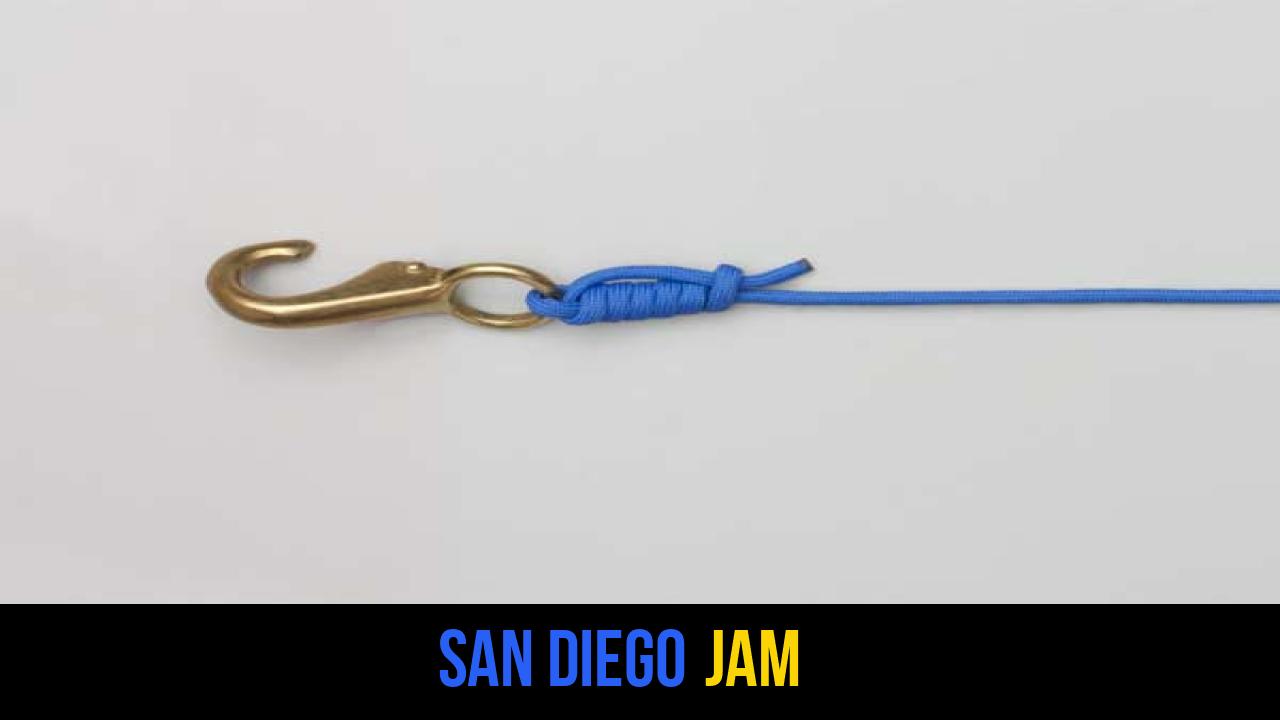
In the world of outdoor rope techniques, few connections command as much respect for terminal strength and reliability as the San Diego Jam knot. Originally developed for the high-stakes world of long-range tuna fishing, this knot has transitioned from a specialized secret of the Pacific coast to a staple in the kits of professional anglers and outdoor enthusiasts worldwide.
Whether you are securing a heavy lure to a fluorocarbon leader or exploring the fundamental physics of rope knots, the San Diego Jam offers a unique combination of friction and mechanical "jamming" that prevents slippage even under extreme tension. Its reputation is built on its high breaking strength, often testing at nearly 100% of the line’s rated capacity when tied correctly.
As we delve into the mechanics of this knot, you will see how it utilizes multiple wraps to distribute pressure, reducing the risk of the line cutting itself. This guide provides a comprehensive look at the knot’s history, the best materials to use, and a strict adherence to the traditional tying method.
Alternative names for the San Diego Jam knot include:
- San Diego Knot
- Reverse Clinch Knot
- Heiliger Knot
What Is a San Diego Jam?
The San Diego Jam knot is a terminal tackle knot designed primarily to attach a line to a hook, lure, swivel, or ring. It is categorized as a "jam" knot because the final tuck of the line creates a wedge effect that locks the wraps in place as tension is applied. Unlike simpler knots that may slip when used with modern, slick synthetic lines, the San Diego Jam excels in maintaining its integrity.
Practical Uses and Benefits
- Heavy-Duty Fishing: Its primary use remains in saltwater fishing where large, powerful fish like tuna, yellowtail, and wahoo are the targets. It is particularly effective with heavy monofilament and fluorocarbon lines ranging from 20lb to 100lb test.
- Outdoor Rope Techniques: In a broader sense, the principles of the San Diego Jam—wrapping a tag end around a standing line to create friction—are foundational in various outdoor rope techniques. Understanding how this knot functions provides insight into how friction hitches and "jamming" mechanisms work in survival and scouting scenarios.
- Versatility with Materials: While many knots struggle with the stiffness of fluorocarbon, the San Diego Jam’s structure allows it to seat perfectly without creating the "kinks" that weaken the material.
Materials and Tools Needed
To master this knot, you must consider the diameter and texture of the material you are using. While the instructions remain the same, the behavior of the rope or line will change.
Recommended Lines and Ropes
- Fluorocarbon: This is where the San Diego Jam shines. The knot’s ability to "seat" without burning the line makes it ideal for this sensitive material.
- Monofilament: A classic choice for beginners. The slight stretch in monofilament makes the tightening process more forgiving.
- Braided Lines: While possible to tie with braid, you may need to increase the number of wraps to prevent slippage due to the line’s thin diameter and slick coating.
- Utility Cord/Paracord: For those practicing rope knots for general outdoor use, 550 paracord is an excellent medium for learning the wraps and seeing how the "jam" occurs.
Essential Tools
- Terminal Tackle: A heavy-duty hook, swivel, or a simple metal ring for practice.
- Cutting Tool: A sharp pair of line nippers or a multi-tool to ensure a clean trim of the tag end.
- Lubricant: In a field setting, water or saliva is used to reduce friction heat during the tightening phase.
How to Tie San Diego Jam?
To ensure the highest level of knot integrity, follow these steps exactly as they have been handed down through generations of expert outdoorsmen.
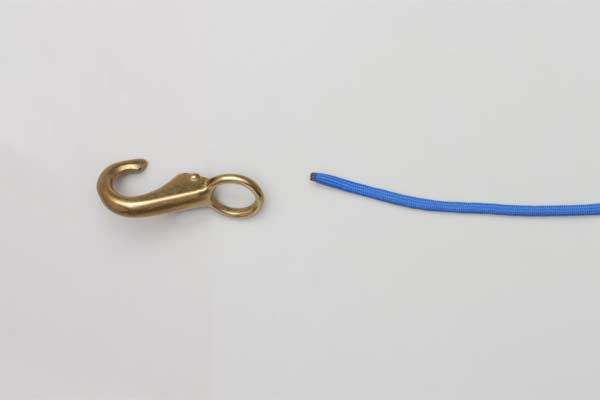
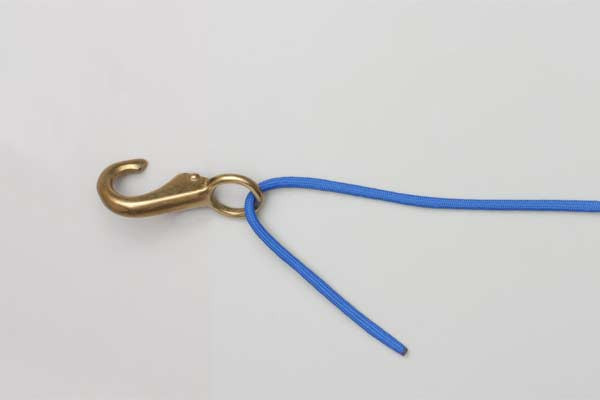
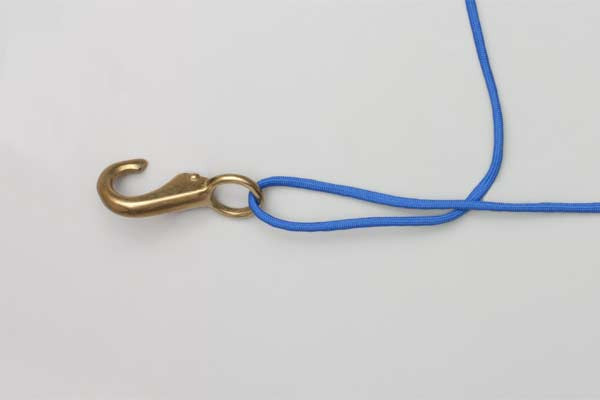
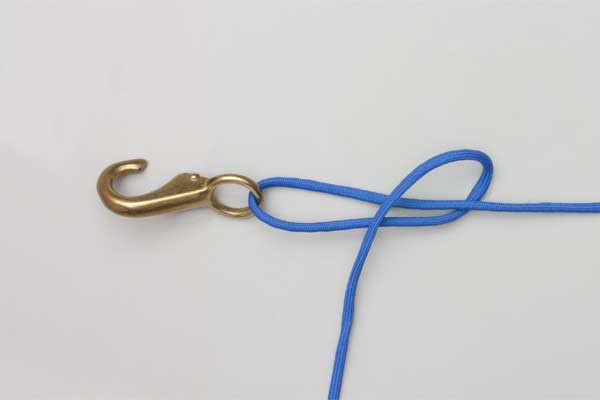
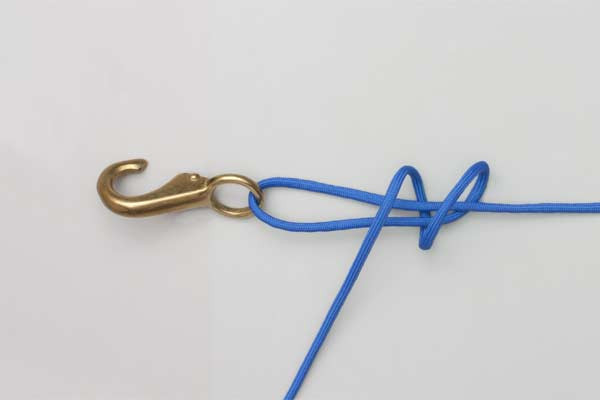
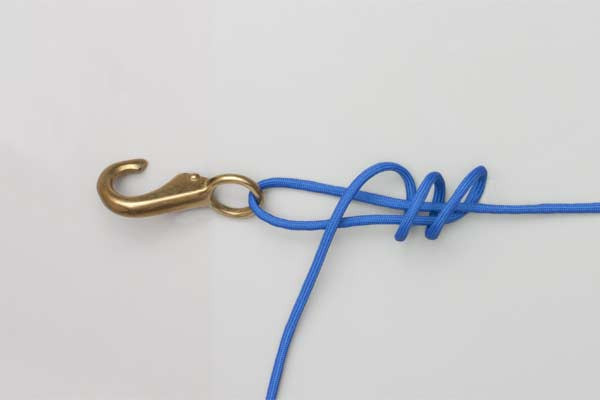
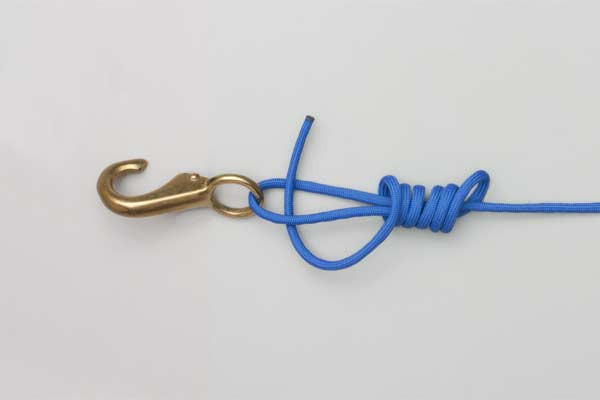
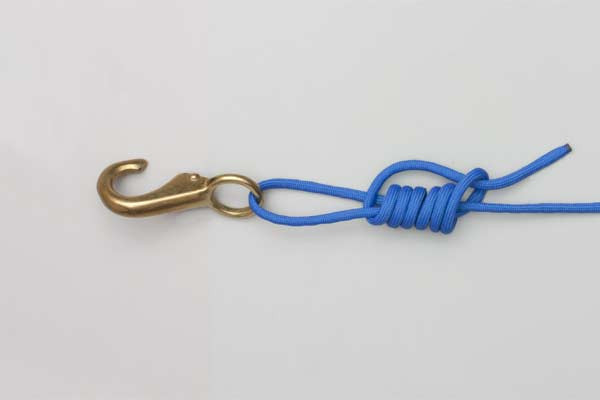
- Pass the tag end through the eye. Hold the lines to keep a loop and wrap the tag end around the line and the tag end several times.
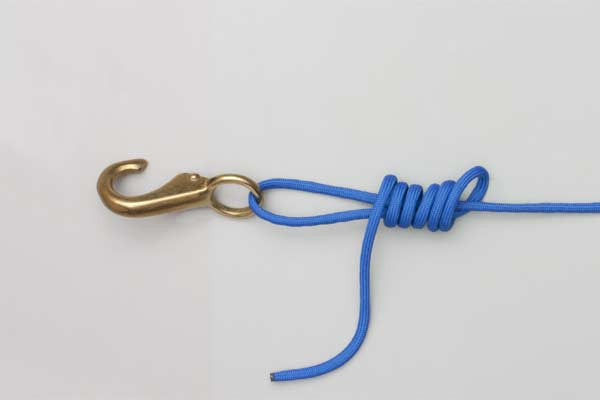
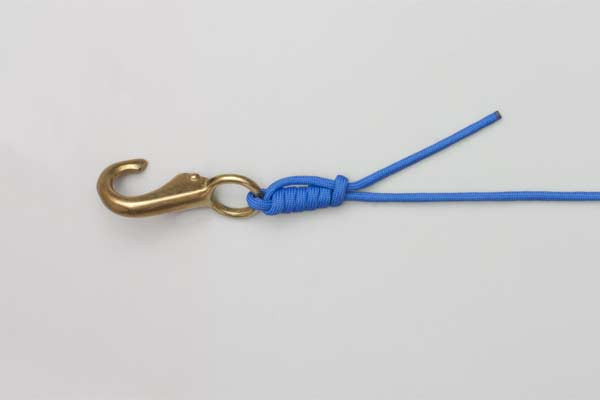
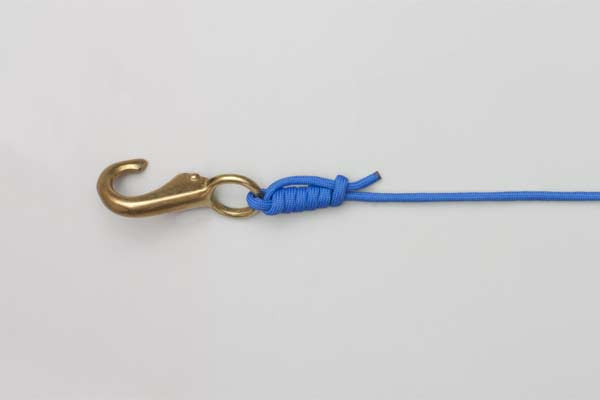
- Pass the end between the lines near the eye and then back through the loop parallel to the line. Lubricate, tighten carefully so that the turns don’t overlap each other, and trim the end.
Common Mistakes to Avoid
Even seasoned experts can make mistakes when tying rope knots. To ensure your San Diego Jam doesn’t fail at a critical moment, keep the following safety and technical tips in mind:
1. Lack of Lubrication
This is the most common cause of knot failure. When you pull the San Diego Jam tight, the friction generates significant heat. In synthetic lines, this heat can "burn" or weaken the plastic, leading to a break well below the rated strength. Always lubricate the knot with water or saliva before the final cinch.
2. Overlapping Wraps
As noted in the instructions, the turns should not overlap. If the wraps cross over one another during the tightening process, they can pinch and cut the line. Use your fingers to guide the coils so they stack neatly like a spring.
3. Insufficient Number of Wraps
The "several times" mentioned in the instructions usually translates to 5–7 wraps. For thinner or slicker lines (like braid), you might need up to 8 wraps. For very heavy lines (80lb+), 4 or 5 wraps are often sufficient. Too few wraps will lead to the knot slipping out under heavy load.
4. Failing to Test the Knot
Before putting the knot into a high-stakes situation, give it a firm steady pull. A properly tied San Diego Jam should feel rock-solid. If you see any deformation in the line above the knot, cut it off and start again.
Related Knots and Splicing
Expanding your knowledge of outdoor rope techniques involves understanding how different knots compare to one another. Here are three related knots often used in similar applications:
Improved Clinch Knot
The Improved Clinch is one of the most widely known rope knots for terminal tackle. It is easier to tie than the San Diego Jam but is generally considered less secure for very heavy or very slick lines. It involves threading the end through a loop created by twisting the line, offering a reliable hold for light to medium-duty tasks.
Palomar Knot
Often cited as the strongest knot for braided lines, the Palomar knot is remarkably simple, involving a doubled-up line passed through the eye and then looped over the entire hook or lure. It is a favorite in many outdoor rope techniques because it is almost impossible to tie incorrectly, though it requires more line to tie than the San Diego Jam.
Uni Knot (Universal Knot)
The Uni knot is a versatile "all-purpose" connection that can be used for terminal tackle, joining two lines together, or even as a sliding hitch. It creates a strong, reliable loop that cinches down onto the eye. It is a great alternative if you find the "back-through-the-loop" step of the San Diego Jam difficult in cold or wet conditions.
Final Words
The San Diego Jam knot is more than just a fishing connection; it is a masterclass in the application of friction and mechanical advantage. By mastering this knot, you add a high-performance tool to your repertoire of outdoor rope techniques. Its ability to hold fast under the most grueling conditions makes it an essential skill for anyone serious about gear reliability.
Remember that the key to a perfect San Diego Jam lies in the details: neat wraps, proper lubrication, and a careful cinch. Whether you are on a boat in the Pacific or practicing your rope knots at a campsite, the San Diego Jam remains a gold standard for terminal strength. Practice the steps until the motion becomes muscle memory, and you will have a connection you can trust for a lifetime of outdoor adventures.
