
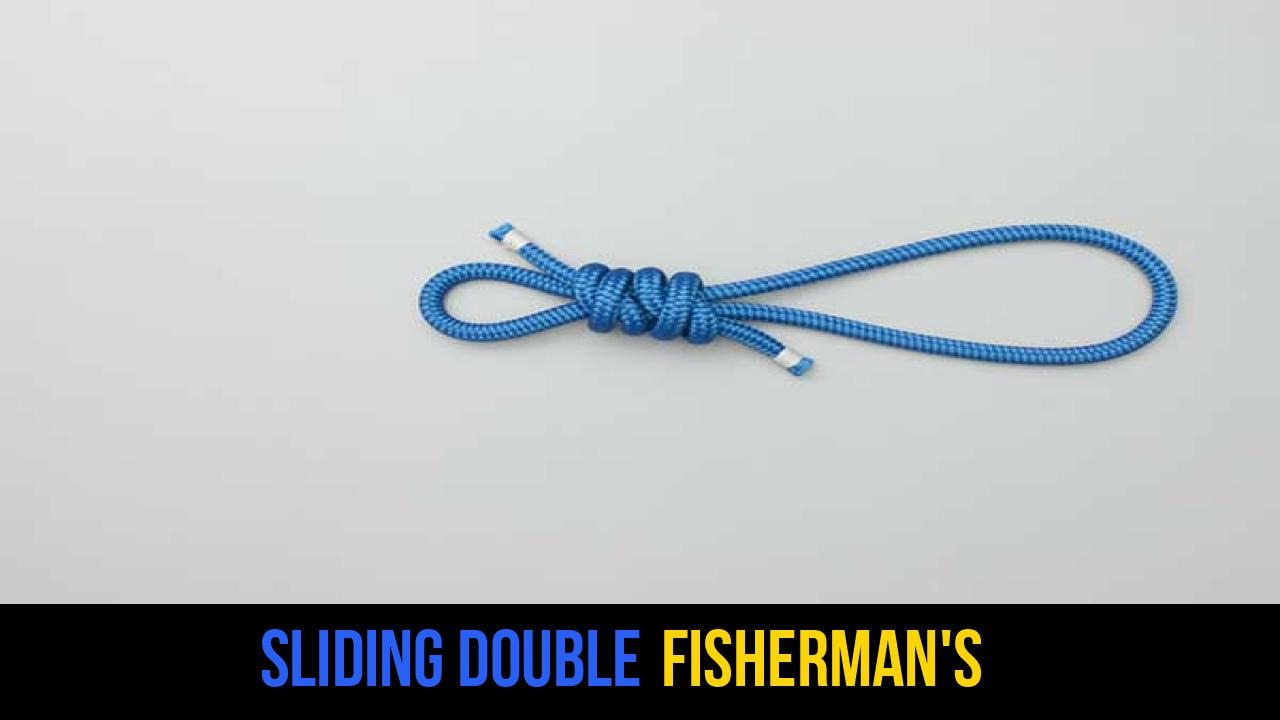
In the world of rope knots and outdoor rope techniques, few configurations offer the same blend of security and adjustability as the Sliding Double Fisherman’s. Whether you are an arborist securing a climb, a scout building a camp gadget, or a survivalist preparing a gear tether, understanding how to manipulate cordage into reliable, sliding loops is a foundational skill.
The Sliding Double Fisherman’s is a variation of the classic Double Fisherman’s Bend. While the standard bend is used primarily to join two separate ropes together permanently, the sliding version is designed to create an adjustable loop that can be expanded or contracted based on the tension applied. Its reputation for being "jam-proof" under moderate loads, yet incredibly secure once tightened, makes it a favorite among technical rope users.
This knot is prized for its high breaking strength retention. Unlike simpler knots that can significantly weaken a rope’s integrity, the double wraps of this knot distribute stress more evenly across the fibers. In this guide, we will explore the mechanics, materials, and precise steps required to master this essential knot.
Alternative Names: Double Fisherman’s Loop, Adjustable Fisherman’s Knot, Two-Way Sliding Knot, Double Grapevine Loop.
What Is a Sliding Double Fisherman’s?
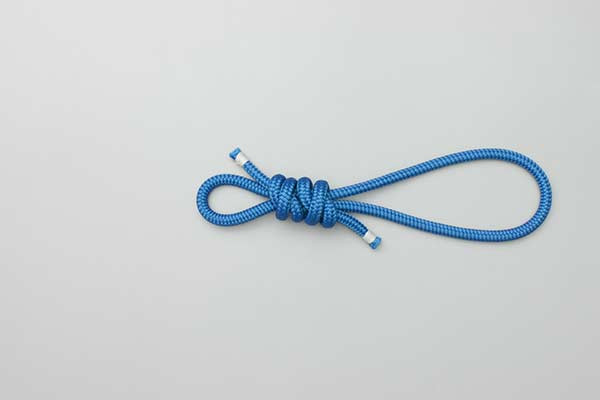
The Sliding Double Fisherman’s is technically a "loop" knot formed by tying two double overhand knots around the standing parts of the rope. When the two knots are pulled away from each other, the loop shrinks; when they are pulled toward each other, the loop expands. Once the two knots meet, they "lock" against one another, creating a secure circle of rope that can withstand significant force.
Practical Uses and Applications
- Climbing and Mountaineering: It is frequently used to create "Prusik loops" or "Autoblock" slings from accessory cord. These loops are essential for self-rescue and ascending a fixed line.
- Arboriculture: Tree surgeons use this knot to create adjustable lanyards and friction hitches that need to be moved frequently.
- Search and Rescue (SAR): The knot’s reliability in high-tension environments makes it a staple for litter tie-ins and secondary safety backups.
- Utility and Decorative: Outside of life-safety applications, it is the standard knot for making adjustable cord necklaces or bracelets, as it allows the wearer to change the length easily.
- Camping and General Utility: Use it to create adjustable guy lines for a tarp or a tensionable clothesline between two trees.
Materials and Tools Needed
To tie a secure Sliding Double Fisherman’s, the quality of your materials is just as important as the technique itself. Because this knot relies on friction and the "gripping" action of the wraps, choosing the right rope is vital.
Rope Types
- Kernmantle Rope: This is the most common type of rope used in climbing. It consists of an interior core (kern) and a woven outer sheath (mantle). The Sliding Double Fisherman’s performs excellently on kernmantle cordage between 5mm and 8mm.
- Static Cord: For most utility and rescue applications, static cord is preferred over dynamic (stretchy) rope, as it holds the knot’s shape better under constant tension.
- Accessory Cord: If you are making a Prusik loop, ensure the accessory cord is significantly thinner than the main rope it will be gripping (usually a 2-3mm difference).
Tools and Considerations
- Sharp Knife or Hot Knife: If you are cutting cord to a specific length for a permanent loop, a hot knife is best to seal the ends and prevent fraying.
- Gloves: When tightening the knot for professional use, wearing gloves allows you to apply maximum "set" to the knot without suffering rope burn.
- Inspection: Always inspect your rope for "soft spots," glazing (melted fibers), or sheath damage before tying any load-bearing knot.
How to Tie a Sliding Double Fisherman’s?
To ensure the highest level of safety and reliability, follow these instructions precisely. The strength of the Sliding Double Fisherman’s knot lies in the symmetry and seating of the two individual knots.
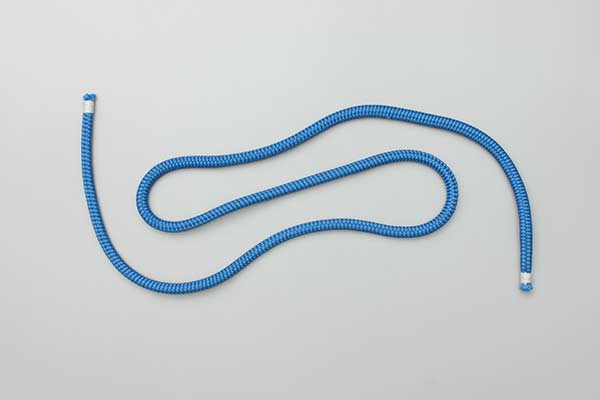
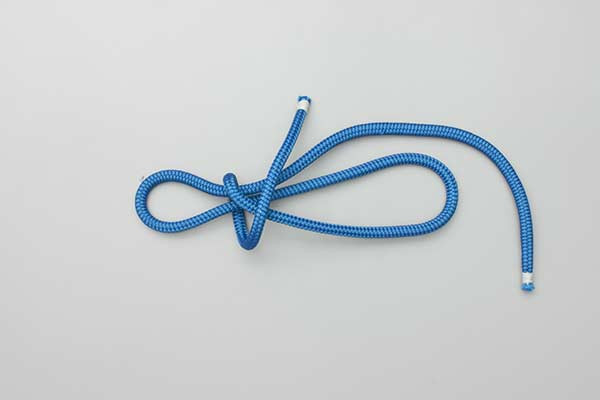
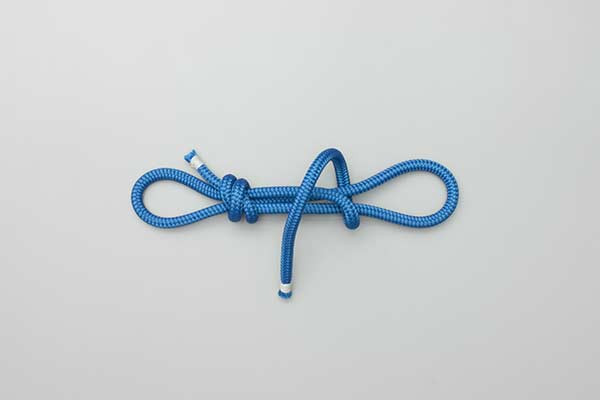
- Lay out the rope to create two bights.
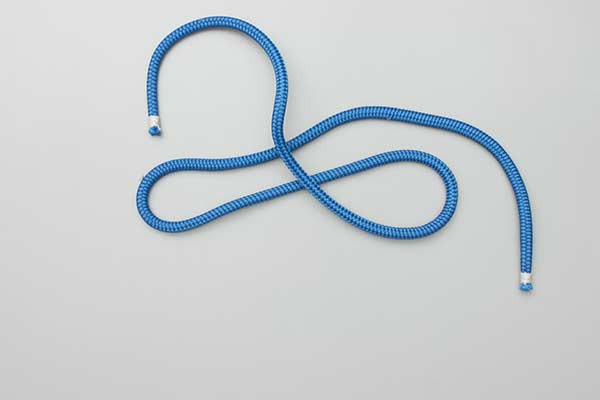
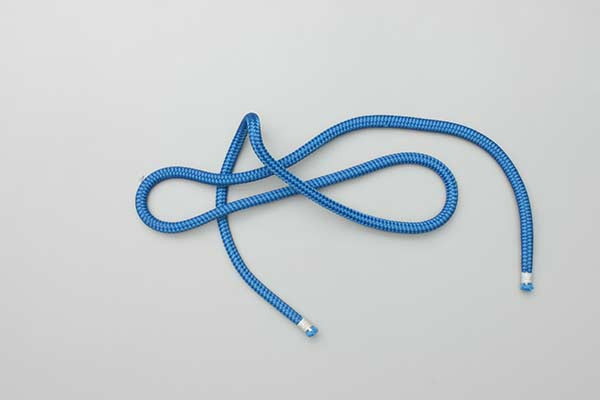
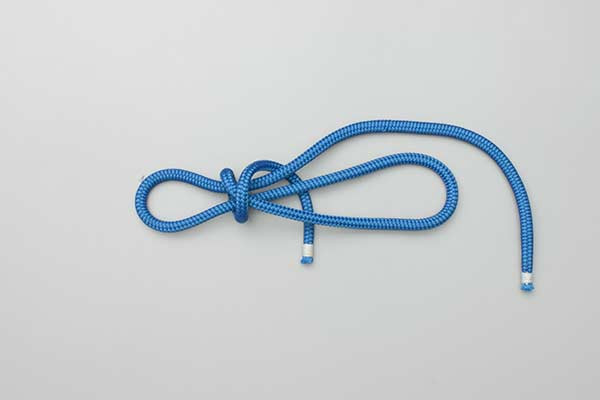
- Wrap one end twice around the adjacent bight and insert it under the two turns.
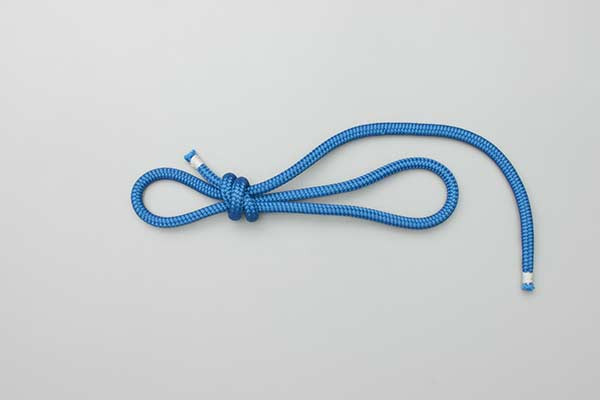
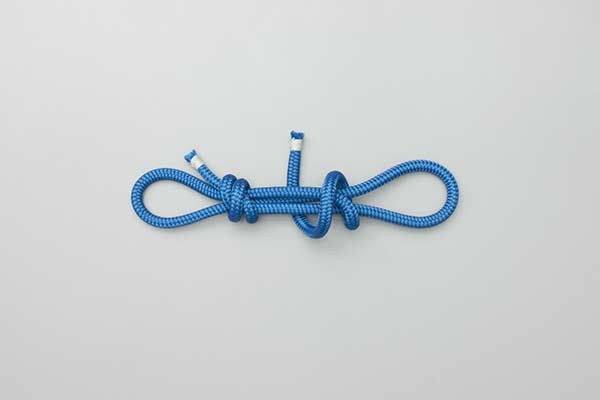
- Then wrap the other end twice around its adjacent bight and insert it under the two turns.
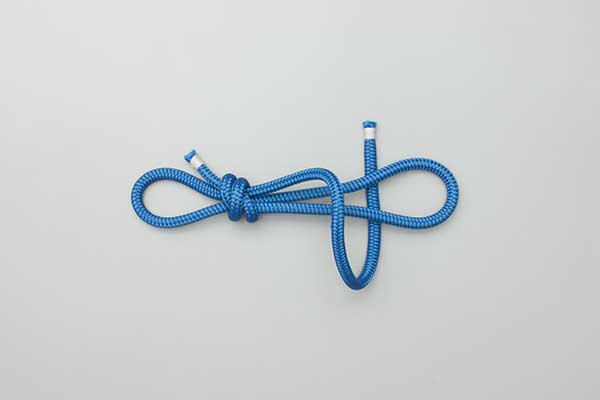
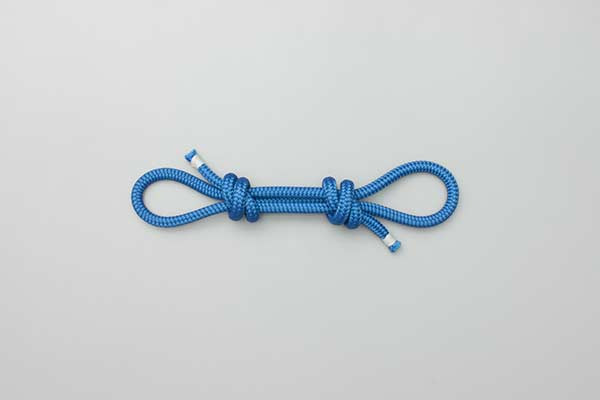
- Pull the ropes to make the two knots touch.
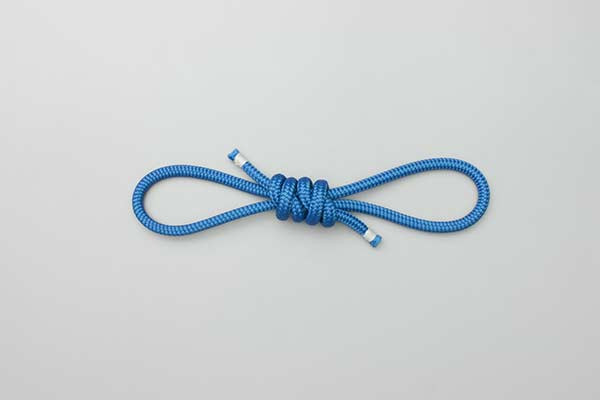
- Adjust the loop sizes to suit your purpose and tighten.
Technical Tip: After completing step 4, ensure that the "X" patterns formed by the wraps are on one side and the parallel strands are on the other. This indicates the knot is dressed correctly.
Common Mistakes to Avoid
Even experienced rope technicians can make errors when tying the Sliding Double Fisherman’s. Avoid these common pitfalls to ensure your outdoor rope techniques remain safe:
- Insufficient Tail Length: Always leave at least 2–3 inches of "tail" (the loose end) exiting the knot. Under extreme loads, the knot may "settle" or creep slightly; a short tail could result in the knot undoing itself.
- Crossing the Wraps Incorrectly: The two wraps must be parallel and sit neatly against each other. If the wraps cross over one another inside the knot, it creates a point of high friction that can damage the rope fibers or cause the knot to jam permanently.
- Failure to "Set" the Knot: A knot is not finished until it is "set." This means pulling each strand individually and then pulling the entire loop to ensure the two knots are seated firmly against each other.
- Mismatched Rope Diameters: While this knot can join ropes of slightly different diameters, using it on significantly different sizes (e.g., a 4mm cord and a 12mm rope) can lead to the smaller knot slipping through the larger one.
- Using Slippery Synthetic Materials: Materials like Dyneema or Spectra are incredibly strong but very "slick." A standard Double Fisherman’s may slip on these materials. In such cases, a "Triple Fisherman’s" (adding a third wrap) is often required.
Related Knots and Splicing
Understanding how the Sliding Double Fisherman’s relates to other knots will broaden your technical expertise.
- Double Fisherman’s Bend: This is the non-sliding version used to join two ropes into one continuous line; it is essentially the same knot but without the adjustable loop.
- Prusik Hitch: A friction hitch that uses a loop formed by a Double Fisherman’s to grip a larger standing rope.
- Figure-Eight Follow-Through: The gold standard for tying into a climbing harness; it is more bulky than the Fisherman’s but easier to inspect visually.
- Overhand Bend (European Death Knot): A much simpler (though less secure in some contexts) way to join two ropes for rappelling.
- Triple Fisherman’s Knot: An extra-secure version featuring three wraps instead of two, used primarily on high-modulus polyethylene (HMPE) ropes.
Final Words
The Sliding Double Fisherman’s is an indispensable tool in the kit of any outdoor enthusiast. Its ability to create a secure, adjustable, and high-strength loop makes it a versatile choice for everything from life-saving climbing maneuvers to simple campsite organization.
By mastering the precise wrapping technique and learning to identify the symmetrical "X" pattern of a well-dressed knot, you enhance your safety and efficiency in the field. Remember that rope knots are perishable skills—practice tying this knot in the dark, with gloves on, and behind your back to ensure that when you truly need it, the muscle memory is there. Always prioritize safety, inspect your gear regularly, and never use a knot for life-safety applications unless you are 100% confident in its construction.
