
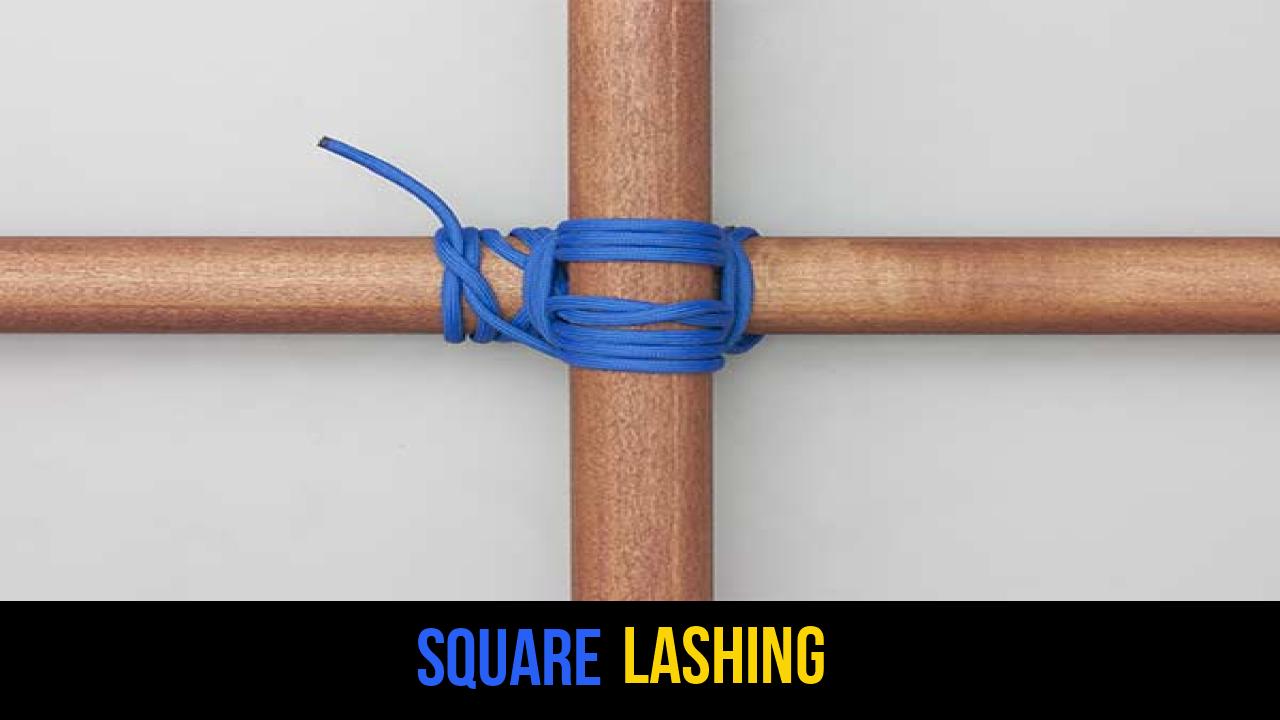
In the world of bushcraft, scouting, and wilderness survival, few skills are as foundational as the ability to join two pieces of timber together securely. While many beginners focus solely on individual rope knots, the true power of structural outdoor construction lies in the art of lashing. Among the various methods used to build everything from camp chairs to massive signal towers, the Square Lashing stands out as the most vital.
Whether you are a seasoned trekker or a weekend hobbyist, understanding how to apply a Square Lashing knot effectively allows you to manipulate your environment with precision. This technique is specifically designed to join two poles that cross each other, typically at a 90-degree angle. By mastering this skill, you unlock the ability to create load-bearing structures that are both stable and durable.
Also known as: 90-degree lashing, standard lashing, or cross lashing.
What Is a Square Lashing?
A Square Lashing is a method used to fasten two spars (poles) together where they cross at right angles (90 degrees). It is the workhorse of pioneering and outdoor construction. Unlike a Diagonal Lashing, which is used when poles tend to pull apart, the Square Lashing is most effective when the poles are being pressed together or when the load is applied perpendicular to the poles.
Practical Uses in the Field
The versatility of this lashing cannot be overstated. In a survival or camping scenario, you might use it for:
- Camp Furniture: Creating the frames for tables, benches, and raised beds.
- Shelter Construction: Securing the ridge pole to upright supports or building a sturdy lean-to frame.
- Bridges and Gateways: Constructing A-frames and cross-members for functional camp infrastructure.
- Tool Repair: Affixing handles to improvised tools or creating tripods for cooking.
By utilizing high-quality outdoor rope techniques, you ensure that your structures remain safe and functional even under the stress of weight and weather.
Materials and Tools Needed
Before you begin tying, you must select the right materials. The integrity of your Square Lashing knot is only as good as the rope and poles you use.
1. The Rope
For traditional pioneering, natural fibers are often preferred because they "bite" into the wood better than synthetic ropes.
- Sisal or Manila: Excellent for permanent or semi-permanent outdoor structures due to their grip and limited stretch.
- Paracord (550 Cord): Great for small-scale projects or lightweight camp gadgets, though it may stretch under heavy loads.
- Synthetic Rope (Nylon/Polypropylene): These are durable and rot-resistant but can be slippery. If using these, extra care must be taken during the tightening phase.
2. The Poles (Spars)
Ensure your poles are relatively straight and free of loose bark. If the bark is slippery, it may cause the lashing to slide. For heavy-duty structures, use hardwood or seasoned pine.
3. Cutting Tools
Always have a sharp knife or a pair of shears ready to trim the rope ends once the lashing is secured with half hitches.
How to Tie Square Lashing?
To ensure maximum strength and stability, follow these precise steps. This method is the standard for reliable outdoor construction.
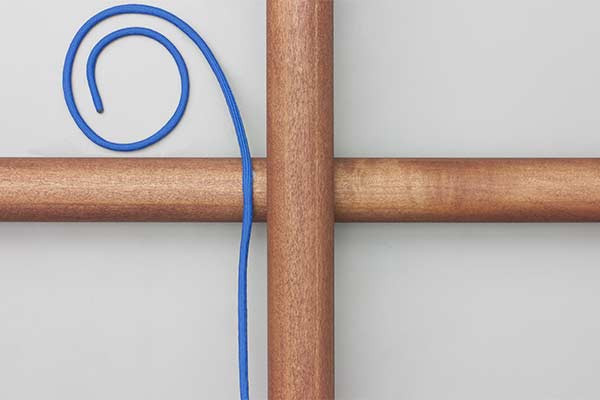
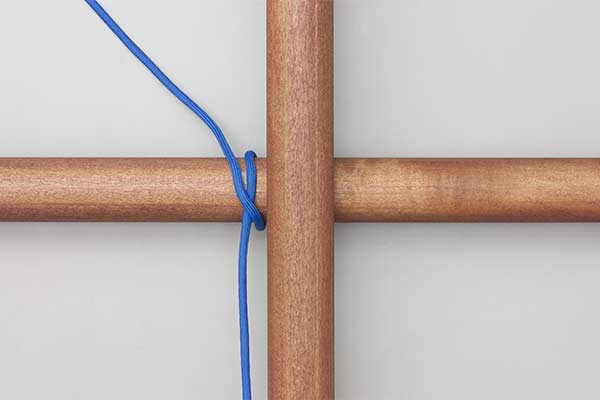
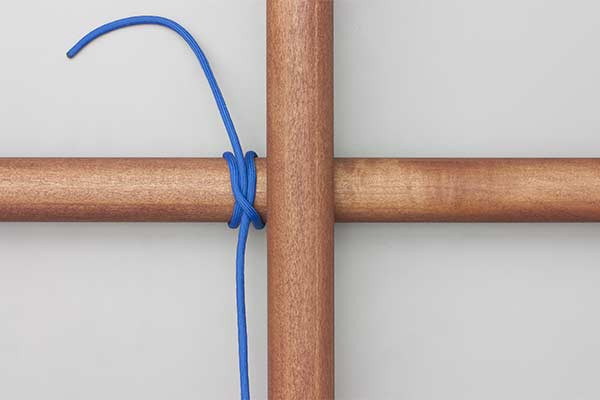
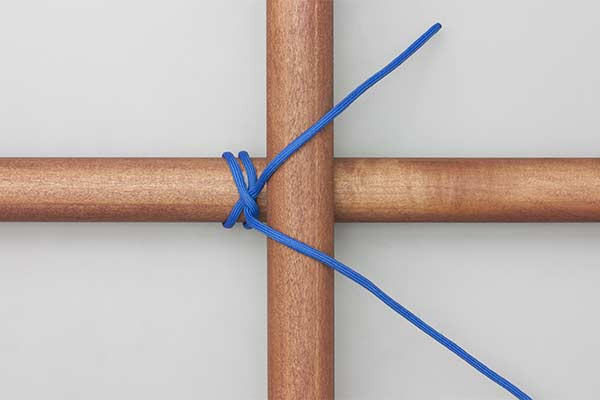
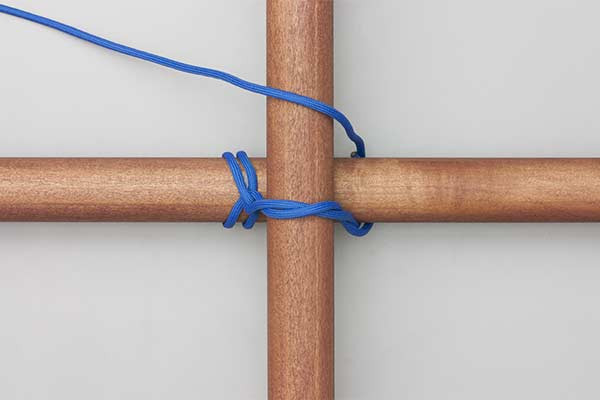
- Start with a Clove Hitch around one pole. This serves as the anchor for your entire lashing. It is usually tied on the vertical pole (the upright) just below where the horizontal pole will sit.
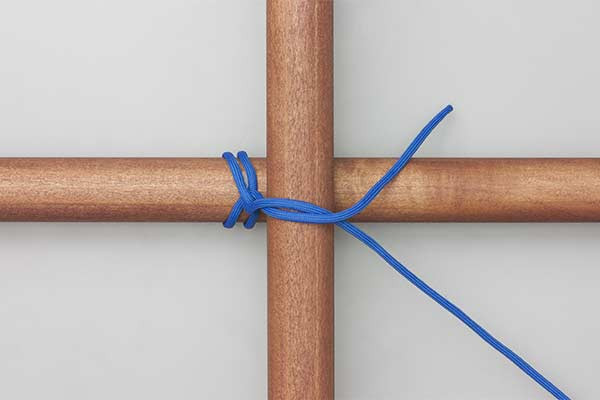
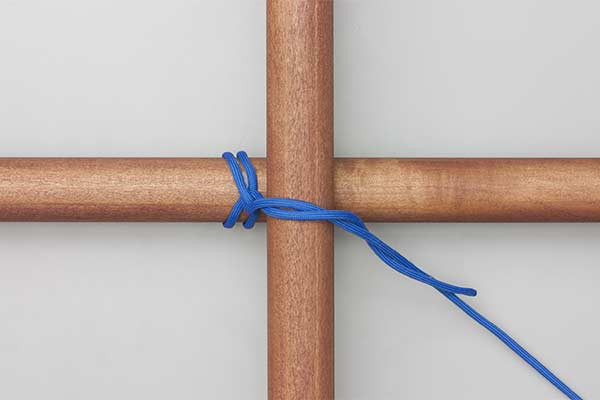
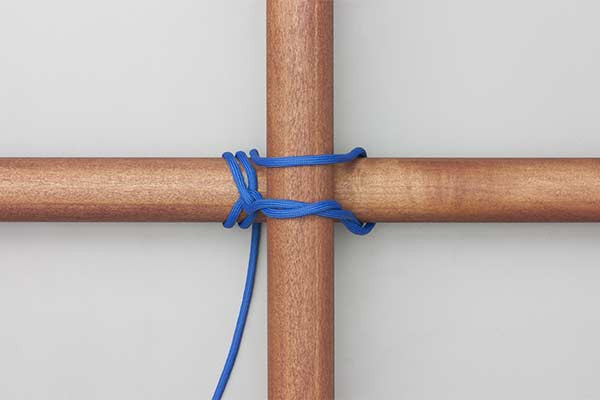
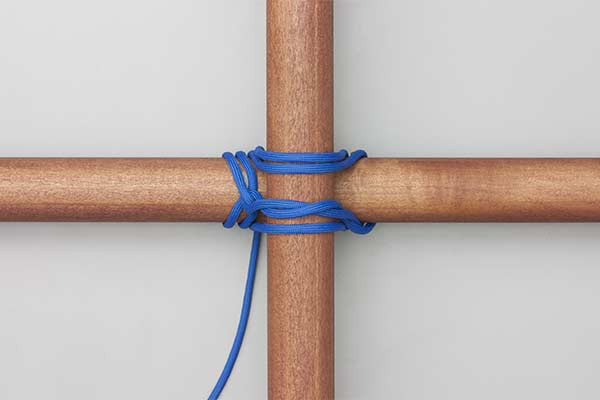
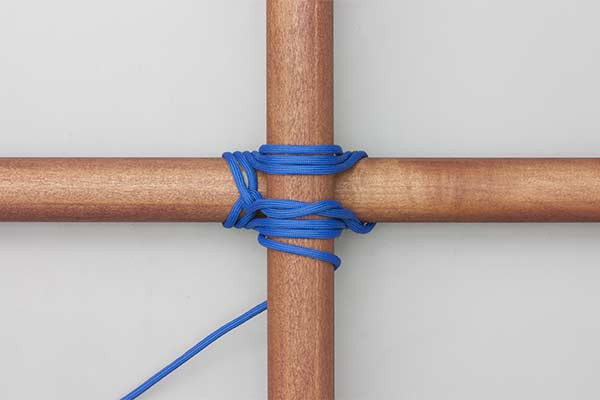
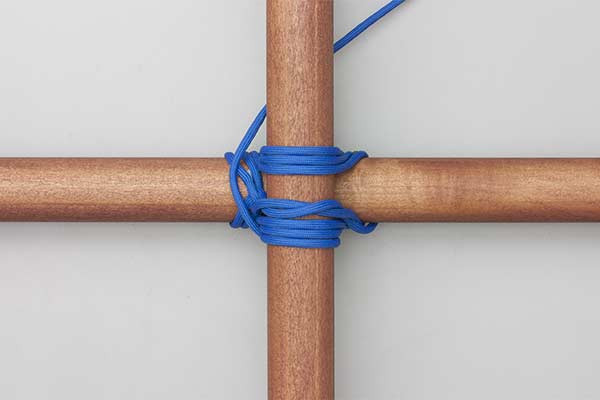
- Twist short end around long and wrap the rope around both poles, alternately going over and under each pole about three or four turns. Ensure that these "wrapping turns" are laid neatly side-by-side rather than crossing over each other. This maximizes the surface area of the rope in contact with the wood.
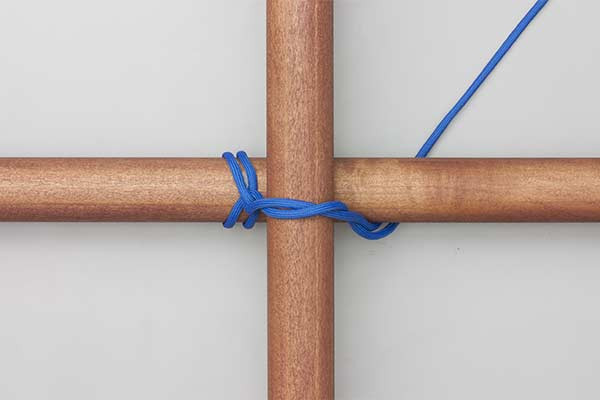
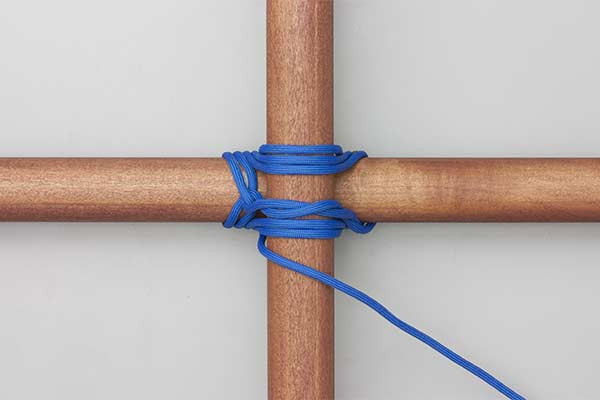
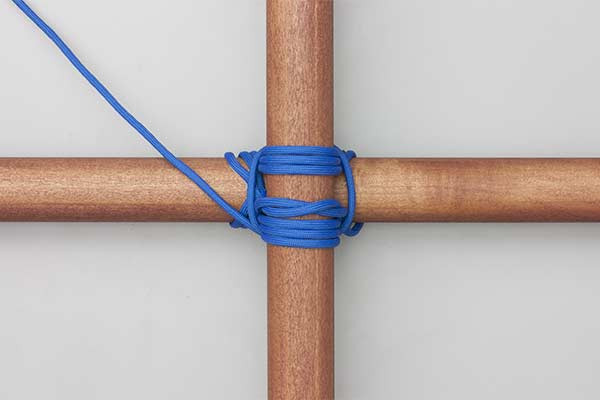
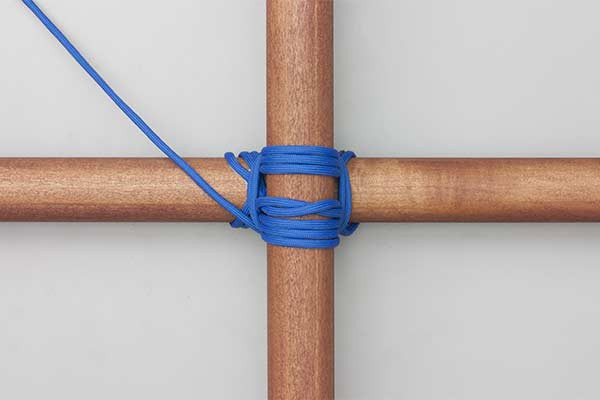
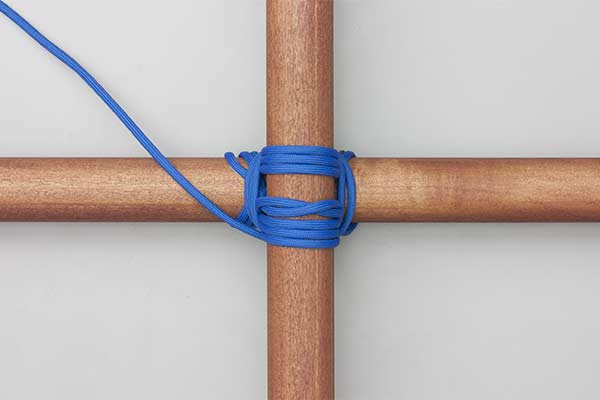
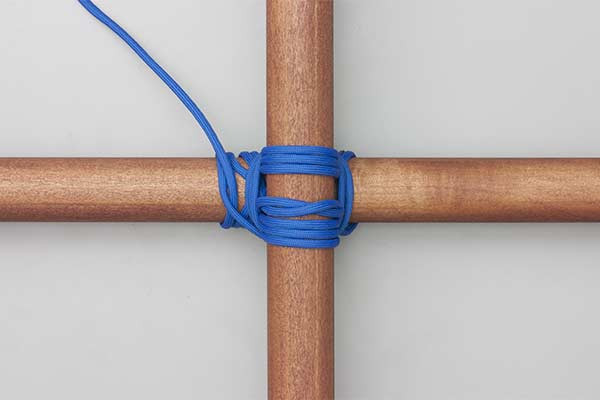
- Tighten the lashing by surrounding it with three or four frapping turns. These turns go between the two poles, effectively "choking" the wrapping turns. This is the most critical step for structural integrity, as it pulls the poles together with immense tension.
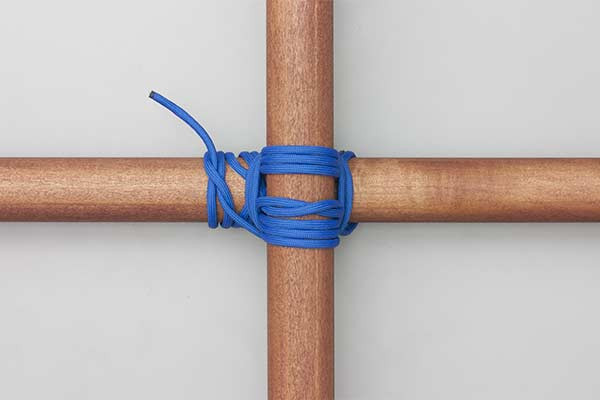
- Finish with two or three tight half hitches. Tie these around the end of one of the poles to lock the rope in place and prevent any slippage over time.
Common Mistakes to Avoid
Even experienced outdoorsmen can make errors that compromise the safety of a structure. When practicing your outdoor rope techniques, watch out for these pitfalls:
1. Loose Wraps
If your initial wrapping turns are loose, the frapping turns will not be able to provide enough tension. Each wrap should be pulled as tight as possible before moving to the next.
2. Crossing the Wraps
In a proper Square Lashing knot, the wraps should lie parallel to one another. If the rope crosses over itself during the wrapping phase, it creates a "point load" that can cause the rope to snap or the lashing to shift under weight.
3. Neglecting the Frapping
The strength of a lashing comes from the frapping. Many beginners do not pull the frapping turns tight enough. This is where you should use your body weight to ensure the poles are clamped together firmly.
4. Incorrect Rope Length
Running out of rope before finishing your half hitches is a common frustration. A general rule of thumb is to use one fathom (6 feet) of rope for every inch of the combined diameter of the two poles.
Related Knots and Splicing
To become a master of rope knots, you should also familiarize yourself with these related techniques:
- Clove Hitch: A quick-to-tie hitch used as the starting point for most lashings; it holds firm under tension but can be adjusted easily.
- Diagonal Lashing: Used to join two poles that cross at an angle other than 90 degrees, or where the poles are under "spring" tension.
- Shear Lashing: Essential for creating "legs" (like an A-frame) or for reinforcing a weak pole by lashing a second pole alongside it.
- Round Lashing: A simple technique used to join two poles side-by-side to extend their length, often used in flagpole construction.
- Two Half Hitches: A reliable way to finish a lashing or secure a rope to a post, providing a secure and adjustable ending.
Final Words
The Square Lashing is more than just a way to tie sticks together; it is a fundamental skill that bridges the gap between basic camping and advanced wilderness engineering. By mastering the sequence of the anchor hitch, the wrapping turns, the tightening fraps, and the final hitches, you gain the ability to build significant structures with nothing more than raw timber and cordage.
As with all outdoor rope techniques, the key to proficiency is repetition. Practice in your backyard or at a local campsite until the movements become second nature. Remember that safety is paramount—always test the weight capacity of your structures at ground level before putting them into heavy use. With a solid Square Lashing knot in your repertoire, you are well-equipped for your next great outdoor adventure.
