
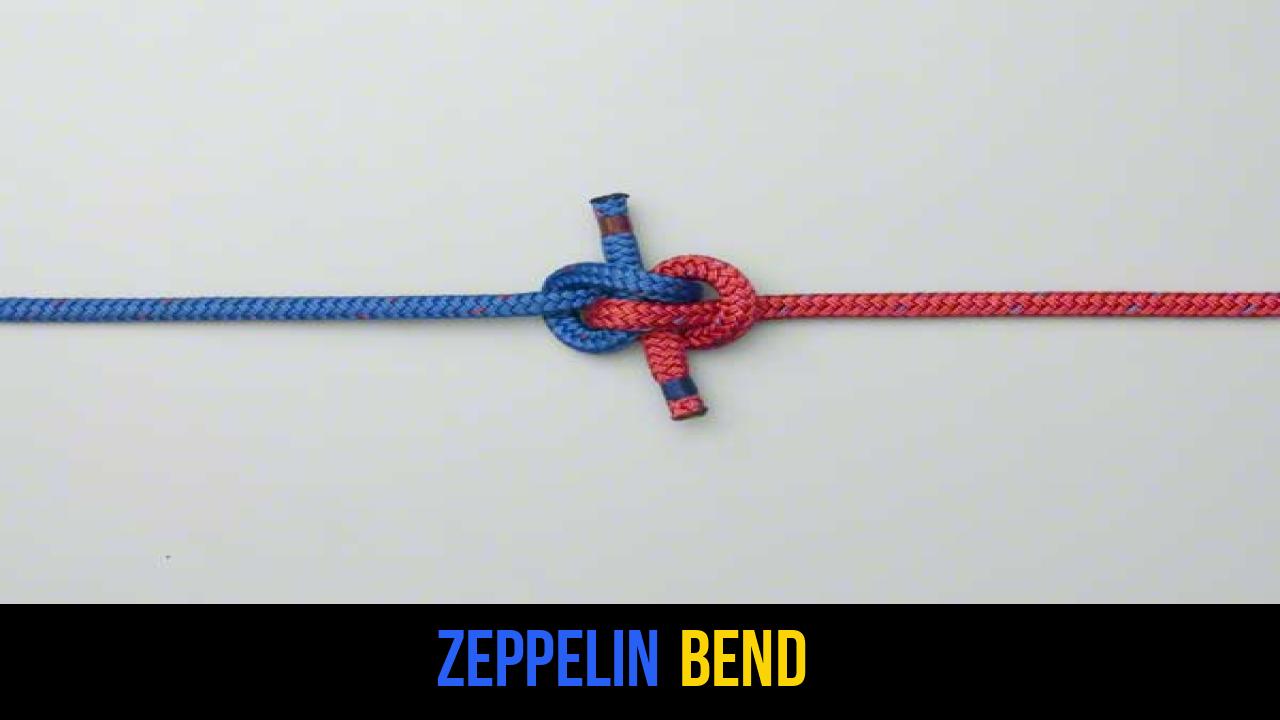
In the world of rope knots and outdoor rope techniques, few bends command as much respect as the Zeppelin Bend. Known for its incredible security and its uncanny ability to remain easy to untie even after being subjected to massive loads, this knot is a favorite among arborists, sailors, and search-and-rescue professionals. Whether you are a weekend hiker or a professional rigger, understanding the mechanics and application of the Zeppelin Bend knot is a vital skill that enhances safety and efficiency in the field.
While many beginners gravitate toward the simple Sheet Bend or the common Square Knot, those who understand the physics of cordage eventually find their way to the Zeppelin. It is a symmetrical, stable, and aesthetically pleasing knot that solves the age-old problem of "jamming"—the tendency of a knot to become permanently stuck after heavy tension.
Alternative Names: Rosendahl Bend, The 69 Bend.
What Is a Zeppelin Bend?
The Zeppelin Bend is a method of joining two ropes (a "bend") that relies on two interlocking bights. Its name is derived from its historical use in mooring large airships, specifically Zeppelins, during the early 20th century. Commander Charles Rosendahl of the US Navy famously insisted on its use because it was the only knot that could withstand the erratic, high-tension gusts affecting a moored airship while remaining easy for ground crews to release quickly.
Practical Uses and Applications
The Zeppelin Bend knot is prized in several high-stakes environments:
- Marine and Sailing: Used for joining heavy hawsers or lines that will be submerged or subjected to constant salt-spray and tension.
- Search and Rescue: Its high security-to-untie ratio makes it ideal for non-critical load extensions where reliability is paramount.
- Arboriculture: Tree climbers use it to join climbing lines or rigging ropes because it does not slip, even when using synthetic, high-lubricity fibers.
- General Utility: From towing a vehicle to securing heavy loads on a trailer, the Zeppelin Bend is the "insurance policy" of knots.
Materials and Tools Needed
To master outdoor rope techniques involving the Zeppelin Bend, you don’t need specialized machinery, but choosing the right cordage is essential for practice and professional application.
Rope Types
- Kernmantle Ropes: Common in climbing and rescue, the Zeppelin Bend holds exceptionally well in the nylon sheath of these ropes.
- Three-Strand Twisted Rope: The knot’s symmetry allows it to "bite" into the grooves of twisted rope, providing excellent friction.
- Synthetic Fibers (Polypropylene/Polyethylene): While these can be slippery, the interlocking nature of the Zeppelin Bend provides more security than a standard Sheet Bend.
- Natural Fibers: Manilla or hemp ropes work beautifully with this knot, though care should be taken as these fibers can degrade over time.
Considerations
- Rope Diameter: The Zeppelin Bend is most effective when joining two ropes of similar diameter. If the ropes differ significantly in thickness, a Rigid Join or a Sheet Bend might be more appropriate.
- Tail Length: Always ensure you have enough "tail" (the loose end of the rope) to prevent the knot from pulling through under extreme cycling of loads.
How to Tie Zeppelin Bend?
Follow these precise steps to ensure a secure and correctly dressed knot. Accuracy in the initial overlapping phase is critical for the knot to function as intended.
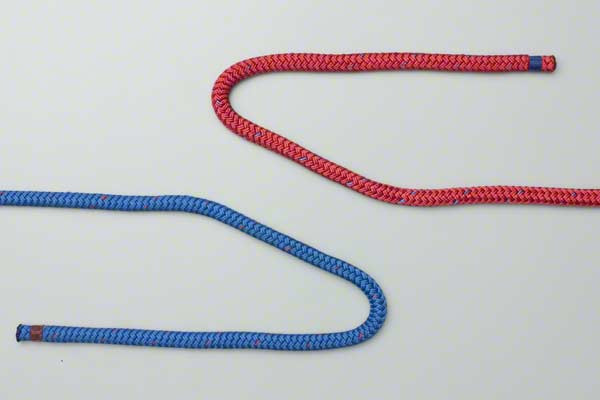
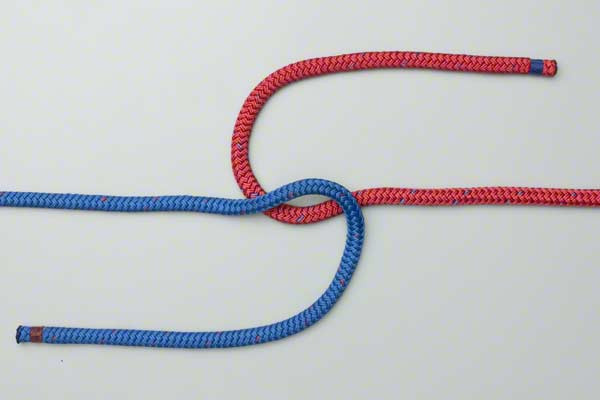
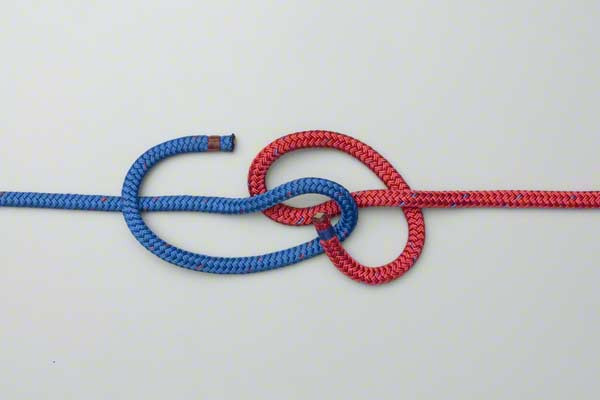
- Form a bight in both ropes and overlap them.
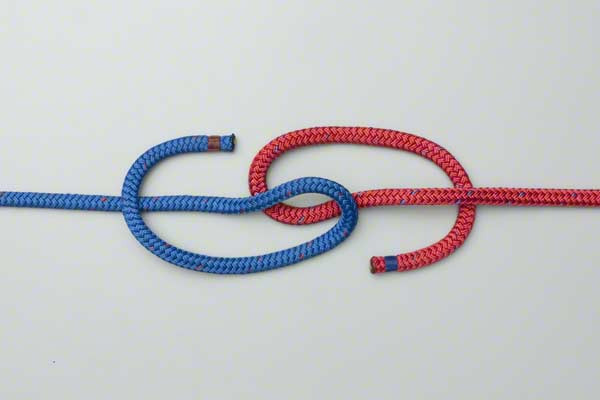
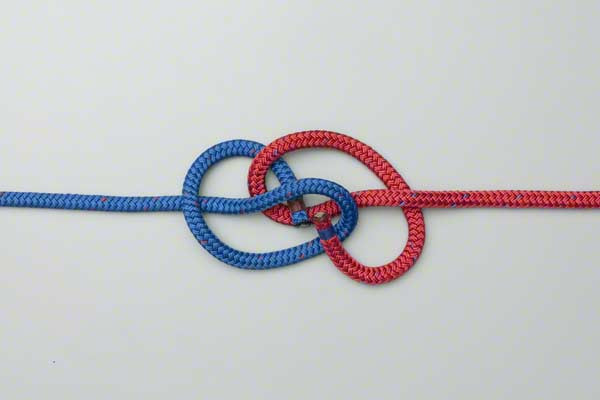
- Pass each end around across itself – going over for the top bight and under for the bottom bight.
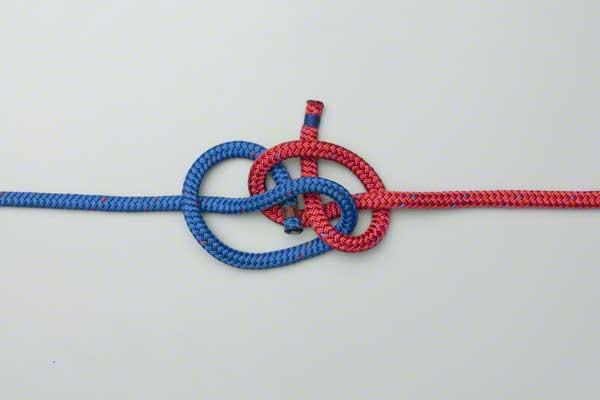
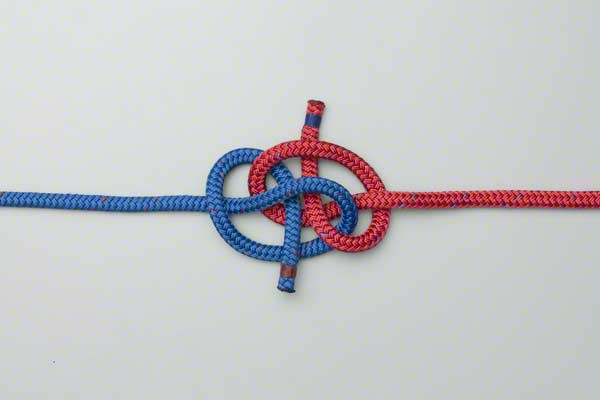
- Thread both ends past each other through the middle.
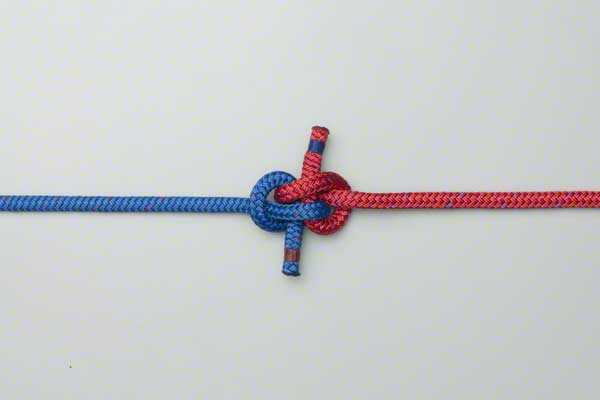
- Tighten to form the Zeppelin Bend.
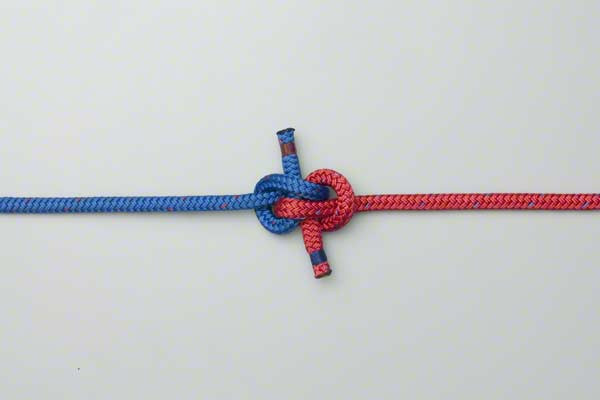
- Back view.
Common Mistakes to Avoid
Even though the Zeppelin Bend knot is known for its stability, a few common errors can compromise its integrity. In the world of outdoor rope techniques, a poorly tied knot is often more dangerous than no knot at all.
1. The "66" or "99" Error
The Zeppelin Bend is often visually compared to the numbers "6" and "9" overlapping. A common mistake is forming the loops so they mirror each other (two 6s or two 9s). If the loops are not asymmetrical in their initial orientation, the knot will not interlock and will spill immediately under tension.
2. Insufficient Dressing
"Dressing" a knot refers to the process of tidying it up and ensuring all strands are parallel and snug before applying a heavy load. If the Zeppelin Bend is left "loose" and then suddenly jerked, the internal friction could cause the rope to glaze or melt.
3. Short Working Ends
Always leave a tail length of at least five to eight times the diameter of the rope. In high-tension scenarios, ropes can "creep" slightly as the fibers compress. A short tail could result in the knot untying itself.
4. Incorrect Orientation of the Ends
When threading the ends through the middle, they must go in opposite directions. If both ends are poked through the same side of the central aperture, the knot will fail to form the necessary "interlocked" structure that gives the Zeppelin its strength.
Related Knots and Splicing
Expanding your repertoire of rope knots allows you to choose the right tool for the specific job. Here are a few knots related to the Zeppelin Bend:
- Hunter’s Bend: This knot is similar in appearance but is formed by interlocking two overhand knots; it is secure but can be harder to untie than the Zeppelin.
- Alpine Butterfly Bend: A very secure way to join two ropes that is easy to inspect visually and remains stable even if the ropes are of slightly different materials.
- Carrick Bend: An aesthetically beautiful knot used for very heavy cables; like the Zeppelin, it is famous for never jamming regardless of the load.
- Sheet Bend: The standard knot for joining ropes of unequal diameters, though it lacks the absolute security and jam-resistance of the Zeppelin.
- Ashley’s Bend: Developed by Clifford Ashley, this bend is highly secure and shares some of the "interlocking" geometry found in the Zeppelin.
Final Words
The Zeppelin Bend stands as a testament to the elegance of functional design. In the realm of outdoor rope techniques, it represents the perfect balance between security and convenience. Its symmetrical nature makes it easy to inspect—if it doesn’t look like a balanced, nested pair of loops, it isn’t tied correctly.
By mastering the Zeppelin Bend knot, you add a professional-grade tool to your kit that performs reliably in the wind, rain, and under the most demanding physical stresses. Whether you are securing a load for a long haul or preparing gear for an outdoor adventure, the Zeppelin Bend is a knot you can trust with your equipment and your safety. Practice it until the "6 and 9" orientation becomes second nature, and you will never have to worry about a jammed or slipping rope join again.
