
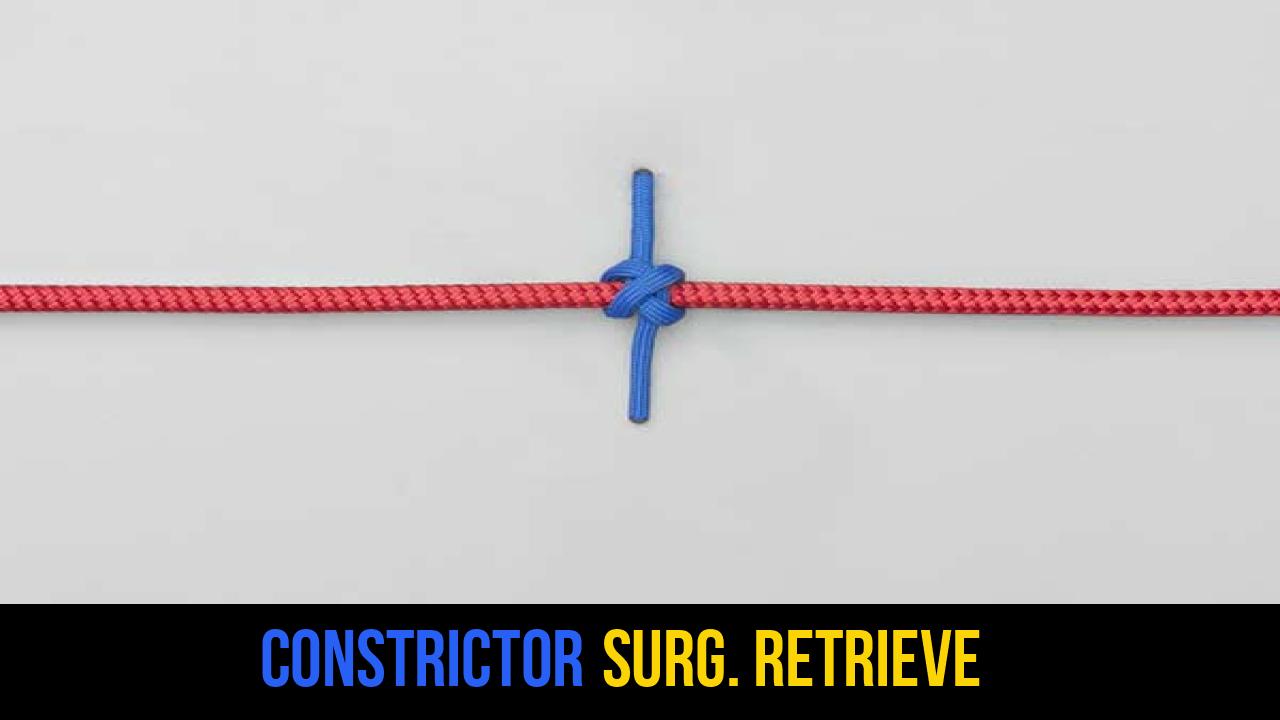
In the world of outdoor rope techniques, few things are as vital as the ability to secure a load or bind materials with absolute confidence. While many adventurers are familiar with the standard Bowline or the Clove Hitch, professional riggers, technical gear specialists, and survivalists often turn to more specialized configurations for high-stakes applications. One such configuration is the Constrictor Surg. Retrieve.
This knot is a sophisticated variation of the classic binding knot family, designed for scenarios where a standard knot might slip or fail under varying tension. Whether you are performing field repairs on technical gear, securing a bundle of firewood in a high-wind environment, or practicing advanced scouting maneuvers, understanding the Constrictor Surg. Retrieve knot is a hallmark of an expert woodsman.
In this comprehensive guide, we will explore the mechanical advantages of this knot, the specific tools required for its execution, and a strict step-by-step breakdown of how to tie it correctly.
Alternative Names: Forceps-Assisted Constrictor, Surgical Binding Hitch, Tool-Retrieved Constrictor, Precision Gear Wrap.
What Is a Constrictor Surg. Retrieve?
The Constrictor Surg. Retrieve is a high-friction binding knot characterized by its semi-permanent nature and its use of mechanical assistance—specifically forceps or pliers—to achieve a level of tightness that manual pulling often cannot reach.
Unlike "loop" knots which are designed to create a fixed circle, the Constrictor Surg. Retrieve is a "hitch" or "binding" knot. Its primary purpose is to exert inward pressure on a cylindrical object (referred to in technical manuals as the "vessel").
Practical Uses in the Great Outdoors
- Gear Repair: Fixing a cracked tent pole or a split wooden tool handle by binding it with high-tensile cordage.
- Rope End Sealing: Creating a permanent "whip" on the end of a thick rope to prevent fraying.
- Bushcraft Construction: Securing cross-beams in a semi-permanent shelter where vibration or wind might cause other knots to shake loose.
- Specialized Rigging: When working in tight spaces where fingers cannot easily reach to tuck the rope end, the "retrieve" method using tools becomes essential.
Materials and Tools Needed
To execute the Constrictor Surg. Retrieve effectively, you must select the right materials. Because this knot relies on high friction, the diameter and texture of your cordage matter significantly.
1. Rope Types
- Paracord (550 Cord): Excellent for general use, though its elasticity means you must pull it tighter than static cords.
- Bank Line (Tarred Nylon): Perhaps the best choice for this knot. The tar coating provides an incredible grip that "locks" the constrictor in place.
- Dyneema/Spectra: High strength but very slippery. Use these only if you are experienced in managing low-friction materials.
2. The "Vessel"
In technical terms, the vessel is the object you are tying around. For outdoor applications, this could be a branch, a PVC pipe, a bundle of stakes, or a rolled-up tarp.
3. Required Tools
As the name implies, this specific technique requires a tool for the "retrieve" phase:
- Hemostatic Forceps: Ideal for fine cordage.
- Needle-Nose Pliers: A common substitute found in most multi-tools.
- Marlinspike: Useful for dressing the knot if the tension is extremely high.
How to Tie Constrictor Surg. Retrieve?
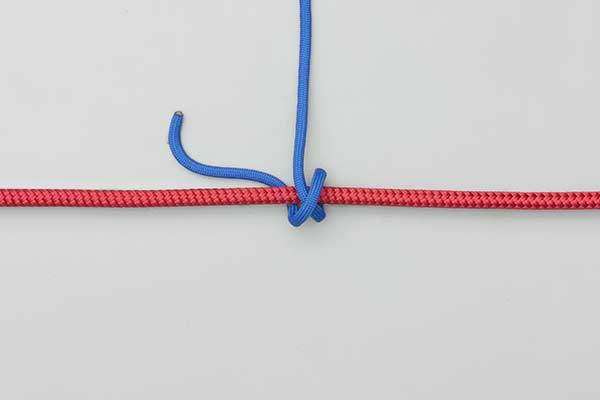
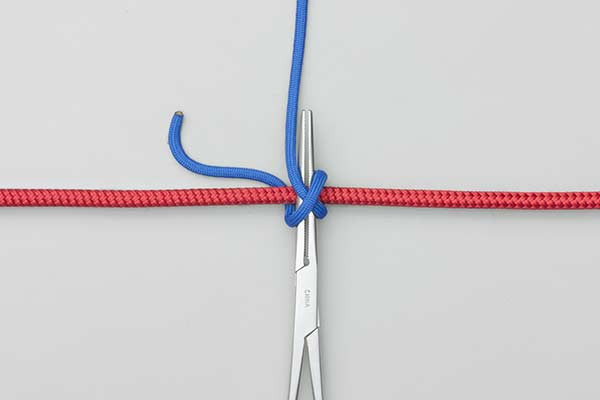
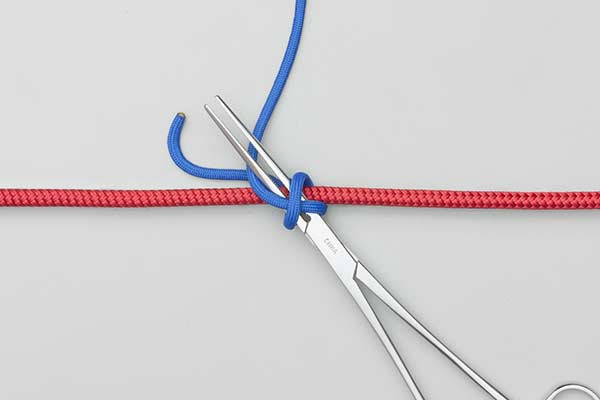
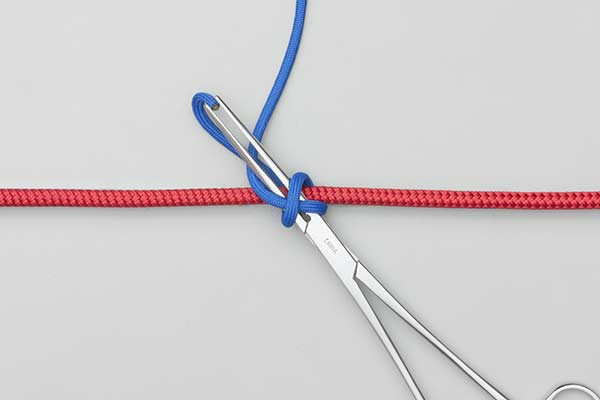
To achieve the maximum security of this knot, follow these instructions precisely. The use of the tool ensures that the "retrieve" is clean and the tension is distributed evenly across the crossover.
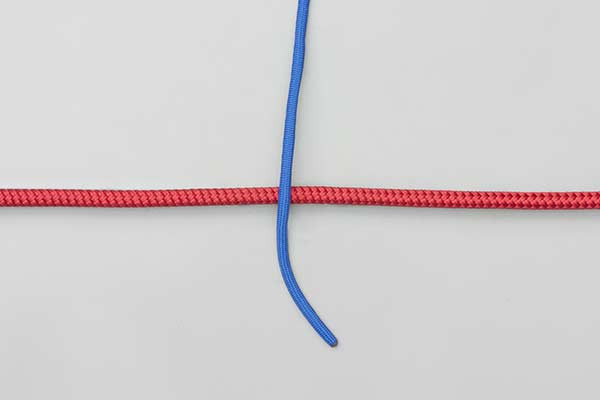
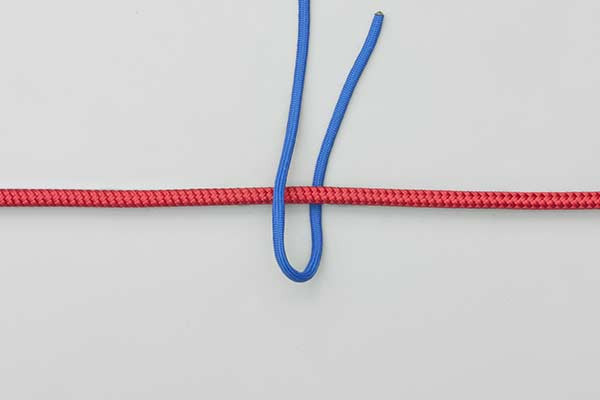
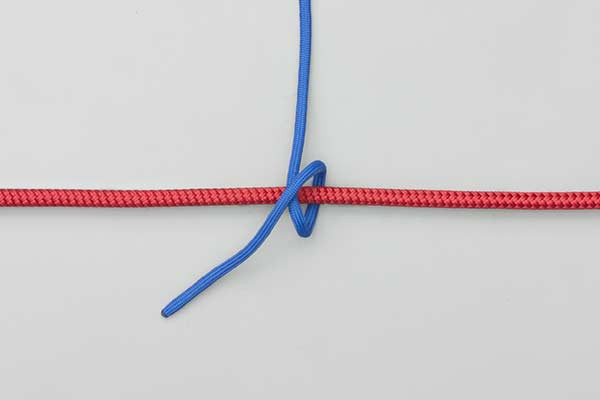
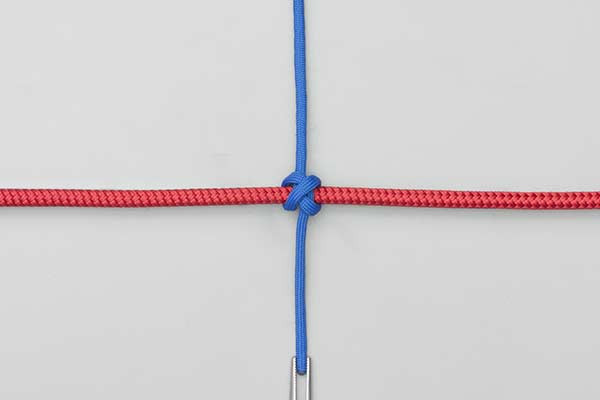
- Pass the suture twice around the vessel so that the second turn crosses over the first.
- Insert the forceps under the cross-over.
- Reach over the long end to retrieve the short end.
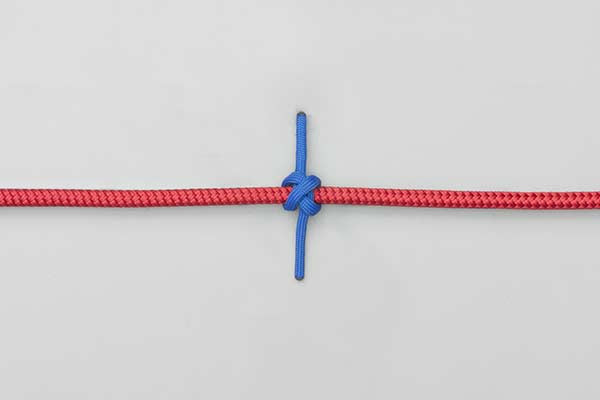
- Grip it, pull tight, and cut the ends.
The Physics of the Constrictor: Why It Works
The Constrictor Surg. Retrieve knot works on the principle of inter-strand friction. When the second turn crosses over the first, it creates a "bridge." By retrieving the short end through this specific path, the knot effectively traps itself.
As tension is applied to the long end (the standing part), the crossover point presses down on the ends underneath it. The more the vessel tries to expand, or the more the cord is pulled, the harder the crossover point "pinches" the rope. This is why it is often considered a "permanent" knot—in many types of cordage, the Constrictor Surg. Retrieve becomes nearly impossible to untie once it has been fully tightened, often requiring a knife to remove.
Common Mistakes to Avoid
Even for those experienced in rope knots, the Constrictor Surg. Retrieve can be tricky due to the tool-assisted retrieval. Avoid these common pitfalls:
1. Misplacing the Forceps
The forceps must go under the crossover point created by the second wrap. If you insert the tool elsewhere, you will likely create a simple Clove Hitch or a generic wrap that lacks the "locking" mechanism of the constrictor.
2. Improper Tensioning
When the instructions say to pull tight, it is best to pull both the short end and the long end simultaneously. This ensures the knot "sets" squarely on the vessel. If you only pull one side, the knot may tilt, reducing its grip.
3. Using Thick Rope on Small Vessels
If the rope diameter is too large relative to the object you are binding, the "arch" of the rope will prevent the crossover from making full contact with the short end. For the best results, ensure the cord is significantly thinner than the diameter of the vessel.
4. Forgetting the Safety Check
Before cutting the ends, always test the stability of the bind. Once you cut the ends, there is no going back to add more tension.
Related Knots and Splicing
Understanding the Constrictor Surg. Retrieve is easier when you compare it to other common outdoor rope techniques. Here are a few related knots you should know:
- The Standard Constrictor Knot: The manual version of this knot. It provides excellent binding strength but can be difficult to tie in confined spaces without the "retrieve" method.
- The Clove Hitch: A fundamental knot used to start many lashings. It is easier to tie and untie than a constrictor but is prone to slipping if the tension is not constant.
- The Surgeon’s Knot: Often confused with surgical retrieves, this is essentially a reef knot with an extra twist, used primarily for increasing friction in the first throw of a package tie.
- The Miller’s Knot: A binding knot traditionally used to secure the tops of heavy sacks. It is similar in profile but slightly less secure than the full constrictor.
- The Transom Knot: Used to join two items at right angles. It incorporates a similar "locking" turn to ensure the cross-connection remains rigid under load.
Final Words
The Constrictor Surg. Retrieve is more than just a way to join two things together; it is a precision tool in the arsenal of any serious outdoor enthusiast or technical specialist. By utilizing the mechanical advantage of a double wrap and the precision of a tool-assisted retrieve, you create a bind that is remarkably resistant to failure.
Whether you are in the field performing an emergency repair on a backpack frame or in the workshop crafting custom outdoor gear, the Constrictor Surg. Retrieve knot ensures that your work stays exactly where you put it. Practice this technique with various cordage types to see how friction affects the "lock," and you will soon find it to be one of the most reliable binds in your repertoire.
Remember: in the outdoors, your gear is only as good as the knots that hold it together. Master the Constrictor Surg. Retrieve, and tie with the confidence of a professional.
