
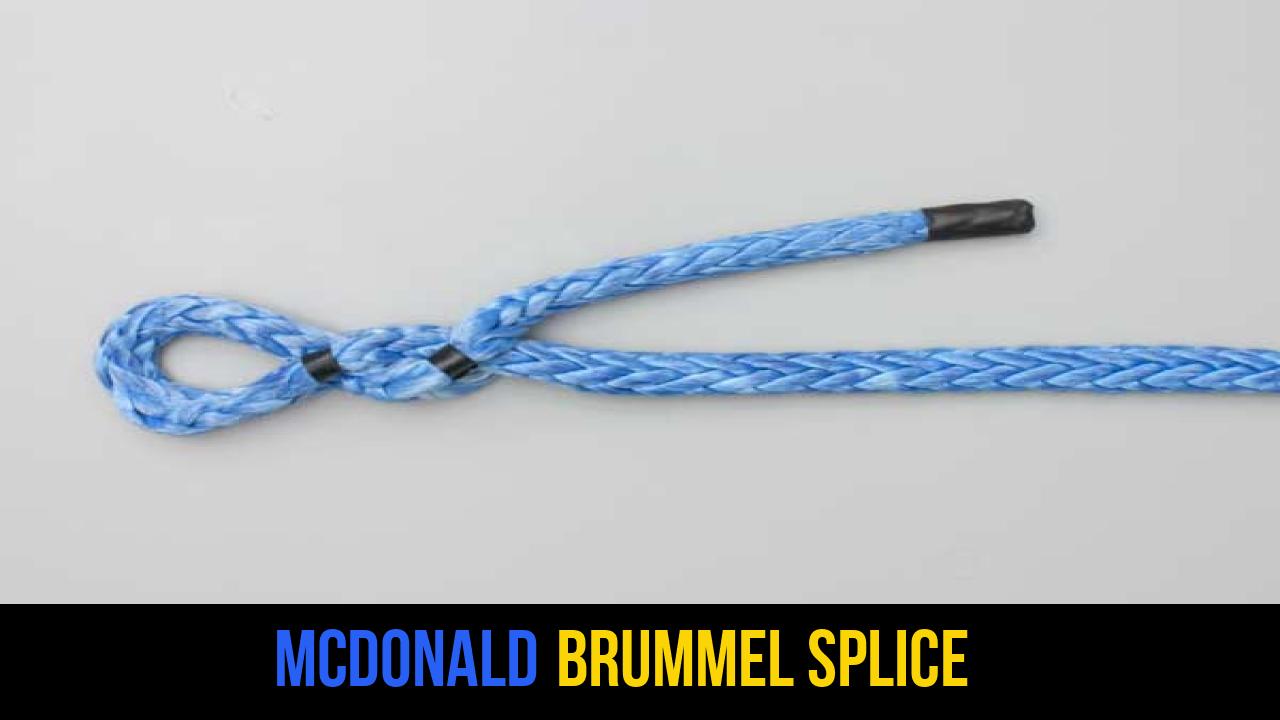
In the world of high-performance rigging and outdoor recreation, the integrity of your equipment is paramount. When dealing with modern, high-modulus polyethylene (HMPE) ropes—such as AmSteel-Blue or Dyneema—traditional knots often fail. These fibers are incredibly slippery, and a standard bowline or figure-eight can reduce the rope’s breaking strength by up to 50% or even slip entirely under load.
This is where the McDonald Brummel Splice becomes an essential tool in your technical arsenal. Unlike traditional knots, a splice maintains a much higher percentage of the rope’s original tensile strength. The McDonald variation of the Brummel technique is particularly prized because it allows the user to create a locked eye splice when only one end of the rope is accessible.
Whether you are a professional arborist, a competitive sailor, or an off-road enthusiast looking to maintain a winch line, understanding the McDonald Brummel Splice is a foundational skill.
Alternative Names: McDonald Brummel, Single-End Brummel Splice, Locked Brummel, Mobile Brummel.
What Is a McDonald Brummel Splice?
The McDonald Brummel Splice is a specialized method of creating a fixed, non-slip loop (an "eye") at the end of a single-braid, hollow-core rope. The "Brummel" family of splices is unique because it uses the rope’s own structure to "lock" the splice in place, preventing it from pulling out even when the rope is not under tension.
Practical Uses
This technique is ubiquitous in industries that require lightweight, high-strength solutions:
- Sailing: Used for halyards, sheets, and control lines where weight savings and strength are critical.
- Arboriculture: Creating high-strength slings and flip lines that must withstand the rigors of tree work.
- Off-Roading: Splicing eyes into synthetic winch lines for recovery operations.
- Aviation and Paragliding: Used in the construction of lightweight soft shackles and tow lines.
The "McDonald" version is specifically designed for situations where the "long end" or the standing part of the rope is already attached to something (like a winch drum or a mast), making it impossible to pass the entire length of the rope through the holes.
Materials and Tools Needed
Before you begin the McDonald Brummel Splice, you must ensure you have the correct materials. This splice is specifically designed for hollow-braid, 12-strand ropes. It will not work on standard three-strand twisted rope or double-braid rope with a parallel core.
Required Tools:
- Hollow Braid Rope: High-quality HMPE or polyester hollow braid.
- Splicing Fid or Wire Puller: A tool used to pull the rope through itself.
- Marking Pen: A permanent marker to identify the "near" and "far" holes.
- Measuring Tape: To ensure the eye size and tail length meet safety standards.
- Sharp Scissors or Ceramic Knife: Synthetic fibers like Dyneema are notoriously difficult to cut and may dull steel blades quickly.
- Electrical Tape: Used to taper the end of the rope to make it easier to pass through the strands.
Considerations:
- Tail Length: For a full-strength splice, the tail should eventually be buried back into the standing part of the rope. This usually requires a bury length of 72 times the diameter of the rope.
- Fid Size: Ensure your fid matches the diameter of the rope you are using.
How to Tie McDonald Brummel Splice?
The following steps outline the precise mechanical actions required to lock the fibers and create the eye. It is vital to prepare your rope by marking your transition points before beginning.
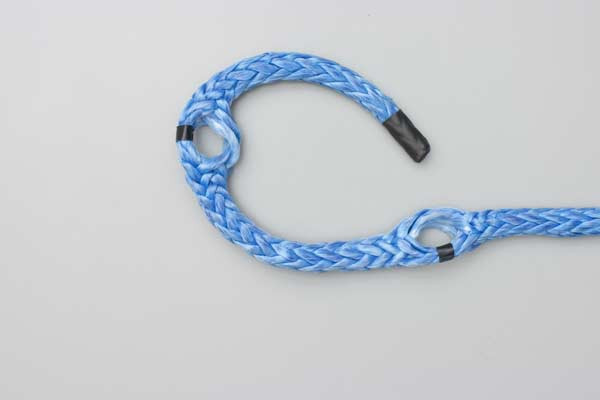
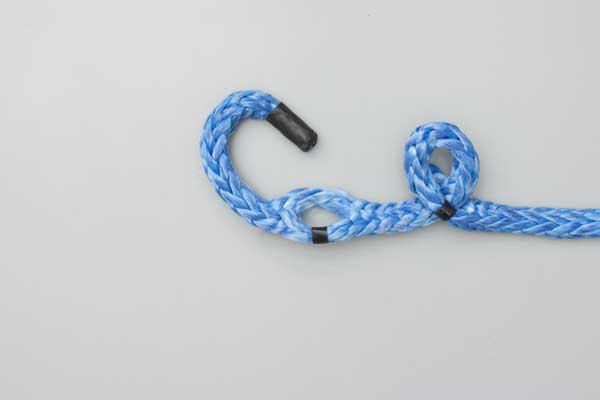
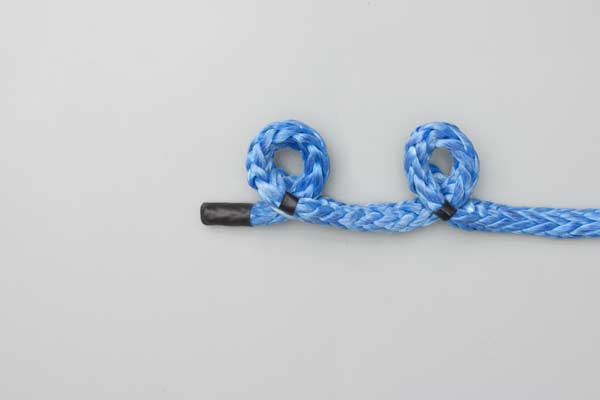
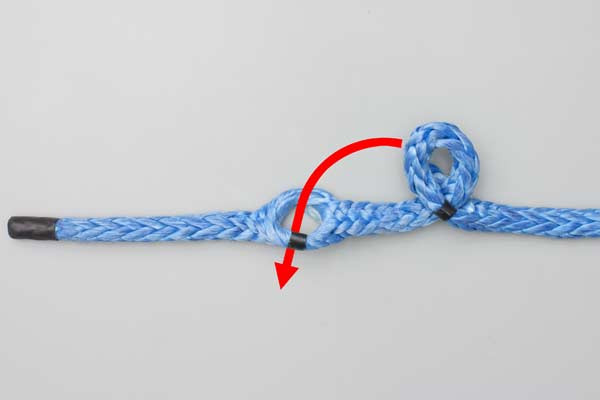
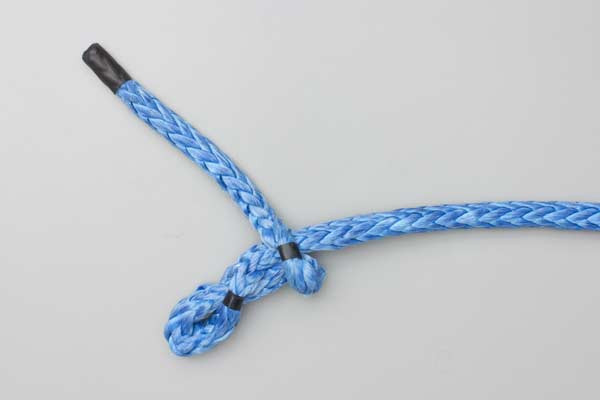
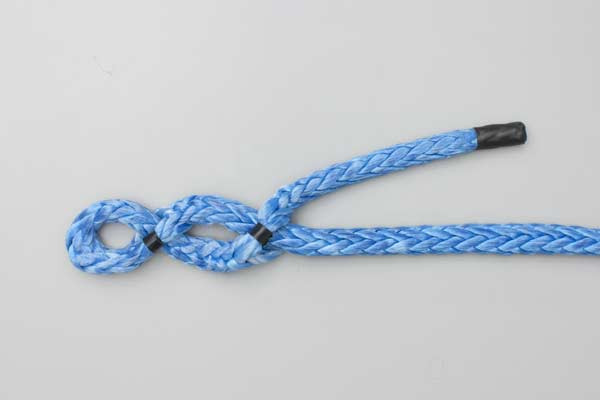
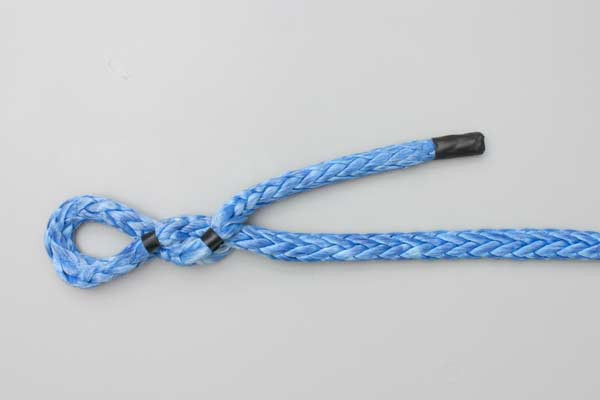
- With the rope marked and holes prepared, pass the end through the further hole to make the eye.
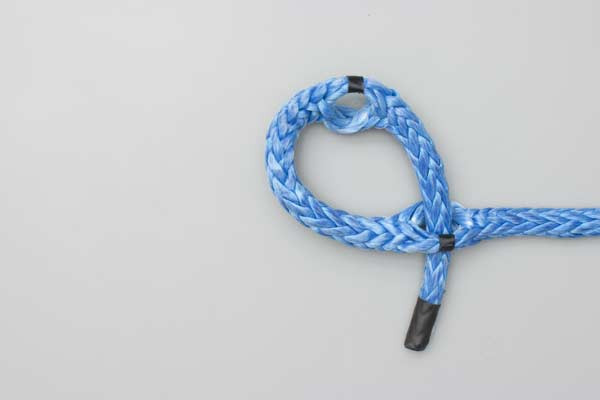
- Then pass the end through the near hole to twist the fibers either side of the hole.
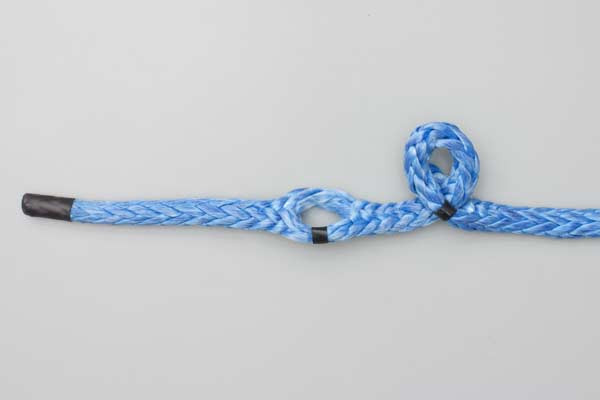
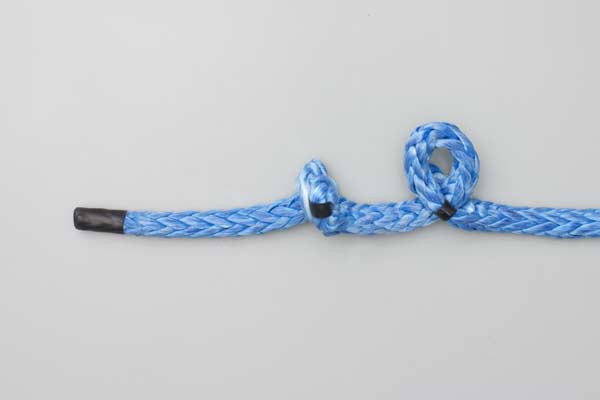
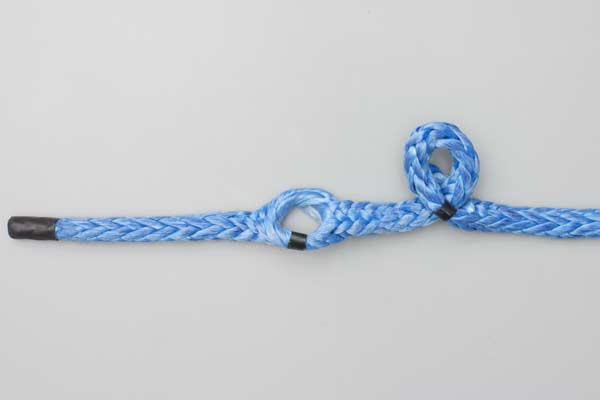
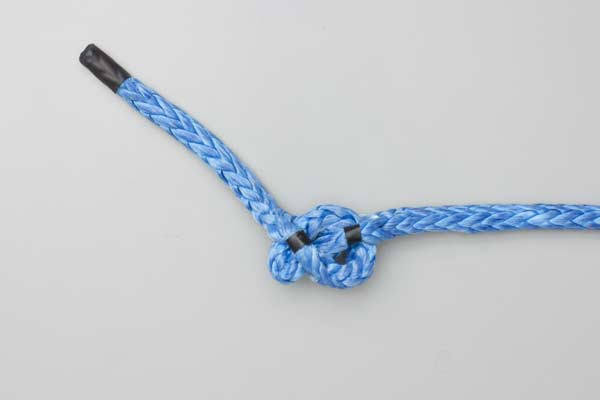
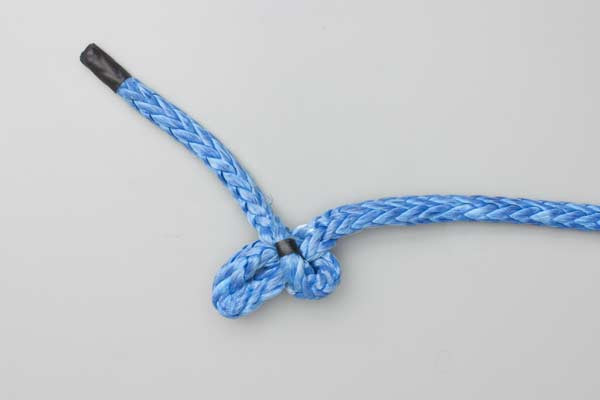
- Pass the eye through this hole to untwist the fibers each side back to normal.
- Tighten to the locked position.
The Science of the "Lock": Why It Works
The beauty of the McDonald Brummel Splice lies in its geometry. When you "pass the eye through the hole," you are essentially creating an inversion of the rope’s braid. This inversion creates a physical interference.
In a standard eye splice (without a Brummel lock), the tail is simply buried inside the standing part. While the "Chinese finger trap" effect holds the tail under tension, the splice can potentially slip or pull out when the rope is slack. The McDonald Brummel Splice solves this by mechanically interlocking the two sections of rope. Even if the rope is tossed around or dragged while slack, the eye remains fixed and secure.
Common Mistakes to Avoid
Even for experienced riggers, the McDonald Brummel Splice can be counter-intuitive the first few times. Avoid these common pitfalls:
1. Incorrect Hole Spacing
If the holes (the "further" and "near" holes) are placed too far apart, the lock will be loose and messy. If they are too close, you may distort the fibers and weaken the rope. Generally, the holes should be spaced approximately one to two rope diameters apart.
2. Forgetting the Bury
The Brummel lock itself is not the primary source of the rope’s strength; the bury (tucking the tail back into the main rope) is. The lock simply prevents the bury from slipping. Always ensure you finish the splice by burying the tail to the manufacturer’s recommended length.
3. Not Tapering the Tail
When you eventually bury the tail, failing to taper the end will create a "step" or a hard spot in the rope. This causes a concentration of stress that can lead to premature rope failure. Always thin out the strands at the end of the tail before the final bury.
4. Using the Wrong Rope Type
Attempting a McDonald Brummel Splice on a rope with a solid core or a non-hollow braid will damage the fibers and result in a knot that provides zero structural integrity.
Related Knots and Splicing
Understanding the McDonald Brummel Splice is a gateway to other advanced outdoor rope techniques. Here are a few related methods:
- Standard Brummel Splice: A locking splice used when both ends of the rope are accessible. It is the "classic" version of the McDonald technique.
- Whoopie Sling: An adjustable loop made using a Brummel lock at one end and a sliding bury at the other, common in hammock camping.
- Soft Shackle: A high-strength loop made entirely of rope that uses a Brummel lock and a stopper knot to replace heavy steel shackles.
- Long Bury Splice: A non-locking splice that relies entirely on friction. It is easier to perform but requires the rope to be under constant tension or to be stitched/whipped to remain secure.
Maintenance and Inspection
Once you have mastered the McDonald Brummel Splice, your job isn’t finished. Spliced ropes in the field must be regularly inspected.
- Check for Compression: Look at the "lock" point. If the fibers appear crushed or melted, the rope has been overloaded and should be retired.
- Check for Slippage: Mark the point where the tail enters the standing part with a pen. If the mark moves away from the eye over time, your bury is slipping.
- UV Damage: Many synthetic ropes are sensitive to sunlight. If the color of the rope has faded significantly or the fibers feel "crunchy," the integrity of your splice may be compromised.
Final Words
The McDonald Brummel Splice is a hallmark of professional rigging. It combines the elegance of fiber geometry with the practical necessity of high-strength termination. While it may seem complex during the "twisting and untwisting" phase, the result is a permanent, secure, and incredibly strong eye that outperforms almost any rope knot in existence.
By following the exact steps provided and ensuring your materials are appropriate for the task, you can significantly increase the safety and efficiency of your outdoor gear. Practice with scrap pieces of 12-strand hollow braid until the motion becomes second nature, and you will have added one of the most valuable outdoor rope techniques to your skill set.
Whether you’re securing a load or preparing for a climb, the McDonald Brummel Splice provides the peace of mind that only a professionally executed splice can offer.
