
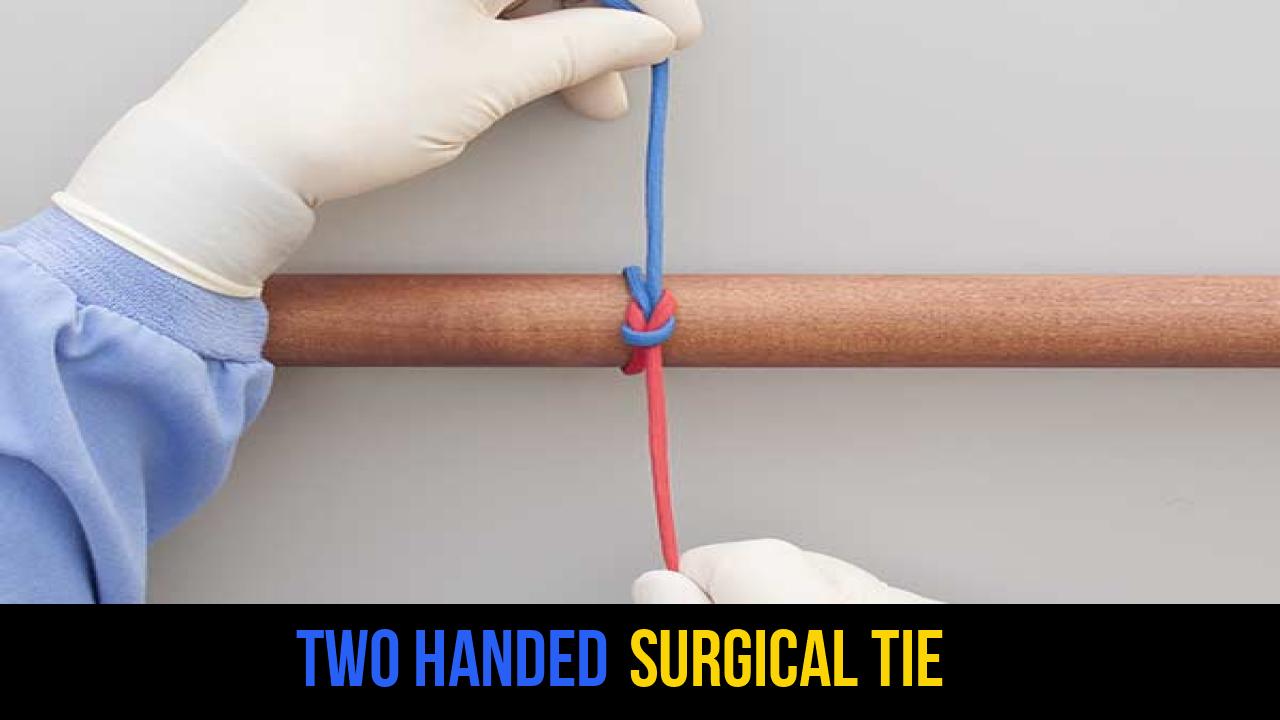
In the realm of rope knots and outdoor rope techniques, few methods offer the same level of precision and tactile feedback as the Two Handed Surgical Tie. While its name suggests a specific professional origin, this technique is a foundational skill for anyone involved in technical outdoor gear management, survivalist training, or traditional scouting.
The beauty of this tie lies in its symmetry and the controlled manner in which tension is applied to the line. Unlike quick-flick knots that can often result in tangles or "Granny Knots," the Two Handed Surgical Tie ensures that the user maintains a constant grip on both ends of the cordage, resulting in a perfect Square (Reef) Knot every time. Whether you are securing a load on a pack, repairing a torn tent fly, or practicing advanced lashings, mastering this manual tie is a hallmark of an expert woodsman.
Alternative Names: Two-Handed Square Knot, Manual Reef Tie, Surgeon’s Square Knot, Double-Handed Binding Knot.
What Is a Two Handed Surgical Tie?
The Two Handed Surgical Tie is a specific manual method used to create a Square Knot (also known as a Reef Knot). In technical rope work, the "tie" refers to the process of using both hands to manipulate the cordage into a secure, interlocking binding.
Practical Uses in the Outdoors
In outdoor scenarios, this knot is prized for its security and ease of deployment. Its primary function is to join two ends of a single rope around an object—a process known as "binding."
- Gear Repair: Securely fastening a patch over a dry bag or backpack.
- First Aid Training: Used in wilderness first aid simulations to secure splints or bandages where constant tension is required during the tying process.
- Bundling: Organizing firewood or securing a rolled-up sleeping mat.
- Lashing Starts: While many lashings start with a Clove Hitch, the Two Handed Surgical Tie provides a flat, stable base for temporary bindings.
The mechanical advantage of this tie is that it allows the user to keep the rope "tight" between the first and second throws, preventing the knot from loosening while the final structure is completed.
Materials and Tools Needed
To practice and master the Two Handed Surgical Tie, you need the right materials. While this tie can be performed on almost any flexible cordage, different materials react differently to the friction generated during the tie.
Recommended Rope Types
- Paracord (550 Cord): The gold standard for practicing outdoor rope techniques. It is flexible, durable, and has a slight stretch that helps you feel the knot "set."
- Nylon Utility Cord: Excellent for high-friction scenarios.
- Cotton Sash Cord: Great for beginners because the natural fibers "bite" into each other, making it easier to see if the knot is slipping.
Tools for Practice
- Practice Dowel: A small wooden rod or even a sturdy branch can serve as the object you are tying around.
- Gloves: When working with thin, high-tensile synthetics like Dyneema, lightweight gloves can prevent rope burn during high-tension practice.
How to Tie Two Handed Surgical Tie?
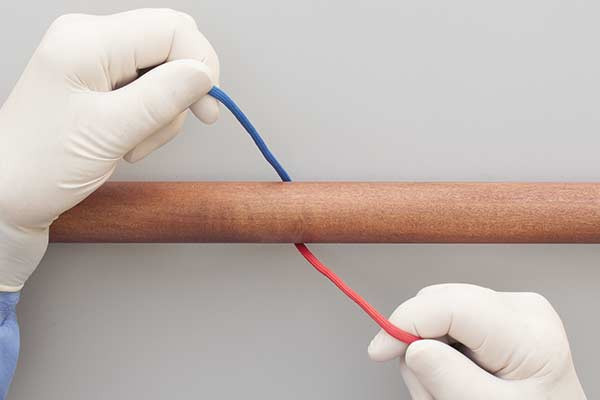
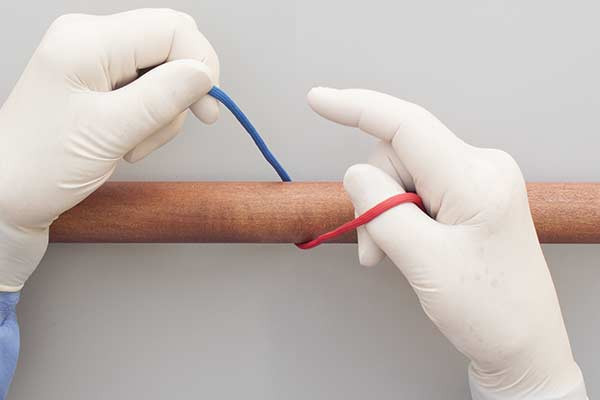
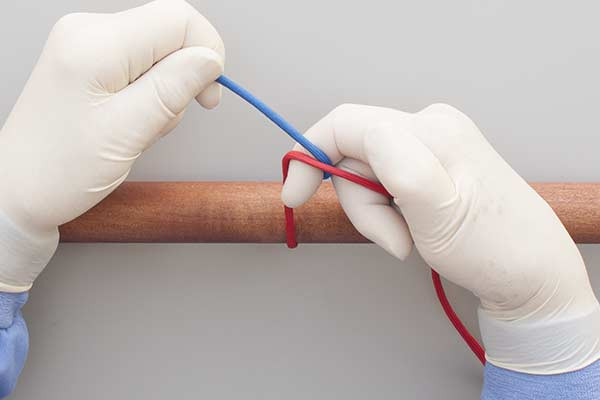
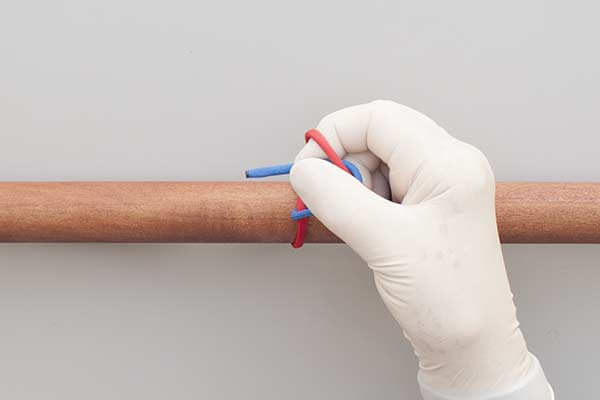
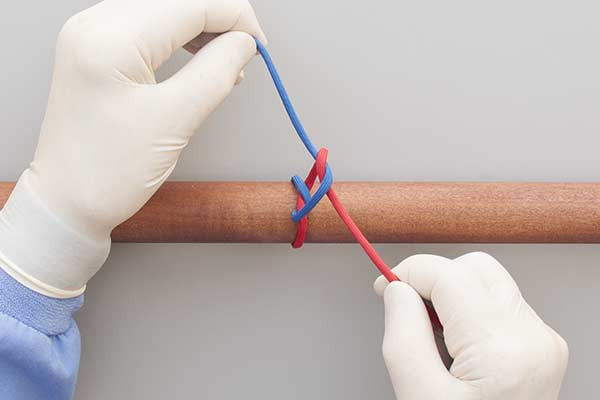
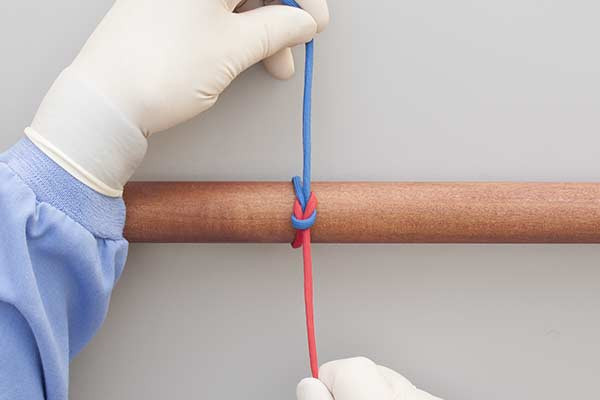
The following instructions detail the precise manual movements required to execute this tie. Accuracy in the finger movements ensures the transition from a Half Knot to a full Square (Reef) Knot without crossing the lines incorrectly.
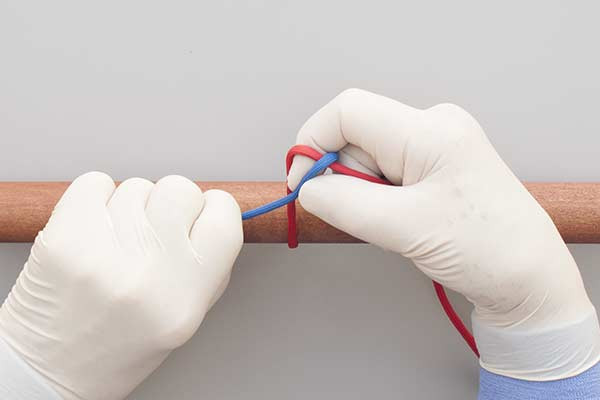
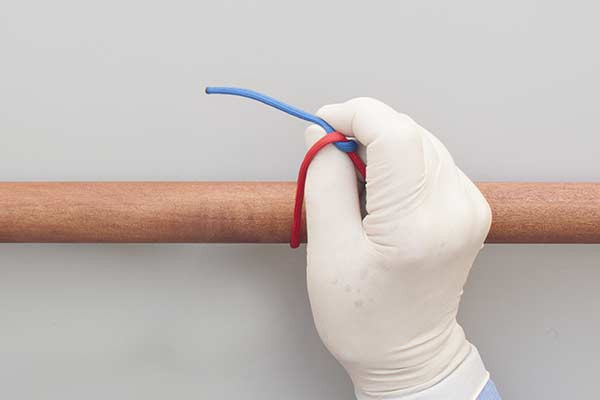
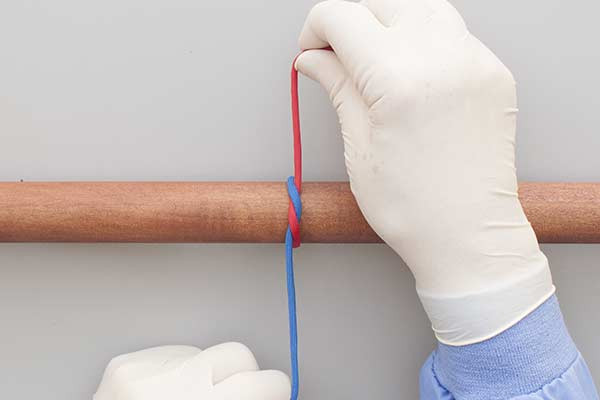
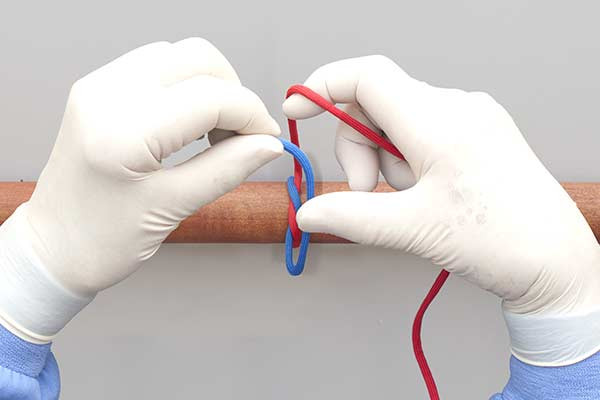
- With the short end away from you, hook your index finger between the ends.
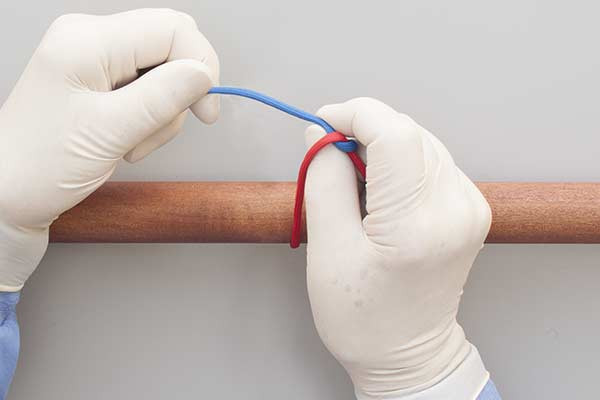
- Grip the end with your thumb, push it through, and pull it tight to make a Half Knot.
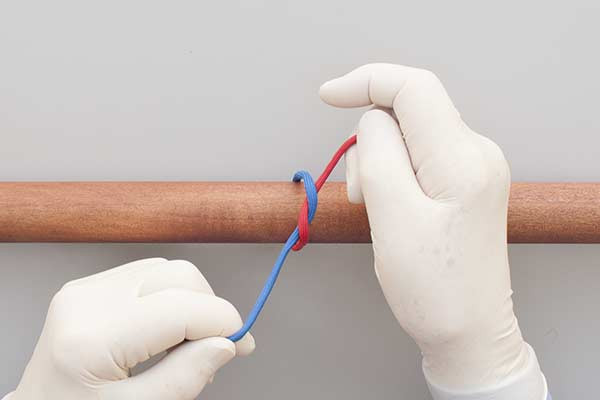
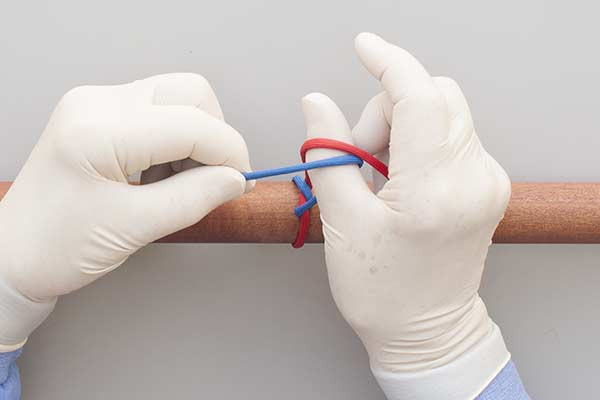
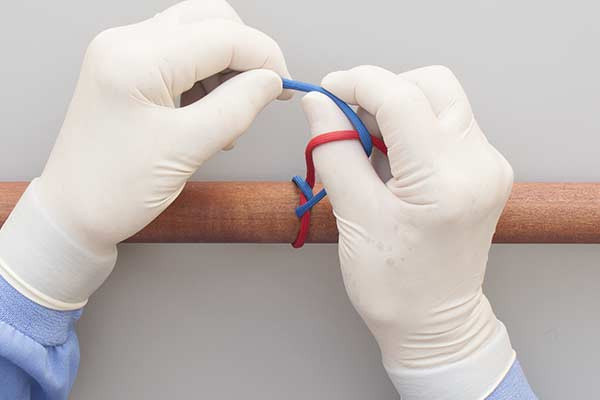
- Next, hook your thumb between the ends.
- Grip the end with your finger, push it through, and pull it tight to complete the Square (Reef) Knot.
Common Mistakes to Avoid
Even seasoned experts can occasionally fumbles the Two Handed Surgical Tie. Understanding the mechanics of the knot helps in avoiding these common pitfalls:
1. The "Granny Knot" Trap
The most common error is failing to alternate the fingers correctly in Steps 1 and 3. If you use your index finger for both "throws," you will likely create a Granny Knot. Unlike the Square Knot, a Granny Knot is unstable, slips under load, and can be notoriously difficult to untie once jammed.
2. Uneven Tension
If you pull one end harder than the other during Step 2, the knot may "capsize." In outdoor rope techniques, a capsized knot transforms into two half-hitches around a straight line, which will slide right off your gear. Always pull both ends with equal force outward.
3. Ignoring Material Memory
Stiff, thick ropes (like heavy climbing rope) have "memory" and may resist the tight turns of a surgical tie. When using such materials, ensure you manually "dress" the knot—straightening the loops so they lay flat against each other—before applying the final pull.
Related Knots and Splicing
Expanding your repertoire of rope knots involves understanding how the Two Handed Surgical Tie relates to other essential hitches and bends.
- The Surgeon’s Knot: A variation of the square knot where an extra twist is added to the first Half Knot. This provides additional friction to keep the knot tight while you prepare the second throw.
- The Square (Reef) Knot: The structural result of the surgical tie. It is the most common knot for joining two ropes of equal diameter but should never be used for critical life-safety loads.
- The Sheet Bend: A superior alternative to the square knot when you need to join two ropes of different thicknesses or materials.
- The Clove Hitch: While the surgical tie is for binding, the Clove Hitch is the primary knot for securing a rope to a post or spar in camping and pioneering.
Final Words
The Two Handed Surgical Tie is more than just a method; it is a discipline. In the world of technical outdoor gear, the ability to tie a secure, reliable knot under pressure is invaluable. By following the structured steps of hooking the index finger and thumb in sequence, you ensure the structural integrity of the Square (Reef) Knot.
Whether you are a survivalist, a sailor, or a hobbyist, practicing this tie until it becomes muscle memory will significantly enhance your proficiency with outdoor rope techniques. Remember that the safety of your gear—and sometimes your person—depends on the quality of your knots. Practice often, use the right materials, and always inspect your knots before putting them under load.
With the Two Handed Surgical Tie in your toolkit, you are well on your way to mastering the essential art of cordage.
