
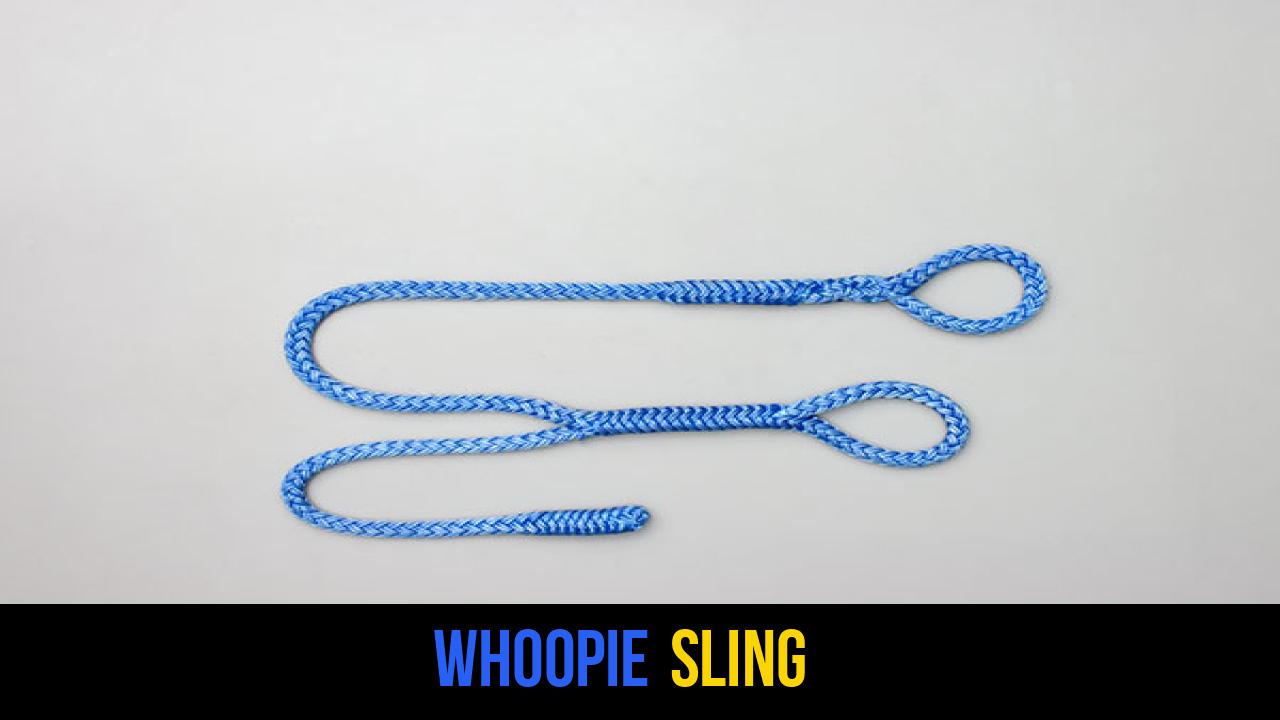
In the world of ultra-lightweight camping and professional arboriculture, efficiency and reliability are the twin pillars of success. Among the most ingenious developments in outdoor rope techniques is the Whoopie Sling. While many beginners start their journey with standard rope knots, the transition to splicing—specifically the creation of adjustable slings—marks the move from amateur to expert.
The Whoopie Sling is not a knot in the traditional sense; it is a sophisticated splice. It utilizes the "Chinese finger trap" principle, where the outer sheath of a hollow-braid rope constricts around the inner tail when tension is applied. This creates a secure, non-slip hold that can be adjusted in seconds without the bulk or strength-reduction inherent in traditional knots. Whether you are suspending a hammock between two ancient oaks or rigging a heavy limb for removal, understanding the mechanics of the Whoopie Sling is an essential skill.
Alternative names for the Whoopie Sling include:
- Adjustable Eye-to-Eye Sling
- HMPE Adjustable Sling
- Hammock Suspension Sling
- Constrictor Sling
What Is a Whoopie Sling?
A Whoopie Sling is an adjustable attachment device made from high-strength, hollow-braid synthetic rope. Most commonly constructed from High-Modulus Polyethylene (HMPE) fibers like AmSteel-Blue or Dyneema, these slings offer a strength-to-weight ratio that far exceeds steel cable.
Practical Applications
The versatility of the Whoopie Sling makes it a staple in several industries and hobbies:
- Hammock Camping: It is the gold standard for hammock suspension. Its adjustability allows campers to achieve the perfect 30-degree hang angle regardless of the distance between trees.
- Arboriculture: Tree surgeons use heavy-duty Whoopie Slings for rigging. They can be quickly adjusted to fit various trunk diameters to secure blocks or pulleys.
- Sailing: Used for lightweight lashings and adjustable stays where weight savings are critical.
- Off-Roading: Smaller versions are used as soft shackle components or adjustable winch line extensions.
The primary advantage of a Whoopie Sling over traditional rope knots is strength retention. While a standard knot might reduce a rope’s breaking strength by 30% to 50%, a well-executed splice like the Whoopie Sling typically retains 90% to 95% of the rope’s rated strength.
Materials and Tools Needed
Before you begin the splicing process, you must gather the correct materials. Unlike standard outdoor rope techniques that work with twisted or double-braid ropes, the Whoopie Sling requires specific cordage.
1. Hollow-Braid Rope
You must use a 12-strand hollow-braid rope. Dyneema SK75/78 or AmSteel-Blue are the preferred choices. These ropes have no core; the center is hollow, allowing the rope to be buried within itself.
2. Splicing Fid or Wire Puller
A fid is a specialized tool used to pull the rope through its own center. For smaller diameters (like 7/64" or 1/8" used in camping), a folded piece of floral wire or a specialized "D-Splicer" works best. For larger rigging ropes, a tubular aluminum fid is required.
3. Measuring Tape and Marker
Precision is key. You need to measure the "bury" length—the amount of rope tucked inside the main line—to ensure the friction is sufficient to hold the load.
4. Sharp Scissors or Ceramic Knife
HMPE fibers are notoriously difficult to cut. A sharp set of shears or a specialized ceramic blade will prevent fraying.
How to Tie Whoopie Sling?
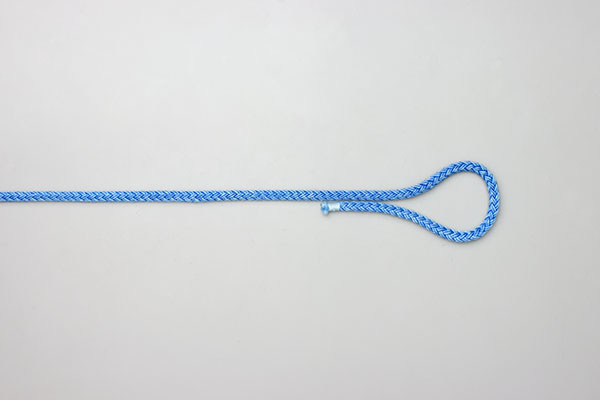
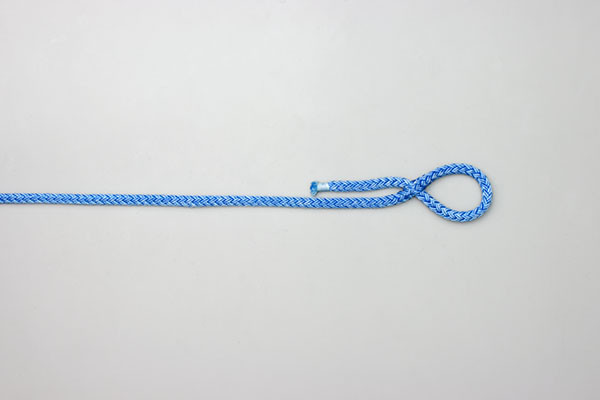
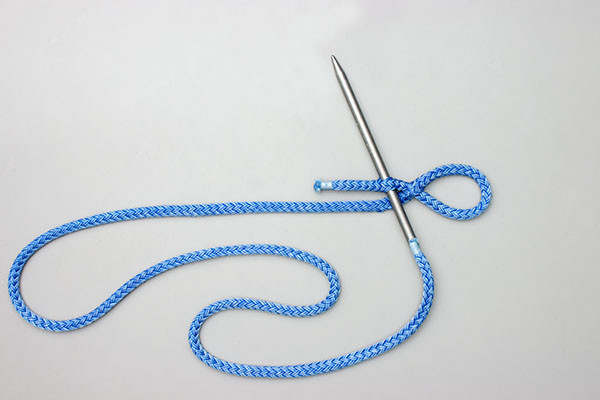
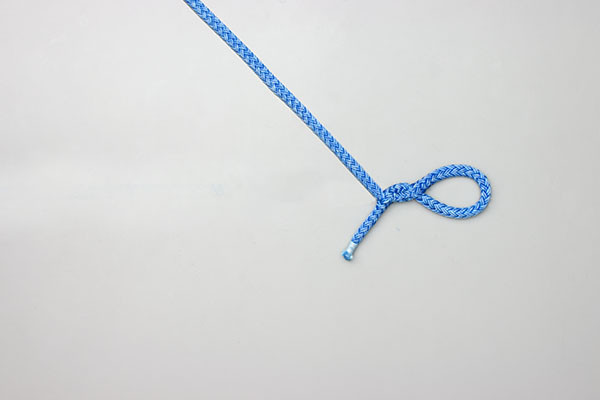
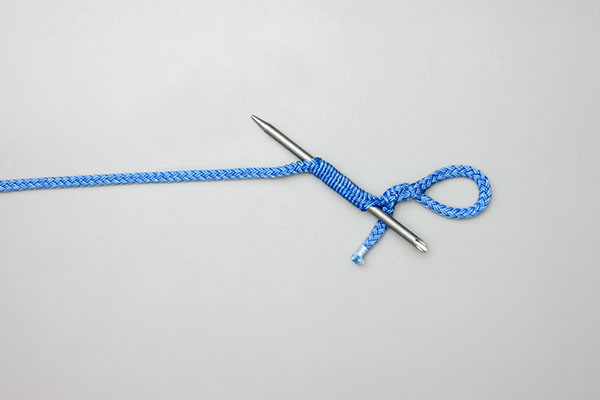
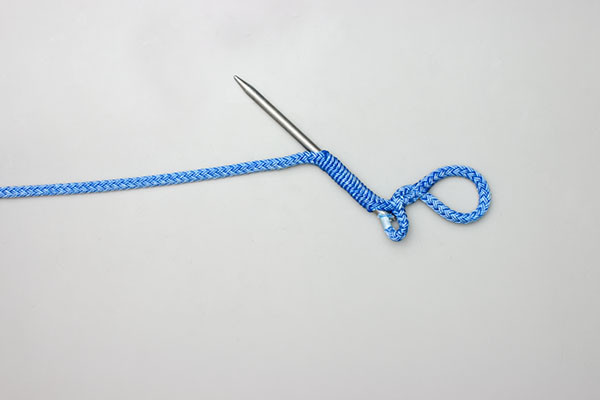
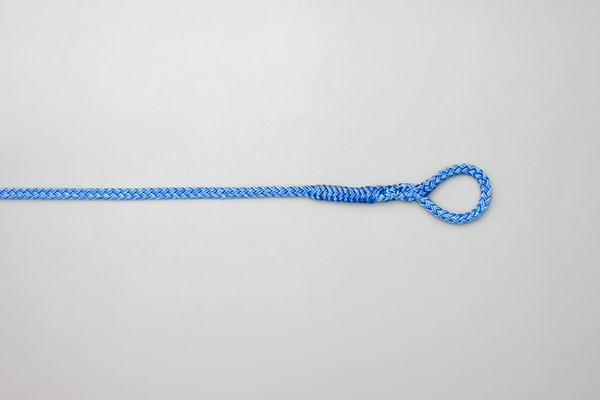
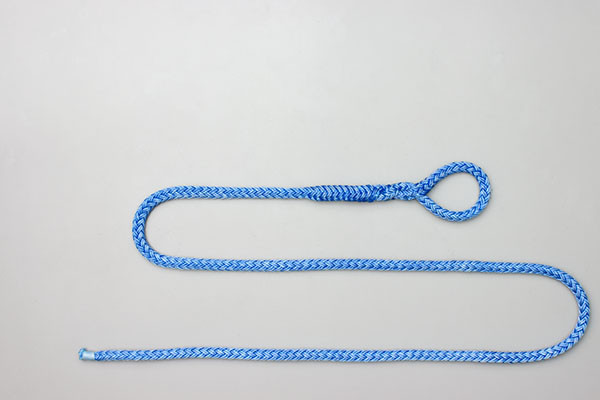
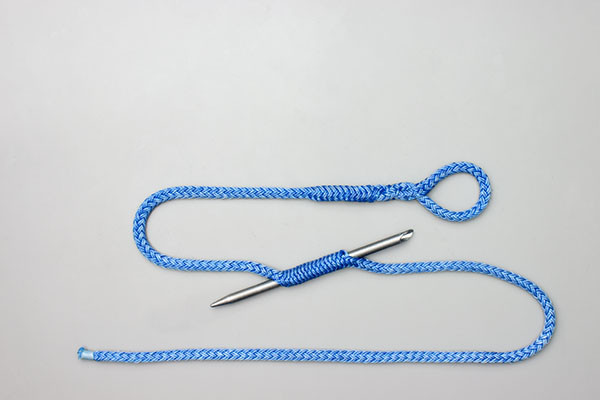
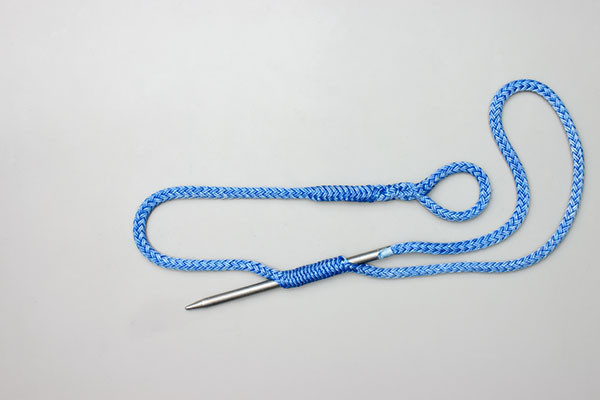
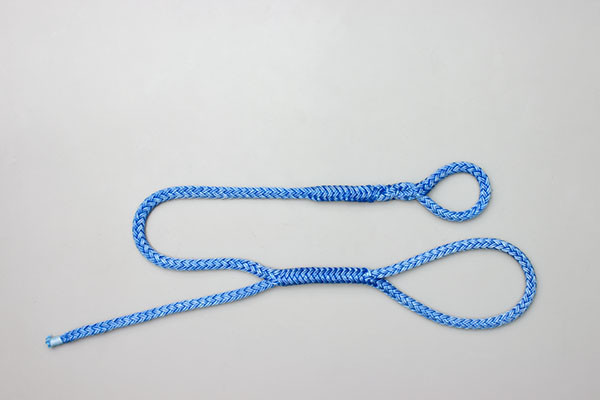
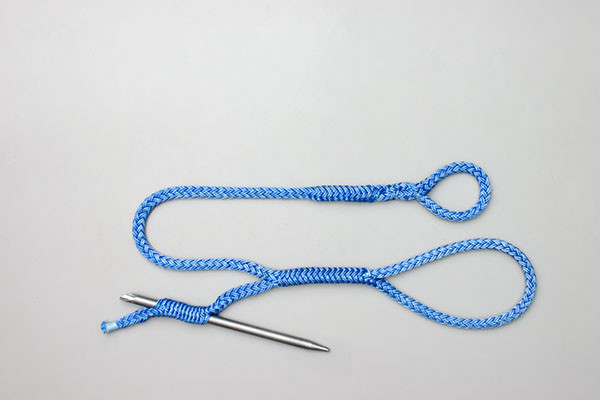
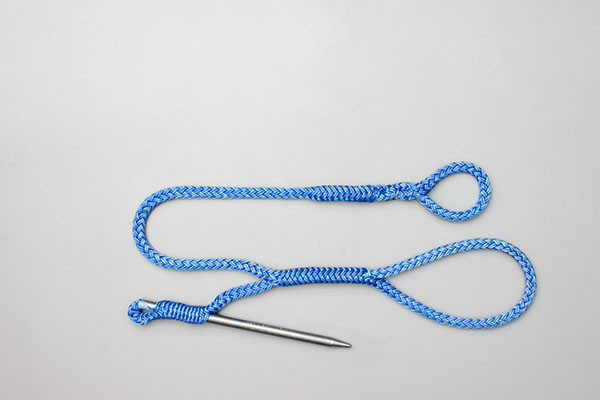
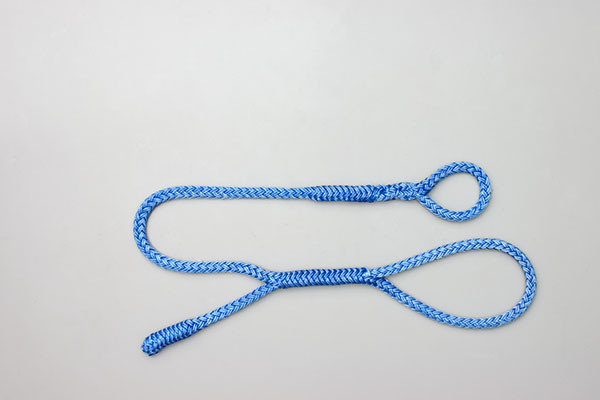
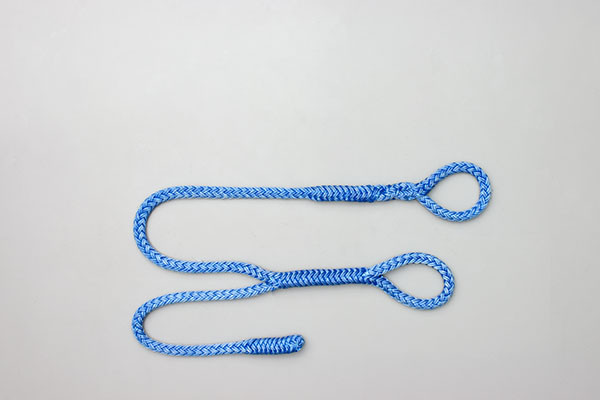
To create a professional-grade Whoopie Sling, follow these precise steps. This method utilizes the Locked Brummel Splice to ensure the fixed eye never slips, even when not under tension.
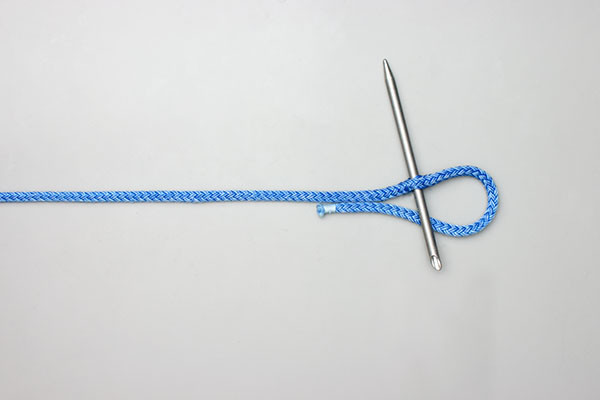
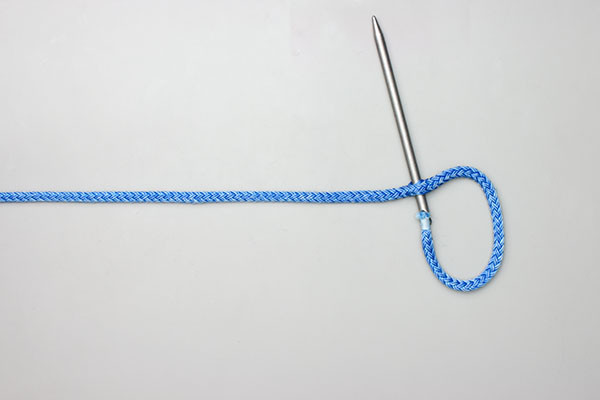
- Make a Loop using a Locked Brummel Splice and then thread the fid to bury the short end.
- Next, thread the fid along the middle of the rope to make the adjustable loop.
- Finally, use the fid to bury the short end as a back splice.
- Pull to adjust.
Common Mistakes to Avoid
Even for those experienced in rope knots, splicing can be tricky. Avoid these common pitfalls to ensure your Whoopie Sling is safe for use:
- Using the Wrong Rope Type: You cannot make a Whoopie Sling with paracord or standard double-braid nylon. It must be a 12-strand hollow braid.
- Bury Length Too Short: The "bury" is what provides the friction. A general rule of thumb is a bury length of 21 times the diameter of the rope. If the bury is too short, the sling will slip under heavy loads.
- Forgetting the Taper: When burying the tail (Step 1 and Step 3), it is often helpful to "taper" the end by removing a few strands. This makes the transition smoother and prevents a "bump" that could snag.
- No Stopper Bead: In the adjustable loop, many users add a small plastic bead. This prevents the adjustable loop from being accidentally pulled back into the bury, which would require a fid to fix.
- Ignoring the Locked Brummel: A simple splice can slip if not under tension. The Locked Brummel ensures the fixed eye remains secure at all times.
Related Knots and Splicing
To further enhance your knowledge of outdoor rope techniques, consider learning these related splices and knots:
- Soft Shackle: A high-strength loop made from Dyneema that replaces heavy metal carabiners. It uses a stopper knot and a spliced eye to create a secure, lightweight connector.
- Continuous Loop: A simple circle of rope created using a long bury splice. These are often used as "prusik loops" or for attaching hardware to hammocks.
- Eye Splice: The foundation of many rope knots and riggings, this creates a permanent loop at the end of a line without the bulk of a knot.
- Prusik Knot: A friction hitch used to grab a rope when weighted. It is often used in conjunction with Whoopie Slings to create an adjustable ridgeline for tarps.
Final Words
The Whoopie Sling represents the pinnacle of modern outdoor rope techniques. By moving away from traditional rope knots and embracing the science of splicing, you can create gear that is lighter, stronger, and more adjustable than anything found in a standard retail store.
Whether you are an arborist looking for a reliable rigging solution or a backpacker aiming to shave ounces off your pack weight, the Whoopie Sling is a transformative tool. By mastering the Locked Brummel Splice and the adjustable bury, you gain a deeper understanding of how modern fibers work and how to utilize them safely in the field. Remember to always inspect your splices for wear and ensure your bury lengths are adequate for the intended load. Happy splicing!
