
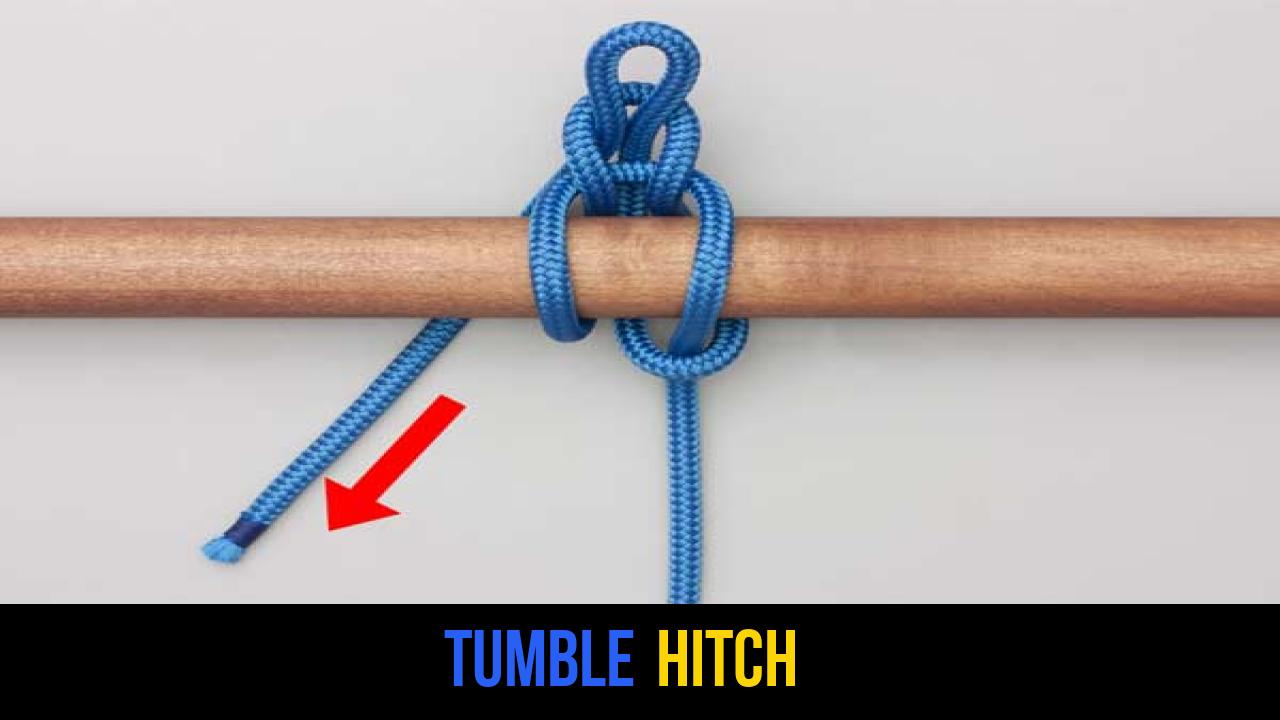
In the vast lexicon of rope knots, few offer the specific combination of security under load and "explosive" release capability quite like the Tumble Hitch. For outdoor enthusiasts, arborists, and sailors, mastering various outdoor rope techniques is not just about keeping things tied down; it is about having the right tool for the right job. The Tumble Hitch knot is a specialized hitch designed for situations where you need a firm hold that can be dismantled in a single second with a simple tug of the working end.
As an expert in technical outdoor gear and rigging, I have seen many beginners struggle with complex hitches that jam under tension. The Tumble Hitch solves this problem through a clever "bight-through-bight" architecture. Whether you are securing a temporary gear line or setting up a quick-release mooring, this knot is a fundamental addition to your repertoire.
Alternative names: The Explosive Hitch, Quick-Release Post Hitch, ABOK #171.
What Is a Tumble Hitch?
The Tumble Hitch knot is a member of the "quick-release" or "slip" hitch family. Its primary function is to secure a rope to a cylindrical object—such as a pole, post, or spar—in a way that remains stable while the standing end is under heavy tension, yet collapses instantly when the tail (the "dead" end) is pulled.
Practical Uses and Applications
Unlike the more common Highwayman’s Hitch, which can sometimes be unstable if not dressed correctly, the Tumble Hitch is generally considered more secure. Its utility spans several disciplines:
- Camping and Bushcraft: Perfect for hanging gear or lanterns that need to be packed away quickly at dawn.
- Boating: Used for temporary mooring where a rapid departure might be necessary.
- Arboriculture: Facilitates the lowering of light branches or tools where the ground crew needs to release the line without climbing back up.
- Emergency Scenarios: In search and rescue, quick-release hitches allow for the rapid deployment or retrieval of equipment.
Materials and Tools Needed
To tie a reliable Tumble Hitch, the choice of materials is paramount. Not all ropes behave the same way under the friction required for this hitch.
Recommended Rope Types
- Nylon (Three-Strand or Braided): Nylon has excellent "grip." The slight elasticity of nylon helps the bights seat firmly against the pole, reducing the risk of the knot "creeping."
- Polyester (Dacron): Low stretch and high UV resistance make this ideal for marine environments where the Tumble Hitch might be exposed to the elements.
- Kernmantle (Static): For technical rigging, a static kernmantle rope provides the predictability needed for the knot to hold its form under significant weight.
Tools and Considerations
- The Anchor Point: The Tumble Hitch is designed for cylindrical objects. Ensure the pole or branch is sturdy and free of sharp burrs that could snag the rope during the "tumble" release.
- Rope Diameter: This knot performs best with ropes between 6mm and 12mm. Very thin cords (like paracord) may bite into themselves, making the release less "fluid," while very thick hawsers may be too stiff to form the necessary tight bights.
How to Tie Tumble Hitch?
Following the proper sequence is vital to ensure the knot functions as intended. If the bights are misplaced, the knot may either fail to hold the load or fail to release when pulled.
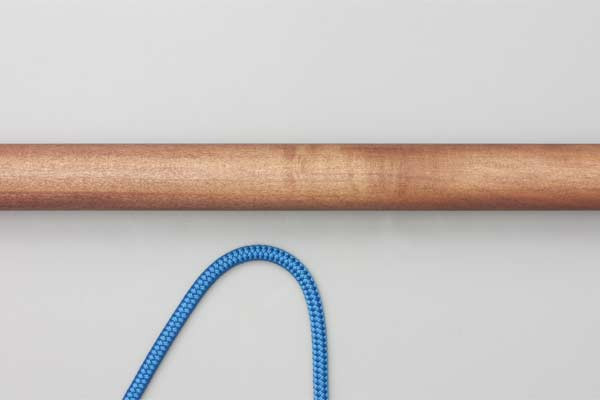
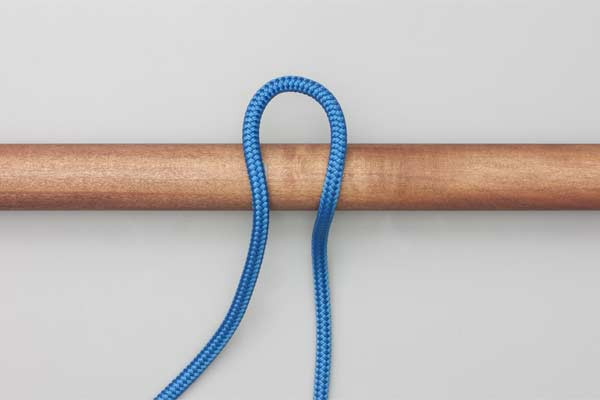
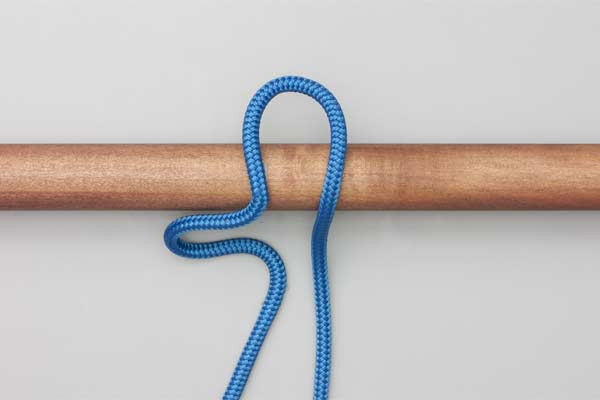
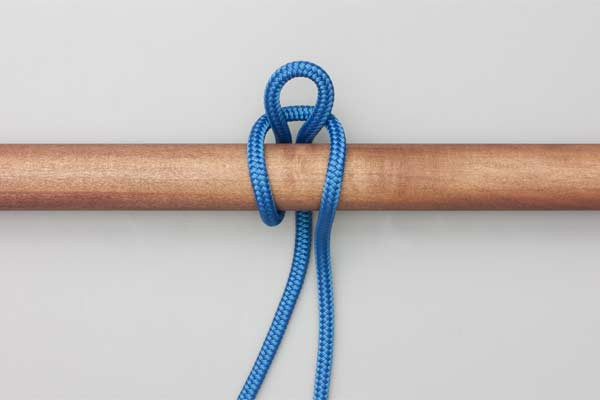
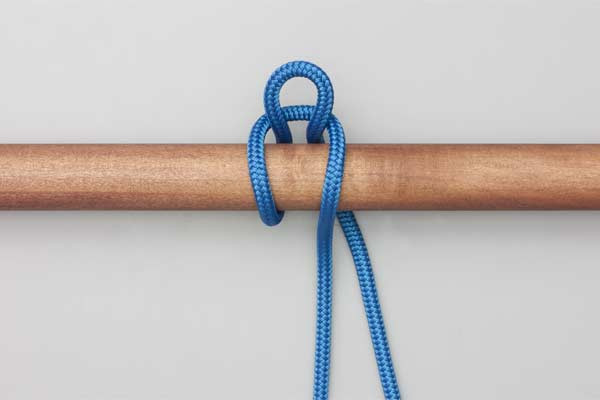
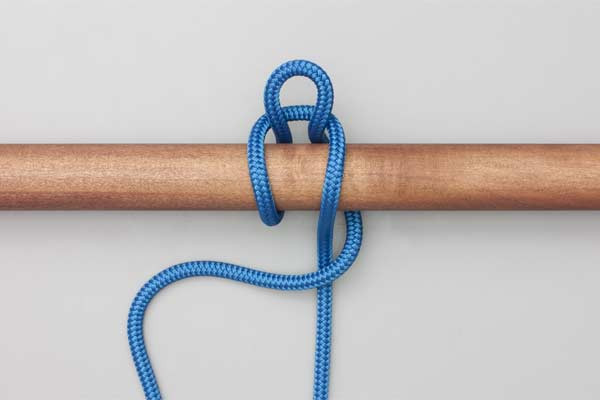
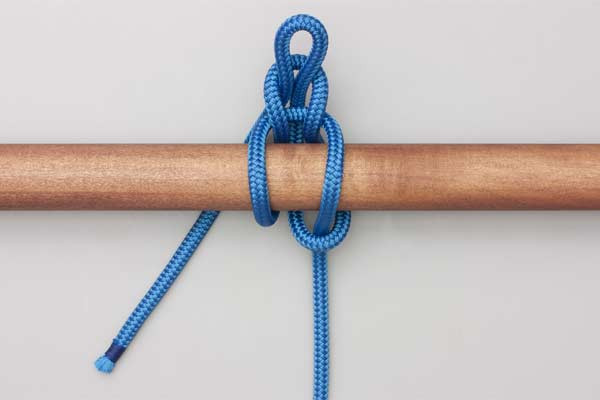
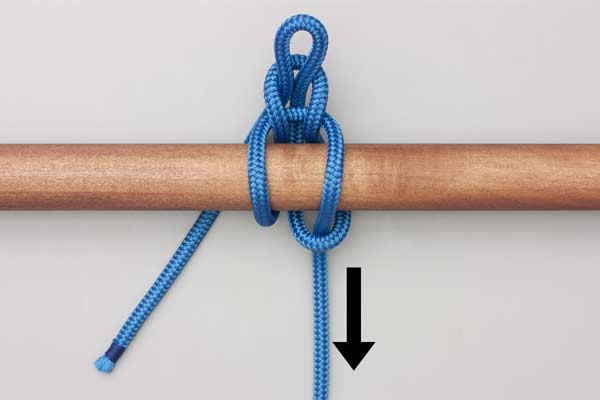
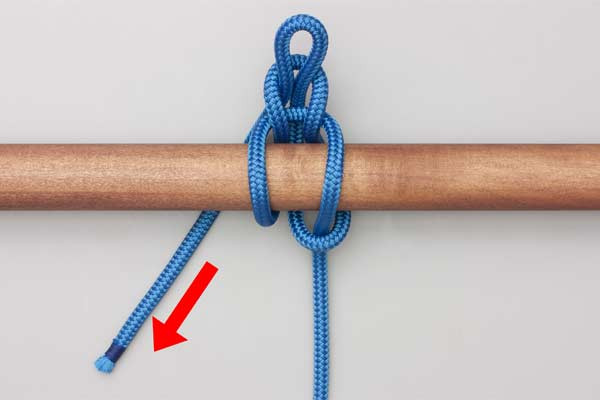
Follow these steps exactly to tie the Tumble Hitch knot:
- Hold an initial bight of the rope against the pole.
- Place a second bight behind the pole and through the initial bight.
- Pass the tail around the Standing End.
- Then tuck a bight through the second one.
- Tighten to secure the knot and take the load.
- Pull the tail to release.
Common Mistakes to Avoid
Even seasoned professionals can make errors when tying the Tumble Hitch knot. To ensure safety and performance, watch out for these common pitfalls:
1. Dressing the Knot Poorly
"Dressing" refers to the process of tidying the knot and ensuring all parts are parallel and snug. If the loops are overlapping haphazardly, the friction may not be distributed evenly, leading to a slip. Always tighten to secure the knot before applying a full load.
2. Confusing the Tail and the Standing End
The "Standing End" is the part of the rope that will bear the load. The "Tail" is the part you pull to release it. If you accidentally apply the load to the tail, the knot will disintegrate immediately. Always verify which end is which before putting weight on the line.
3. Using Slipper Materials
High-tech ropes like Dyneema or Spectra have a very low coefficient of friction. In these materials, the Tumble Hitch may slip. If using "slick" ropes, extra care must be taken, or a different hitch should be selected.
4. Safety Warning
Never use a quick-release hitch like the Tumble Hitch for life-critical applications (such as climbing or rappelling) without a secondary safety backup. The very feature that makes it useful—its easy release—makes it a liability if the tail is snagged accidentally.
Related Knots and Splicing
Understanding the Tumble Hitch is easier when you compare it to other outdoor rope techniques. Here are a few related knots that every specialist should know:
- Highwayman’s Hitch: A classic quick-release hitch often used for tethering horses; it is faster to tie than the Tumble Hitch but generally considered less secure under fluctuating loads.
- Mooring Hitch: A highly reliable quick-release knot used primarily in sailing to secure a boat to a dock or piling, offering a balance of security and ease of release.
- Siberian Hitch (Evenk Knot): A favorite in cold-weather survival, this hitch can be tied while wearing heavy gloves and provides a quick-release loop around a tree.
- Clove Hitch: While not a quick-release knot in the "slip" sense, it is the foundational hitch for securing a rope to a pole; mastering it helps you understand rope-to-object friction.
Final Words
The Tumble Hitch is a masterclass in functional geometry. It utilizes the mechanical advantage of bights and wraps to create a temporary bond that is as strong as the rope itself, yet as fleeting as a whisper when the release is triggered.
By integrating the Tumble Hitch knot into your repertoire of rope knots, you enhance your efficiency in the field. Whether you are a weekend camper or a professional rigger, the ability to secure and release gear with precision is a hallmark of expertise. Practice this knot with different rope diameters and textures until the "tumble" becomes second nature. Remember: the key to a perfect hitch is not just in the tying, but in the understanding of how tension and friction work together to keep your world secure.
For more advanced outdoor rope techniques, always ensure you are staying updated with the latest safety standards and material specifications. Happy tying!
