
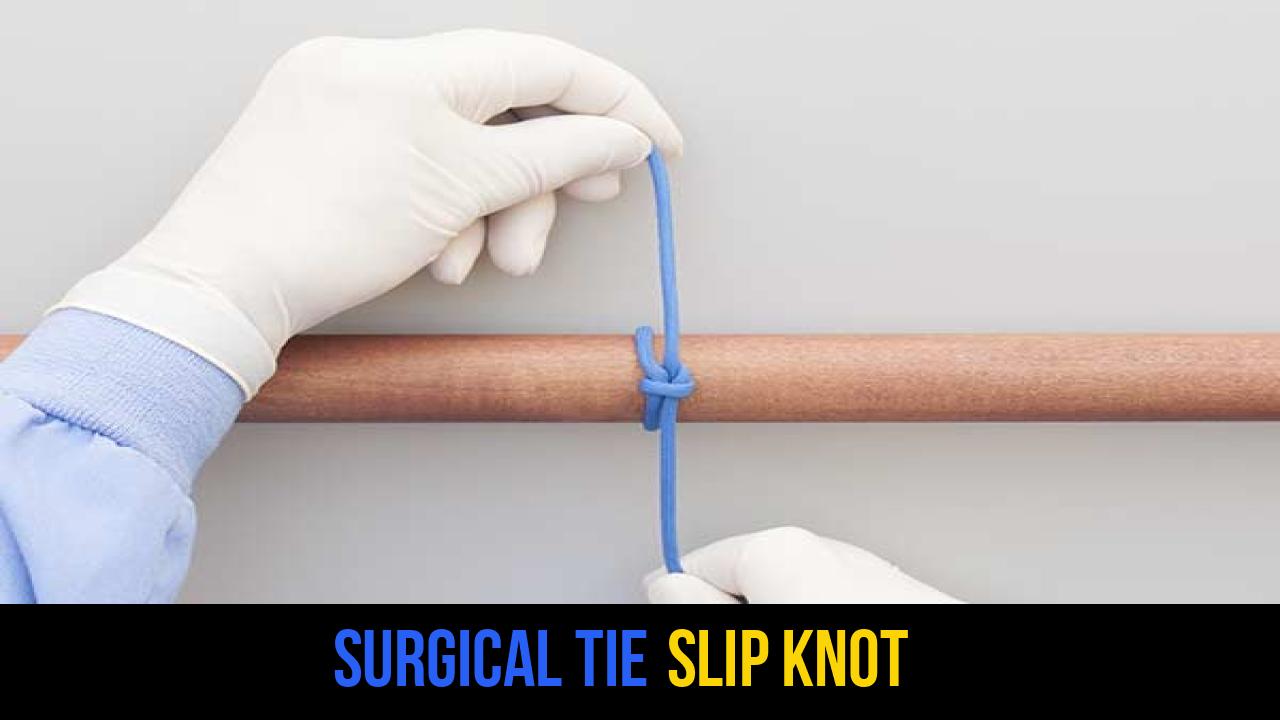
In the world of technical outdoor gear and survival skills, the ability to secure a line with precision is often the difference between success and failure. While many enthusiasts focus on heavy-duty hitches and climbing bends, the Surgical Tie Slip Knot represents a specialized category of rope knots that prioritize finesse, adjustable tension, and a low-profile finish.
Originally derived from the high-stakes environment of medical procedures, this knot has found a unique home in the kits of outdoor specialists. Whether you are performing a field repair on a delicate piece of ultralight gear, securing a temporary binding on a survival splint, or organizing fine cordage in a base camp, the Surgical Tie Slip Knot offers a level of control that standard slip knots lack. Its primary advantage lies in the "inversion" process, which allows the user to transition from a sliding, adjustable loop to a more secure, locked-down configuration.
Alternative Names: Surgeon’s Sliding Tie, Inverted Slip Knot, Tactical Precision Loop, Adjustable Gear Bind.
What Is a Surgical Tie Slip Knot?
The Surgical Tie Slip Knot is a specialized binding knot characterized by its two-stage application process. Unlike a standard slip knot used for simple tethering, this knot utilizes a specific sequence of finger movements to create a loop that can be cinched down tightly against an object (referred to in technical terms as the "vessel") before being "flipped" or "inverted" to lock the tension in place.
Practical Outdoor Applications
In the context of outdoor rope techniques, this knot is rarely used for high-load hauling. Instead, it is an essential tool for:
- Field First Aid: Securing dressings or stabilizing splints where consistent, adjustable pressure is required without the bulk of a traditional knot.
- Gear Repair: Binding broken tent poles or securing loose webbing on a technical backpack.
- Bushcraft and Crafting: Tying off delicate lashings on small camp projects or securing fine materials like bank line or micro-cord.
- Tensioning: Acting as a precursor to more permanent lashings by holding components in place while the primary rope is being set.
Materials and Tools Needed
To master the Surgical Tie Slip Knot, the choice of material is paramount. Because this knot relies on the ability to "invert" or flip the geometry of the cordage, the diameter and texture of the rope will significantly impact its performance.
Recommended Rope Types
- 550 Paracord: The gold standard for outdoor utility. Its nylon sheath provides enough friction to hold the slip but enough "slickness" to allow for the final inversion.
- Bank Line (Tarred or Untarred): Excellent for smaller, more permanent applications. The tarred version provides superior grip.
- Micro-Cord or Nano-Cord: Ideal for practicing the fine motor skills required for this knot.
- Shock Cord: While difficult to invert, the surgical tie can be adapted for elastic applications where a constant pull is necessary.
Considerations for Success
- Pliability: Stiff, static ropes (like 10mm climbing rope) are generally unsuitable for this specific technique. Look for supple cordage.
- Length: Ensure you have enough of a "short end" (tag end) to manipulate with your fingers.
- The "Vessel": In outdoor scenarios, your "vessel" is the object you are tying around—a branch, a pole, or a bundle of gear.
How to Tie a Surgical Tie Slip Knot?
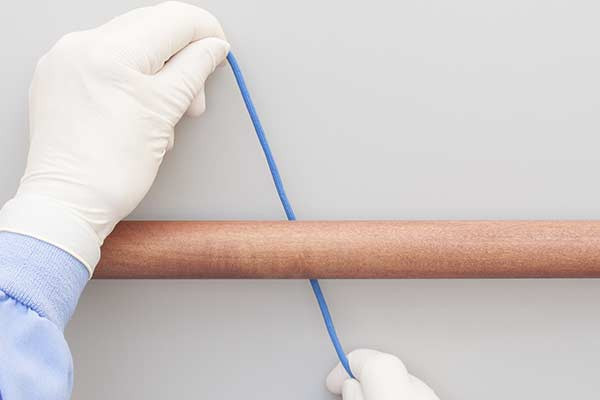
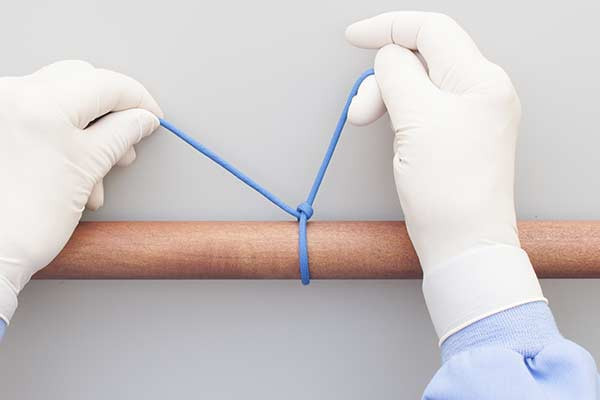
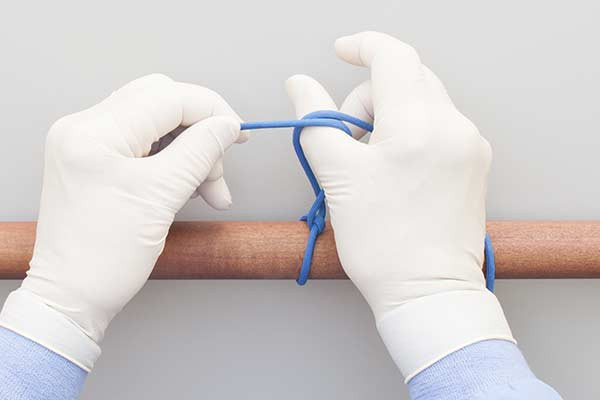
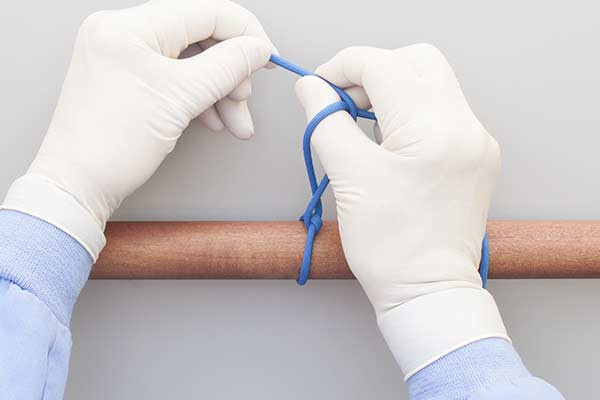
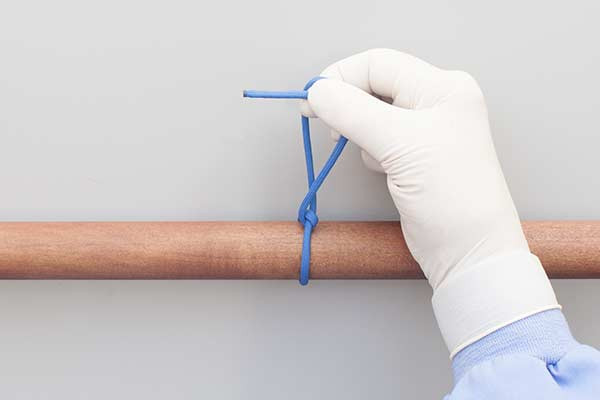
Precision is the most critical factor when executing this knot. Follow these steps exactly as outlined to ensure the knot functions as intended.
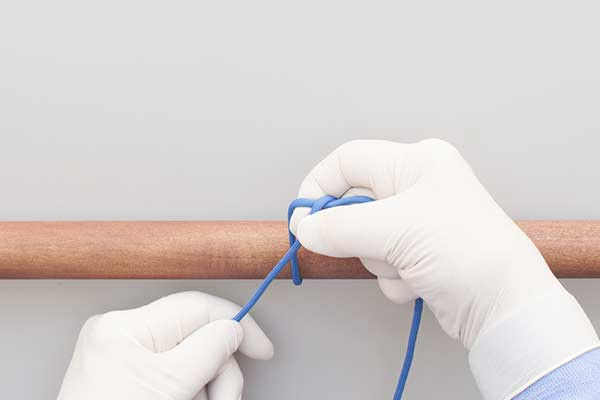
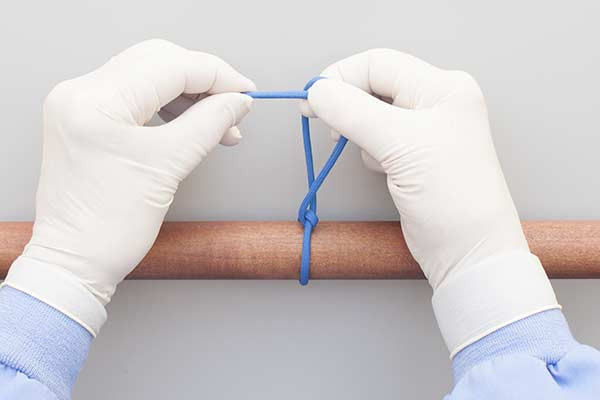
- With the short end away from you.
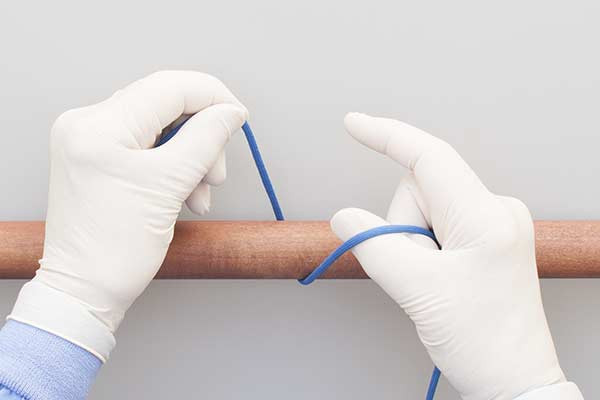
- Hook your index finger between the ends.
- Grip the end with your thumb and push it through.
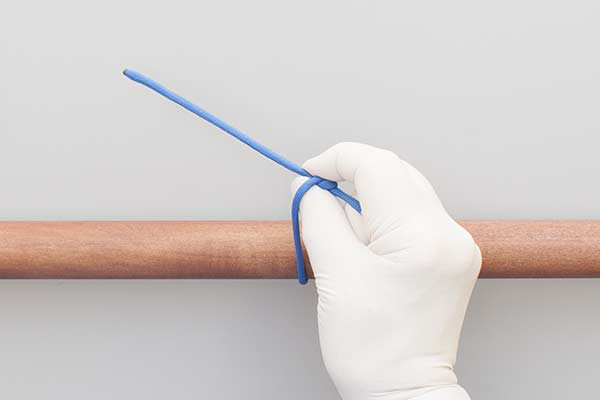
- Slide the knot down against the vessel.
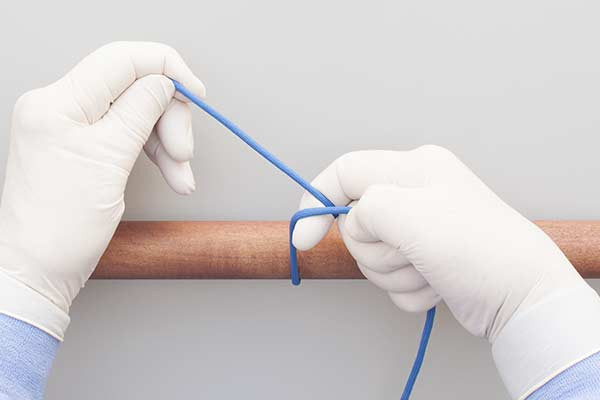
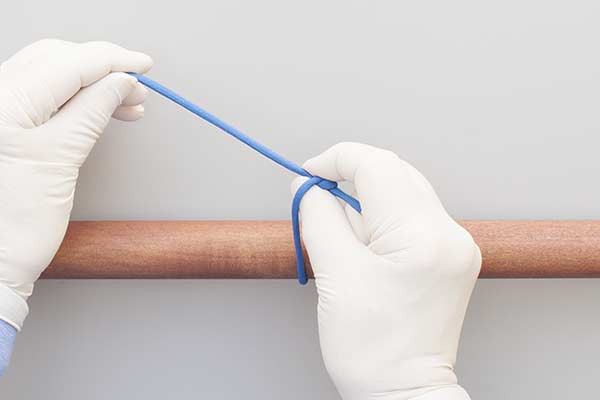
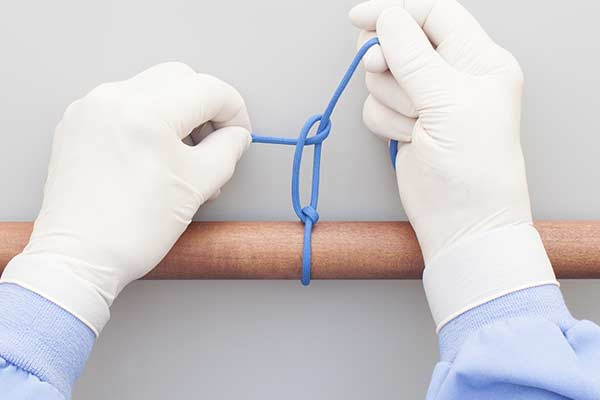
- Next, hook your thumb between the ends.
- Grip the end with your finger, push it through.
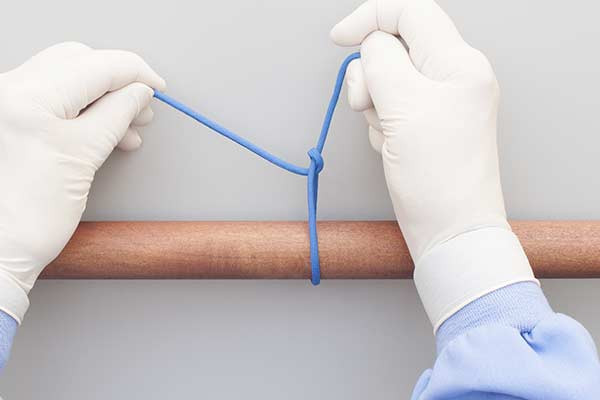
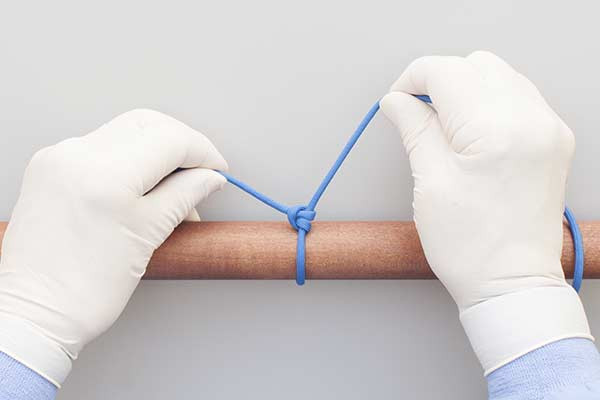
- Slide the knot down.
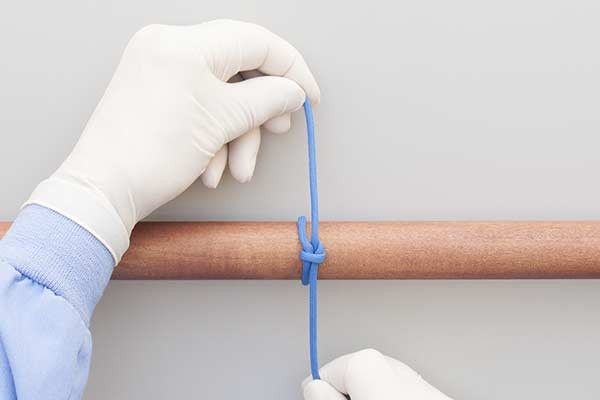
- Pull on the short end to invert the knot.
Common Mistakes to Avoid
Even for experienced practitioners of outdoor rope techniques, the Surgical Tie Slip Knot can be tricky due to the specific finger dexterity required.
1. Neglecting the Inversion
The final step—pulling on the short end to invert the knot—is what differentiates this from a standard, insecure loop. If you fail to invert the knot, it remains a simple slip knot that can easily come undone under fluctuating tension.
2. Incorrect Finger Placement
The instructions specify alternating between the index finger and the thumb. This is not arbitrary; the alternation creates the specific "over-under" geometry required for the knot to collapse and سپس (then) invert correctly. Mixing these up often results in a tangled mess rather than a functional tie.
3. Using Oversized Cordage
If the rope is too thick relative to the object (vessel) you are tying around, the knot will become "chunky" and fail to slide down smoothly. For the best results, use cordage that is significantly thinner than the diameter of the object being secured.
4. Lack of Tension During the Slide
When you slide the knot down against the vessel, you must maintain constant tension on the standing part of the rope. If the line goes slack, the internal loops of the knot may cross, preventing the final inversion.
Related Knots and Splicing
Understanding the Surgical Tie Slip Knot is part of a broader mastery of rope knots. Here are several related techniques that every outdoor specialist should know:
- The Surgeon’s Knot: A variation of the reef knot that adds an extra twist to the first throw, increasing friction to prevent slipping while the second half of the knot is tied.
- The Taut-Line Hitch: An adjustable friction hitch used on lines under tension. It is ideal for staking out tents and provides a more heavy-duty alternative to a simple slip tie.
- The Clove Hitch: A classic binding knot that is quick to tie and easy to adjust, though it lacks the specific "locking" mechanism provided by the surgical tie’s inversion.
- The Constrictor Knot: One of the most effective binding knots available. Once tightened, it is nearly impossible to undo without cutting the rope, making it the "permanent" cousin to the surgical tie.
- The Slip Knot (Standard): A basic utility knot used to create a temporary loop. While easier to tie, it lacks the security and precision of the surgical version.
The Science of Knot Security in the Outdoors
Why does the Surgical Tie Slip Knot work so well in technical scenarios? It comes down to mechanical advantage and friction management.
When you push the end through using your thumb or finger, you are creating a series of wraps that increase the surface area contact between the rope and itself. This is known as the Capstan effect. As you slide the knot down, you are removing "slack air" from the tie. The final "inversion" changes the topology of the knot, essentially turning it inside out so that the tension of the standing line clamps down on the tag end.
In outdoor rope techniques, we value knots that are "easy to tie, easy to untie, but secure when loaded." The surgical tie fits this description perfectly for light-duty, high-precision tasks.
Final Words
The Surgical Tie Slip Knot is a testament to the fact that not all rope knots need to be massive, load-bearing structures to be useful. In the hands of a skilled outdoor gear specialist, this knot becomes a surgical instrument—capable of providing exact tension and a reliable hold in delicate situations.
By mastering the specific finger movements and the critical final inversion, you add a layer of sophistication to your survival and gear-maintenance repertoire. Whether you are in the deep backcountry or repairing equipment in your workshop, the precision of the Surgical Tie Slip Knot ensures that your bindings stay exactly where you put them. Practice with various cordage types to develop the muscle memory necessary for field application, and always remember: the secret is in the flip.
