
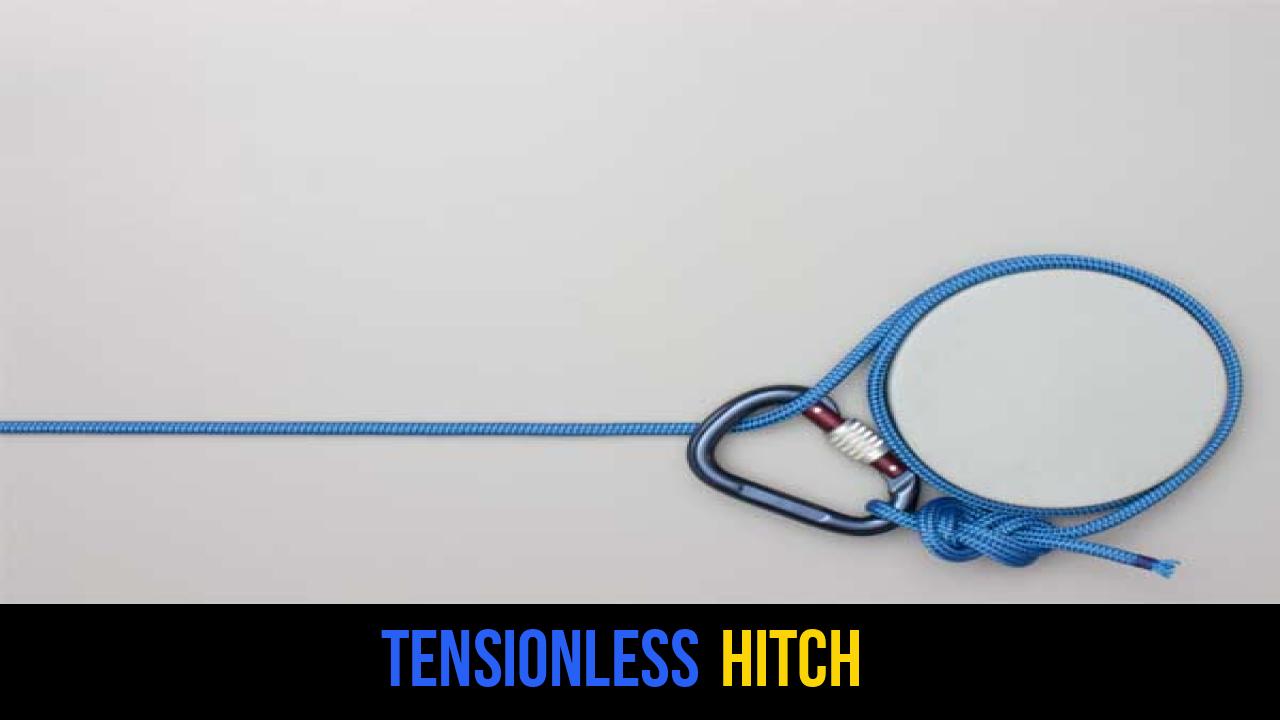
In the world of professional rigging, search and rescue, and advanced climbing, the integrity of an anchor point is the difference between success and catastrophic failure. While there are hundreds of rope knots used in various industries, few possess the unique mechanical advantage of the Tensionless Hitch.
Often referred to as the "king of anchors," the Tensionless Hitch knot is a fundamental component of outdoor rope techniques because it preserves the maximum breaking strength of the rope. Unlike traditional knots that involve sharp bends—which can weaken a rope by up to 30% or 50%—this hitch relies on friction and the physics of the "Capstan effect" to secure a load without compromising the fibers of the cordage.
In this comprehensive guide, we will explore the technical nuances of this hitch, the materials required to execute it safely, and a step-by-step breakdown of how to tie it according to industry standards.
What Is a Tensionless Hitch?
The Tensionless Hitch is a specialized anchor technique where a rope is wrapped multiple times around a sturdy, cylindrical object (like a tree or a structural pillar) before the end is secured back to the standing line.
The Science of Strength
The primary reason professionals use the Tensionless Hitch knot is to maintain 100% of the rope’s rated breaking strength. In a standard knot, like a Bowline or a Figure 8, the rope is forced into tight curves. These curves create uneven tension, where the outside fibers of the bend carry the majority of the load while the inside fibers are compressed. This creates a "weak point."
The Tensionless Hitch avoids this by using the diameter of the anchor itself to distribute the load. As the rope wraps around the post, friction absorbs the tension incrementally. By the time the rope reaches the final securing point (the carabiner), there is virtually no tension left on the knot itself—hence the name "tensionless."
Practical Applications
- Search and Rescue (SAR): Used to create main-line anchors for litter lowers or raises.
- Arboriculture: Securing heavy logs or rigging lines to large trunks.
- Industrial Rigging: Moving heavy machinery where rope integrity is paramount.
- Technical Canyoneering: Creating high-strength deviations or anchors.
Alternative Names:
The Tensionless Hitch is also known as the No-Knot, the High-Strength Tie-Off, or the Friction Wrap.
Materials and Tools Needed
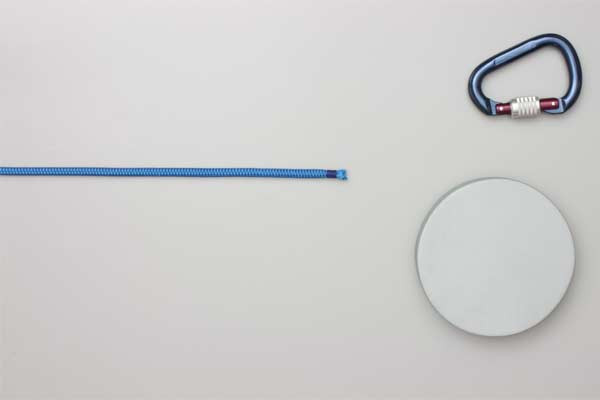
To perform this technique correctly, you need more than just a piece of string. Because this is a high-load anchor, the quality of your equipment is vital.
- The Rope: For most outdoor rope techniques, a static or semi-static kernmantle rope is preferred. The diameter should be appropriate for the load (typically 11mm to 13mm for life-safety applications).
- The Anchor (The Post): The object you wrap around must be significantly larger than the rope. Ideally, the anchor should have a diameter at least four times the diameter of the rope (the 4:1 rule) to ensure the rope does not suffer from "sheave effect" weakening. The surface should be relatively smooth to prevent abrasion, though bark on a live tree usually provides excellent grip.
- Carabiner: A locking carabiner (screw-gate or auto-locking) is required to secure the termination loop back to the standing end.
- Edge Protection: If the anchor post has sharp edges or rough surfaces, heavy-duty canvas or specialized plastic edge protectors should be placed between the rope and the post.
How to Tie Tensionless Hitch?
To ensure maximum safety and efficiency, follow these technical steps precisely. Accuracy in the number of wraps and the final connection is essential for the hitch to function as a "tensionless" system.
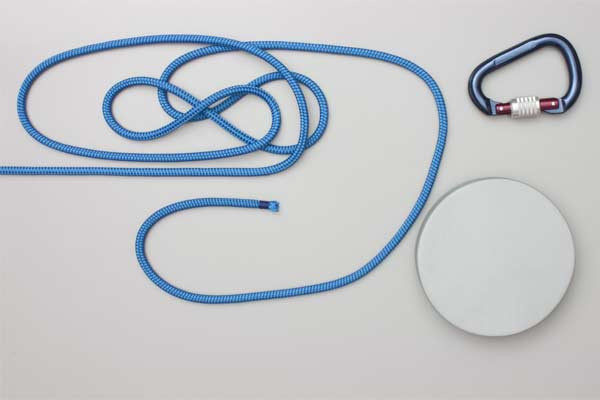
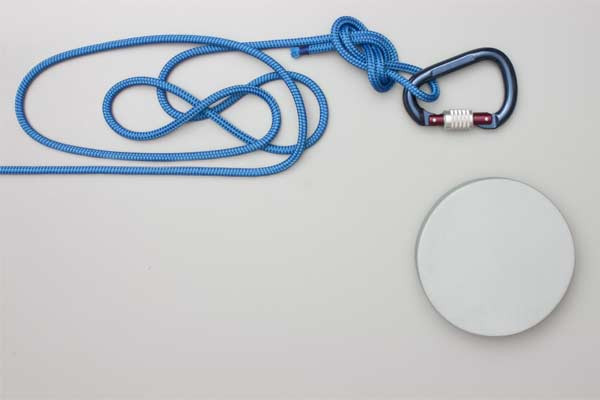
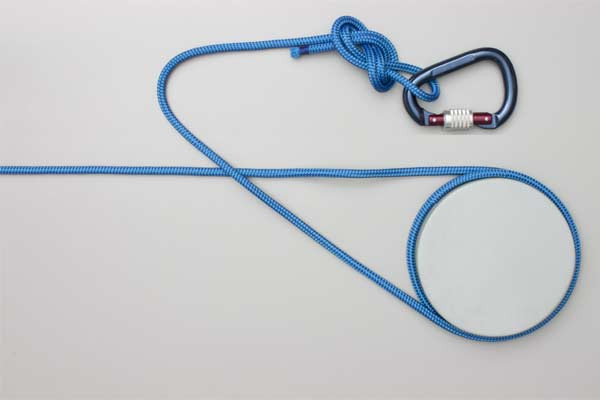
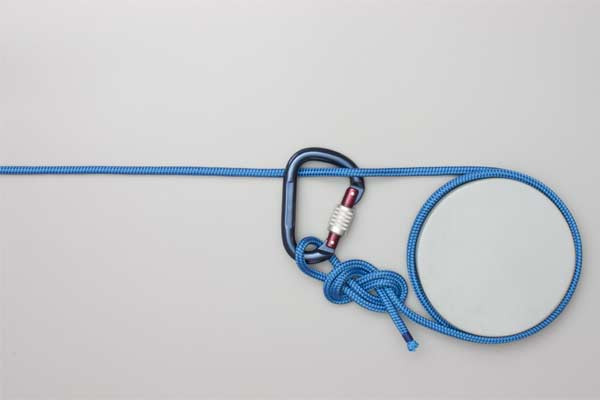
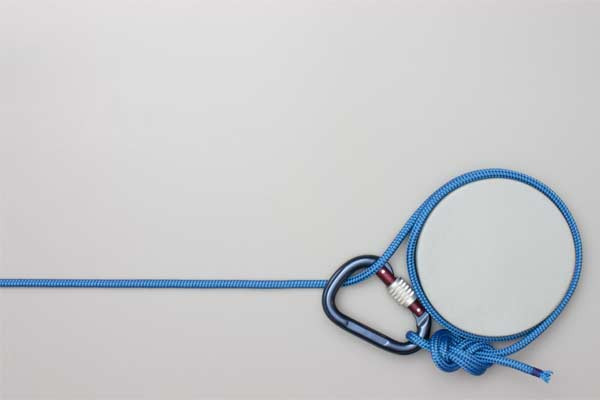
- Prepare sufficient rope to make 3 or 4 turns around the post.
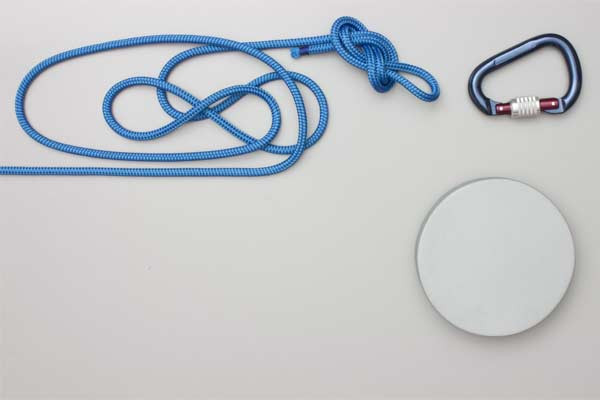
- Make a Figure 8 Loop in the end and attach a carabiner.
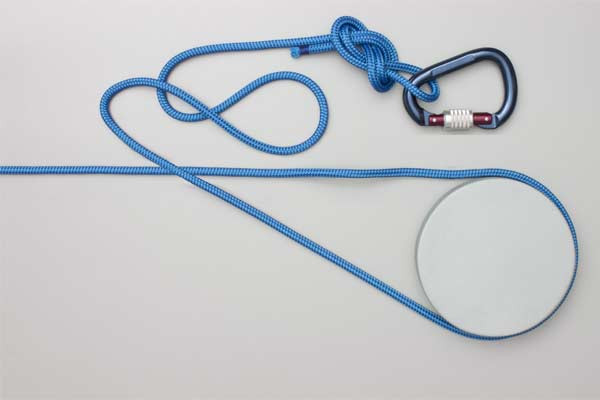
- Wrap the rope around the post.
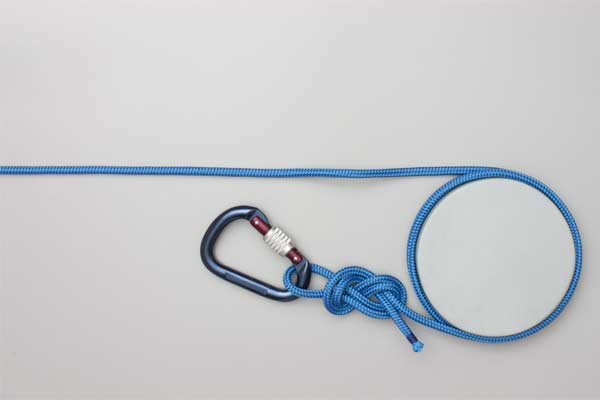
- Make sure there is sufficient slack and clip the carabiner to the standing end.
A kink in the standing end is an error.
Common Mistakes to Avoid
Even though the Tensionless Hitch knot is conceptually simple, small errors can lead to a decrease in safety margins.
1. Insufficient Wraps
The "tensionless" nature of the hitch relies on friction. If you only wrap the rope once or twice, the tension will transfer directly to the Figure 8 loop and the carabiner. For most synthetic ropes on a standard tree or pipe, 3 to 4 wraps are the industry minimum. On very smooth surfaces, like polished steel, more wraps may be necessary.
2. Overlapping the Rope
When wrapping the rope around the post, ensure the wraps are neat and parallel. If the rope crosses over itself, it creates a "pinch point." Under a heavy load, the top layer of rope can crush or melt the bottom layer due to friction and pressure.
3. The "Kink" Error
As noted in the instructions, a kink in the standing end is an error. When you clip the carabiner back to the standing line, there should be enough slack in that final segment so that the carabiner does not pull the main line into an "S" shape or a sharp angle. If the carabiner is pulling the main line tight, you have effectively created a "tensioned" knot, defeating the purpose of the hitch.
4. Choosing a Small Anchor
If you wrap a 12mm rope around a thin metal fence post, the radius of the bend is too tight. This causes the rope to lose strength similarly to a standard knot. Always look for a substantial, immovable object.
Related Knots and Outdoor Rope Techniques
Understanding the Tensionless Hitch is part of a broader skill set in rope management. Here are a few related rope knots you should master:
- Figure 8 on a Bight: This is the standard loop knot used in the end of the Tensionless Hitch. It is exceptionally strong, easy to inspect, and remains relatively easy to untie after being loaded.
- Round Turn and Two Half-Hitches: A classic utility hitch used to secure a rope to a post. While not "tensionless," it is excellent for lower-load scenarios where a quick, secure tie-off is needed.
- The Bowline: Often called the "bowline on a coil" when used similarly to a hitch, this knot creates a fixed loop at the end of a rope. It is less stable than the Figure 8 for the Tensionless Hitch termination but is a staple in maritime and climbing history.
- Munter Hitch: A friction-based hitch used for belaying or rappelling. While the Tensionless Hitch uses friction to stop movement, the Munter uses it to control movement.
Final Words
The Tensionless Hitch is a masterclass in using physics to your advantage. By understanding how the Capstan effect works, you can create anchors that are not only the strongest possible option for your rope but also the easiest to disassemble after a heavy load has been applied.
Whether you are setting up a zipline, a rescue haul system, or simply securing gear in a high-stakes outdoor environment, the Tensionless Hitch knot should be your go-to technique for high-strength anchoring. Remember to always use at least three wraps, keep your lines neat, and avoid the dreaded kink in the standing end. Safety in outdoor rope techniques comes from a combination of the right equipment and the disciplined application of these fundamental skills.
